How to start an sportswear / fitness gear brand
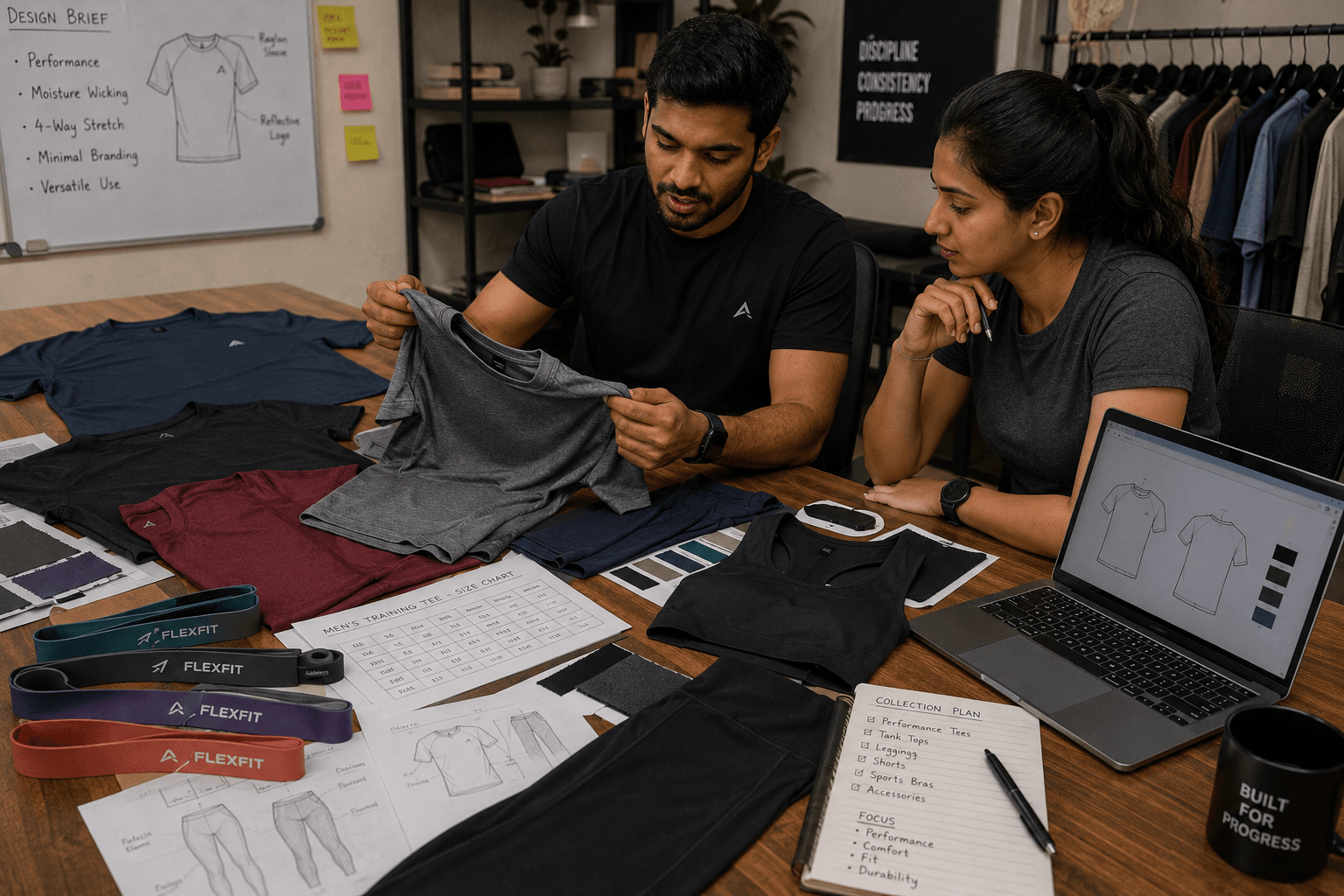
Starting a sportswear or fitness gear brand in India is not just about printing a logo on T‑shirts and selling on Instagram. It requires choosing the right niche, designing products that actually perform, setting up manufacturing, handling registrations and GST, building a brand story, and organizing sales and logistics.
This guide explains how to start a sportswear and fitness gear brand in India, including business model, market research, brand and product development, manufacturing, compliance, e‑commerce setup, marketing, operations, and how Zopkit can support the business.
Table of Contents
- Choose your sportswear business model
- Study the market and customer demand
- Define your brand, niche, and positioning
- Develop products and collections
- Set up manufacturing and supply chain
- Complete registrations and compliance
- Plan investment, pricing, and margins
- Choose sales channels and launch strategy
- Organize operations, logistics, and customer service
- Prepare for long‑term growth
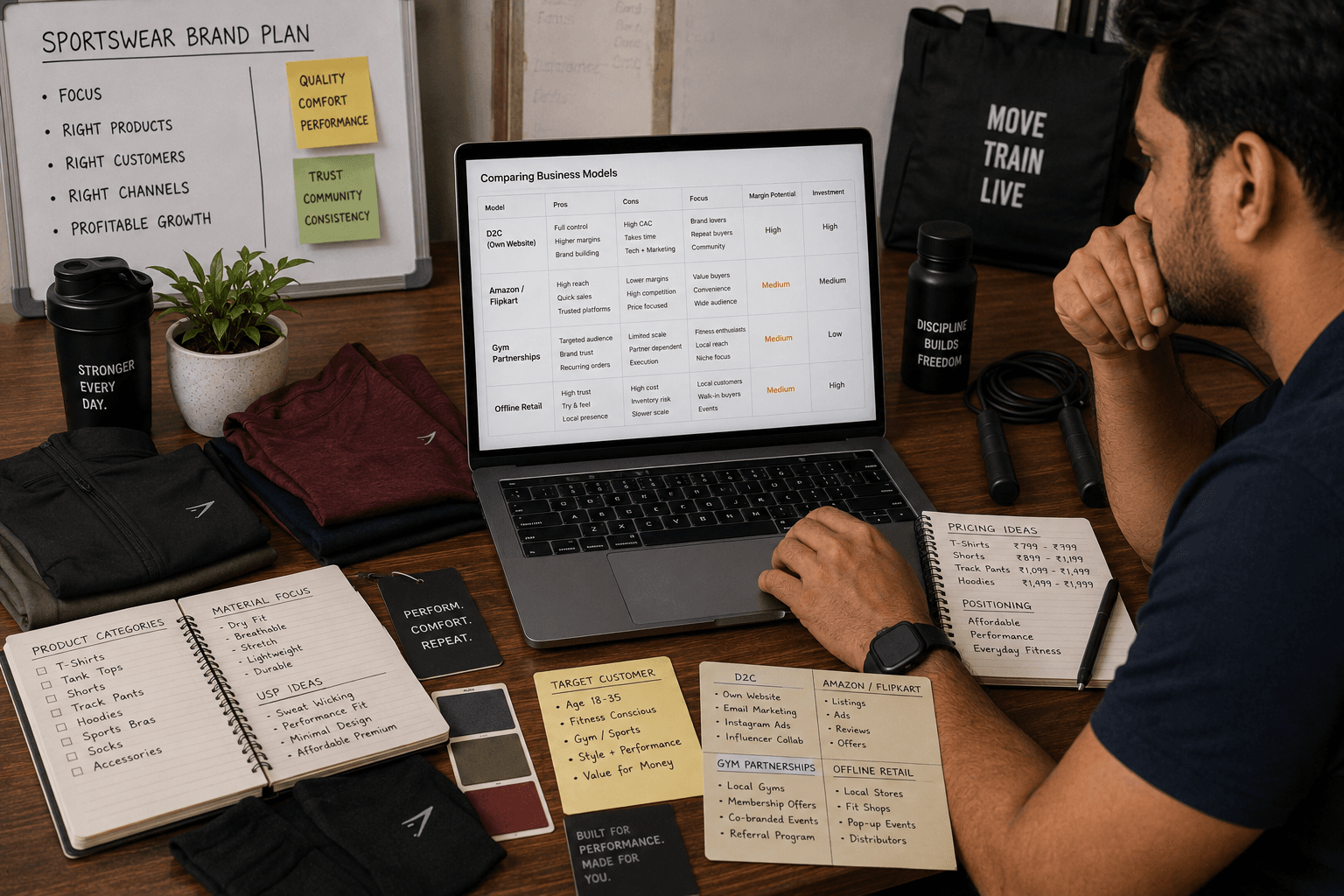
1. Choose Your Sportswear Business Model
The first step is deciding what kind of sportswear or fitness gear brand you want to build.
Possible models include:
- Performance activewear for runners, gym goers, or athletes
- Athleisure clothing for everyday comfort
- Yoga and studio wear
- Team sports apparel for clubs and academies
- Fitness accessories like resistance bands, gloves, belts, water bottles
- Niche segments like plus‑size activewear, modest sportswear, or sustainable fabrics
Decide whether you will:
- Build a D2C brand that sells primarily via your own website
- Focus on marketplaces like Amazon and Flipkart
- Work with gyms, coaches, and academies as distribution partners
- Blend online and offline retail over time
A clear model helps you decide which products to start with, what price range to target, and which customers you want to serve first.
2. Study the Market and Customer Demand
India’s sportswear and fitness market has grown rapidly with urbanization, rising health awareness, and more gym memberships, but it is also crowded. You should understand where there is genuine space.
Research:
- Which brands customers already buy for gym, running, yoga, and everyday activewear
- Price bands for basic, mid‑range, and premium products
- Common complaints such as poor fabric, fit, durability, or transparency on performance claims
- How often people purchase sportswear versus accessories
- What channels they use, such as marketplaces, brand websites, offline retailers, or gyms
Talk to:
- Gym members and trainers about what gear they prefer and why
- Runners, sports club players, and yoga practitioners about what they feel is missing
- Younger customers about what styles and colours they want and which influencers they follow
Your brand advantage may be:
- Better fit and fabric for Indian climate and body types
- More reliable sizing and performance for specific sports
- Sustainable or breathable materials that are still affordable
- Better design and styling in a particular niche
- Stronger partnerships with local gyms and trainers
Build your initial product plan around one or two clear customer profiles rather than trying to serve everyone on day one.
3. Define Your Brand, Niche, and Positioning
Sportswear brands live or die on identity and focus. You need a brand story that feels real to your chosen audience.
Clarify:
- Brand name and logo that reflect your mission, such as performance, sustainability, affordability, or community
- Core promise, for example “better performance in Indian climate”, “accessible activewear for everyday gym goers”, or “minimal, comfortable yoga wear”
- Values, such as durability, honest performance claims, ethical manufacturing, or eco‑friendly materials
- Visual style, including colours, fonts, and photography direction
Define your niche:
- Primary sport or activity, such as running, football, weight training, yoga, or mixed fitness
- Gender and size focus
- Style preference, such as minimal, bold, or fashion‑forward
- Price range you intend to serve
Your positioning should be specific enough that customers can tell why they should pick your brand instead of a generic option, but flexible enough to allow growth as you learn.
4. Develop Products and Collections
Once your brand direction is clear, decide which products will form your first collection.
For apparel, examples include:
- Performance T‑shirts and tanks
- Shorts and leggings
- Sports bras and layered tops
- Track pants and joggers
- Hoodies and jackets
For fitness gear, examples include:
- Resistance bands
- Yoga mats
- Water bottles and shaker bottles
- Gloves, belts, and wrist supports
- Foam rollers and simple home‑workout equipment
Plan your first collection:
- Start with a small number of core styles rather than many variations
- Decide fabric types, such as polyester blends, cotton blends, or specialty materials
- Specify key details, such as stretch, breathability, moisture management, and reinforcement in stress areas
- Prepare basic size charts tailored to Indian measurements
Create simple product documentation:
- Product codes and names
- Size and colour options
- Fabric composition
- Intended use (gym, running, yoga, casual wear)
- Care instructions
Initial collections should be designed to test what your customers actually buy and what feedback they provide, so you can refine future designs.
5. Set Up Manufacturing and Supply Chain
Good sportswear depends heavily on fabric and manufacturing quality. You need partners who understand activewear or fitness gear requirements.
Options:
- Local garment factories that already produce sportswear
- Specialized manufacturers experienced in stretch fabrics and performance stitching
- Overseas suppliers, if you can manage minimum order quantities and logistics
- Domestic manufacturers of fitness gear, such as bands and accessories
When evaluating manufacturers:
- Ask for past work samples similar to your target products
- Check fabric quality, stitching, fit, and durability
- Clarify minimum order quantities and pricing for samples and bulk
- Confirm lead times for sampling and bulk production
- Discuss quality control, packaging, and labelling support
Prepare simple tech packs and line sheets for key styles:
- Fabric type and composition
- Measurements per size
- Construction details such as seams and reinforcement
- Colour and branding placement
- Any functional requirements such as breathability, moisture wicking, or compression
A reliable manufacturing and supply chain setup lets you produce consistent quality without constant crisis management.
6. Complete Registrations and Compliance
Even a small sportswear brand should be launched with proper registrations and compliance.
Choose a business structure:
- Sole proprietorship for simple, owner‑run operations
- Partnership firm for shared ownership
- LLP or private limited company if you plan larger scale or external investment
Typical requirements include:
- Business registration for your chosen entity
- PAN and a current bank account in the business name
- GST registration when required by turnover or if you plan to sell via e‑commerce portals
- Trademark registration for brand name and logo under clothing and accessories classes
- Shops and Establishments registration if you have an office, warehouse, or retail outlet
- Any local trade licences as required by the municipality
Maintain records for:
- Purchase invoices from manufacturers
- Fabric and product quality test reports when available
- Inventory and stock records
- Sales invoices for online and offline orders
- Customer and vendor details
- Tax filings and payments
Early discipline on documentation reduces legal risk and makes future expansion easier.
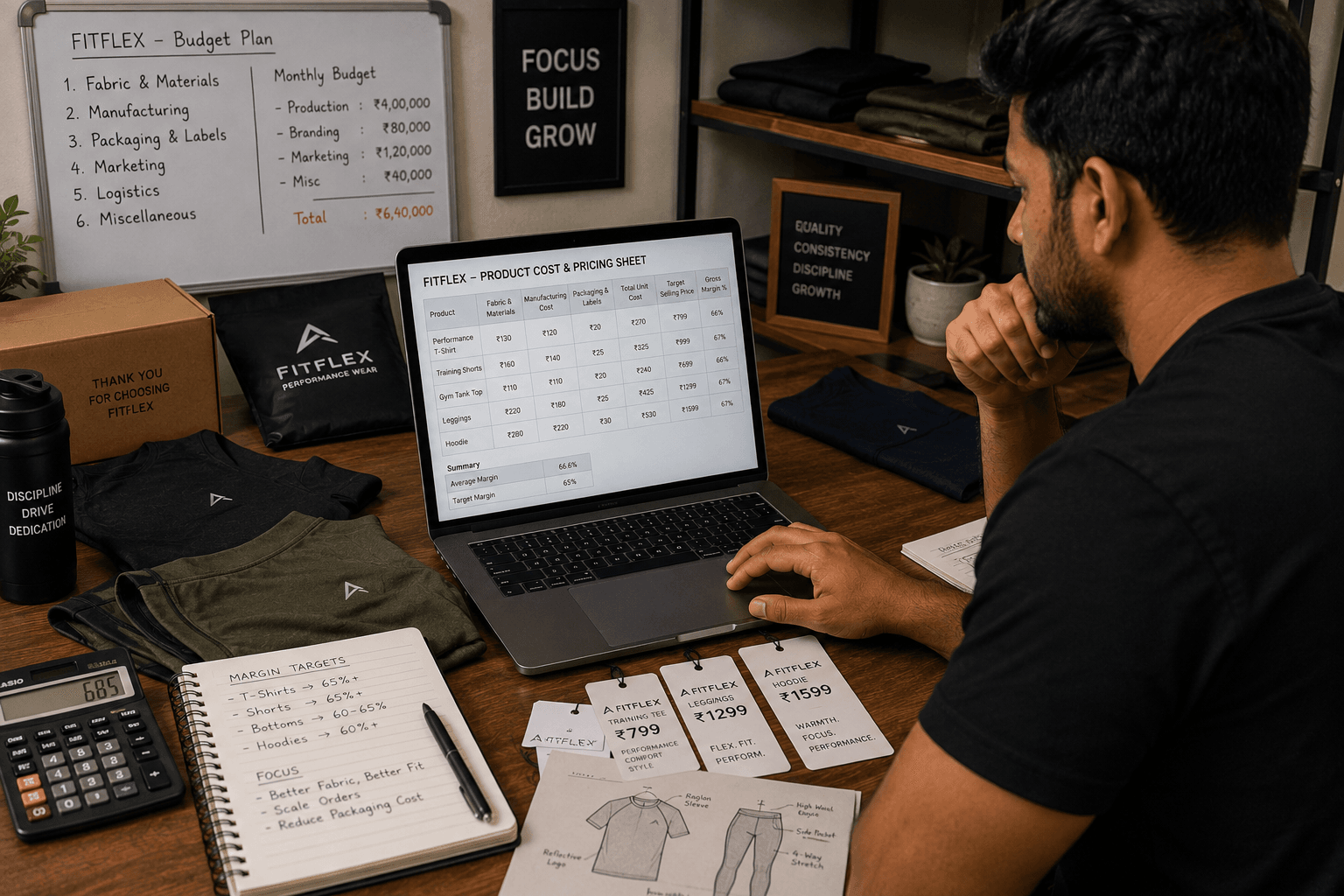
7. Plan Investment, Pricing, and Margins
Investment for a sportswear or fitness gear brand will depend on your product mix, manufacturing choices, and how you launch.
Initial costs:
- Sample development and testing
- First production run
- Branding and packaging development
- Website setup and technology
- Basic photography and content creation
- Registrations and legal fees
- Marketing budget for launch campaigns
Monthly costs:
- Manufacturing and replenishment spending
- Salaries or freelancer charges
- Warehouse or storage costs
- Software subscriptions and tools
- Marketing and paid campaigns
- Shipping and logistics
Pricing and margins:
- Calculate landed product cost including manufacturing, packaging, logistics, and any applicable duties
- Decide target selling price based on market benchmarks and your positioning
- Ensure gross margin is sufficient to cover marketing and operations while remaining competitive
Sportswear often faces competition on price, but a brand built only on low price can struggle to sustain quality and growth. It is safer to build a product and brand value that customers recognize and accept.
8. Choose Sales Channels and Launch Strategy
You need a clear plan for how customers will actually find and buy your sportswear or fitness gear.
Common sales channels:
- Your own website or D2C store
- Marketplaces such as Amazon and Flipkart
- Social commerce via Instagram and WhatsApp
- Gym partnerships and physical counters
- Pop‑up stalls at events or sports meets
Launch strategy:
- Decide one primary channel to focus on initially, such as your own site plus a carefully chosen marketplace
- Build basic content for that channel, including product photos, descriptions, and sizing guidance
- Plan a simple promo strategy, such as limited‑time launch pricing or bundle offers
- Use social content to show real people using the products in gym, running, or yoga settings
At launch, avoid spreading effort too thin across many platforms. It is usually better to make one or two channels work well, then add more once operations are stable.
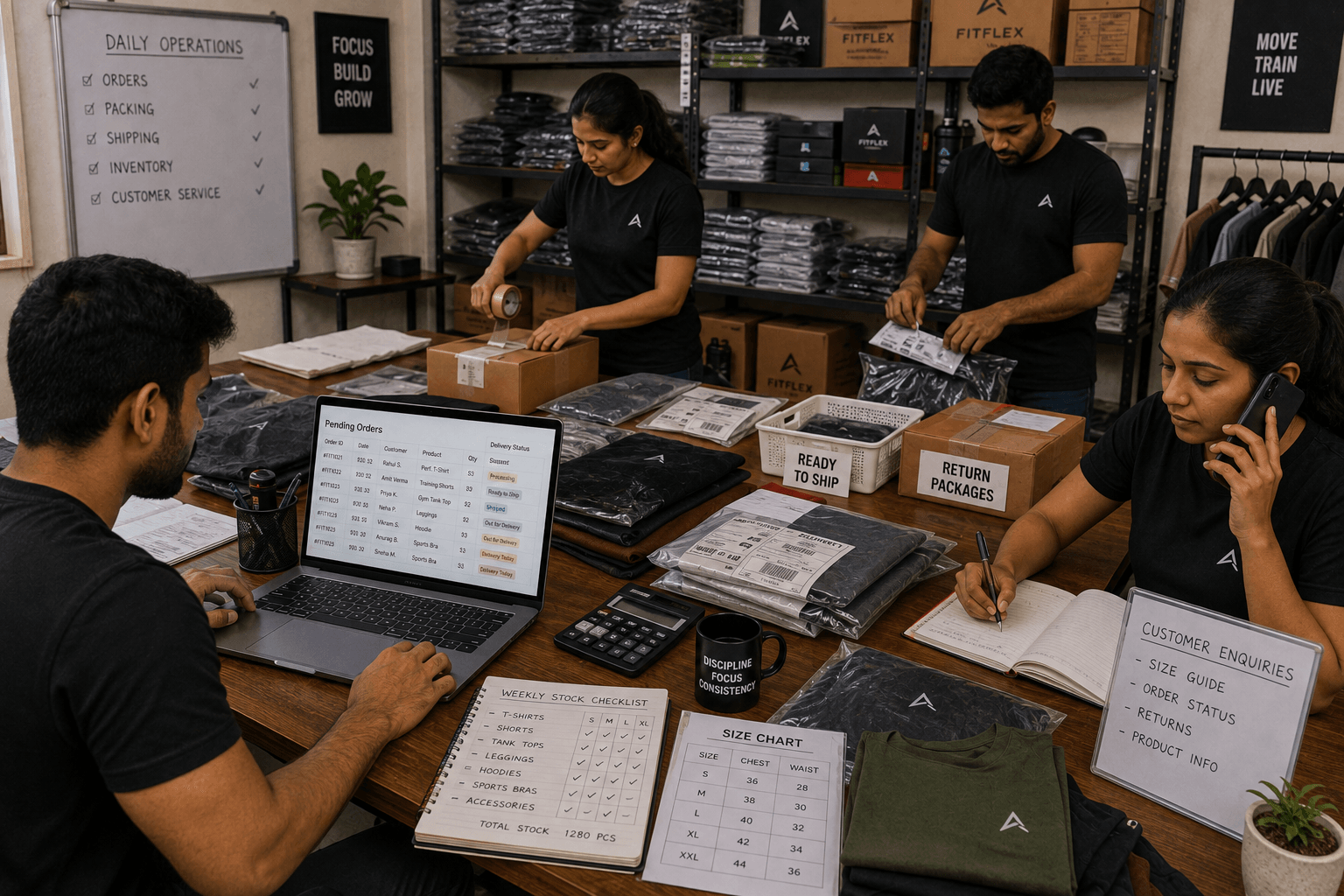
9. Organize Operations, Logistics, and Customer Service
Behind every sportswear brand that looks good online, there must be dependable operations.
Logistics:
- Choose courier partners for domestic shipping
- Define packaging standards for apparel and gear to prevent damage
- Decide dispatch schedules and cut‑off times
- Track shipments and delivery performance
Customer service:
- Provide clear size charts and fit guidance on product pages
- Offer simple channels for inquiries, such as WhatsApp or email
- Answer questions about fabric, use cases, and care
- Handle returns and exchanges according to a clear, fair policy
Internally, create simple routines:
- Daily order review and dispatch
- Weekly stock checks on key styles and sizes
- Monthly review of delivery performance and customer feedback
Consistent operations and service make customers more likely to trust the brand and recommend it to others.
10. Prepare for Long‑Term Growth
Once your sportswear or fitness gear brand has a working first phase, think about controlled growth.
Growth paths:
- Expanding product range within your niche
- Introducing new collections for seasons or events
- Improving your website and digital experience
- Adding more marketplaces or physical partner outlets
- Collaborating with trainers, gyms, or influencers
- Exploring export or cross‑border options when relevant
Before each growth step, confirm that:
- Current products are consistent in quality and supply
- Customers understand your brand promise
- Operations can handle the additional complexity
- Financial data shows where the brand is truly profitable
Growth in sportswear and fitness requires balancing product creativity with operational discipline. A brand that manages both can become more than just another logo on a T‑shirt.
Conclusion
Starting a sportswear or fitness gear brand in India requires more than enthusiasm for fitness. You need a clear business model, focused market research, strong brand positioning, practical product development, reliable manufacturing, proper registrations, realistic investment planning, chosen sales channels, and organized operations.
A brand that helps customers feel comfortable and confident in their training, with honest performance and reliable service, stands a better chance of surviving beyond the first launch.
As your brand grows, systems for customers, finance, projects, people, and training become increasingly important. Zopkit supports this wider operating system through CRM, Finance, Project Management, HRMS, and Academy, helping sportswear and fitness brands manage relationships, money, work, teams, and learning as they build.
Explore how Zopkit can support your sportswear or fitness gear brand at zopkit.com.