How to start an Pet supplies/pet care store
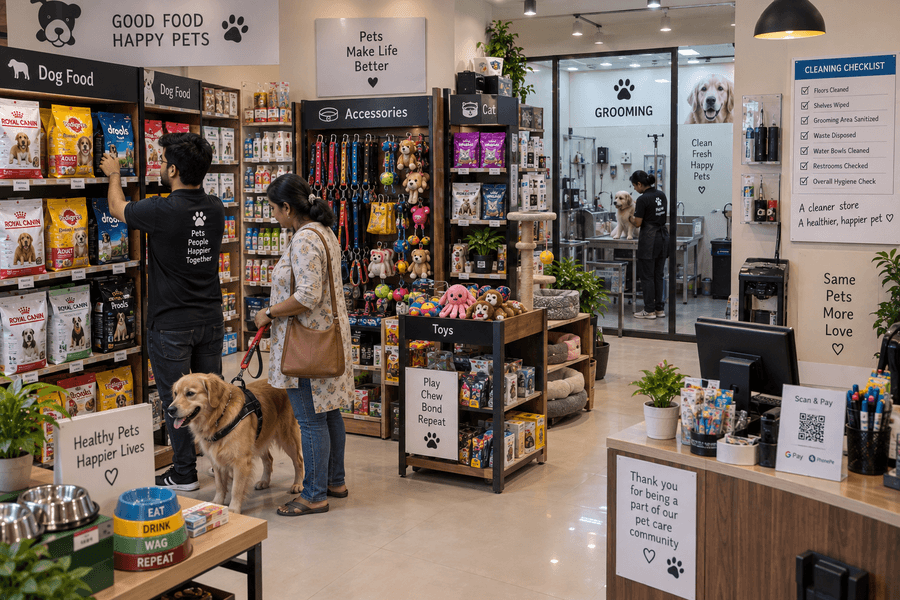
Starting a pet supplies or pet care store in India is not just about renting a shop and filling it with food bags, toys, and shampoos. It requires choosing the right store model, understanding local pet owner demand, arranging registrations and licences, planning investment, building relationships with suppliers and veterinarians, organizing inventory and pricing, and offering a customer experience that makes pet parents trust you with their pets’ everyday needs.
This guide explains how to start a pet supplies or pet care store in India, including the business model, market research, location, registrations, investment, products, inventory, customer service, and how Zopkit can support operations.
Table of Contents
- Choose your pet store business model
- Study your local pet market and demand
- Select the right location and store format
- Complete registrations and compliance
- Plan investment and working capital
- Decide product categories and services
- Set up suppliers, stocking, and pricing
- Design store layout and hygiene routines
- Build customer service and local partnerships
- Use a Retail ERP and Zopkit to run operations
- Choose Your Pet Store Business Model
The first step is deciding what kind of pet business you want to build. Pet parents have different needs, and you do not have to serve everything from day one.
Common models include:
Pet supplies only store
- Mainly pet food, treats, toys, accessories, grooming products, beds, and basic health items for dogs, cats, birds, fish, and small pets.
Pet supplies plus grooming
- A retail area for supplies plus a small grooming section for baths, haircuts, nail trimming, and basic styling.
Full pet care center
- Supplies, grooming, training classes, and possibly boarding if you have space and approvals.
Niche store
- Focus on a narrower segment, such as premium food, organic products, cats only, or a particular income level or neighborhood demographic.
Decide:
- Whether you will deal only in products or also in services such as grooming.
- Whether you will keep live animals or focus purely on supplies.
- Which pet types you will serve first (dogs, cats, birds, fish, others).
- What price band you want to focus on (accessible, mid range, premium).
Clarifying this early helps you decide licences, interior design, staff needs, and investment more realistically.
2. Study Your Local Pet Market and Demand
Pet care is growing quickly in Indian cities, but demand is not equal everywhere. You need to understand your local context before investing.
Walk your area and observe:
- How many people walk their dogs or keep visible pets in nearby societies.
- Presence of veterinary clinics, grooming centers, and existing pet stores.
- Approximate spend levels on pets based on conversations with locals.
- Any gaps, such as limited access to good food, grooming, or accessories.
Talk to potential customers:
- Pet owners in your own networks, neighbors, and people in housing societies.
- Vets and groomers about what pet parents complain about or need more of.
- Apartment associations about pet regulations and common pain points.
Understand:
- What pet types dominate your area (dogs, cats, birds, fish).
- How often pet parents buy food and supplies.
- Whether they currently buy offline, online, or a mix.
- Which categories they struggle to find nearby (good food, safe toys, proper grooming).
Your store advantage might be:
- Reliable, convenient access to core supplies in a pet dense society.
- Better education and guidance on food and care.
- Clean, trustworthy grooming services.
- A combination of local presence plus simple online support.
Use what you learn to shape your first product range and services instead of copying a generic list.
3. Select the Right Location and Store Format
Pet stores need both visibility and easy access for pet parents who come with their pets or prefer nearby delivery.
Look for:
- Residential areas with visible pet ownership and multiple housing societies.
- Locations close to parks, walking routes, or veterinary clinics.
- Buildings that allow commercial use and shop signage.
- Reasonable rent, accessible parking, and safe surroundings.
Before signing a rental agreement, check:
- Commercial usage permission for the property.
- Rent, deposit, lock in period, and escalation terms.
- Local conditions for shop and trade licences.
- Space for retail displays, storage, and any grooming area if planned.
- Ventilation, lighting, and basic infrastructure, especially for hygiene.
Decide store size based on your model:
- Small supplies only store can work in a modest area with focused products.
- Supplies plus grooming needs extra space for grooming tables, washing area, and waiting zone.
- Full pet care center needs substantial space, separate zones, and higher investment.
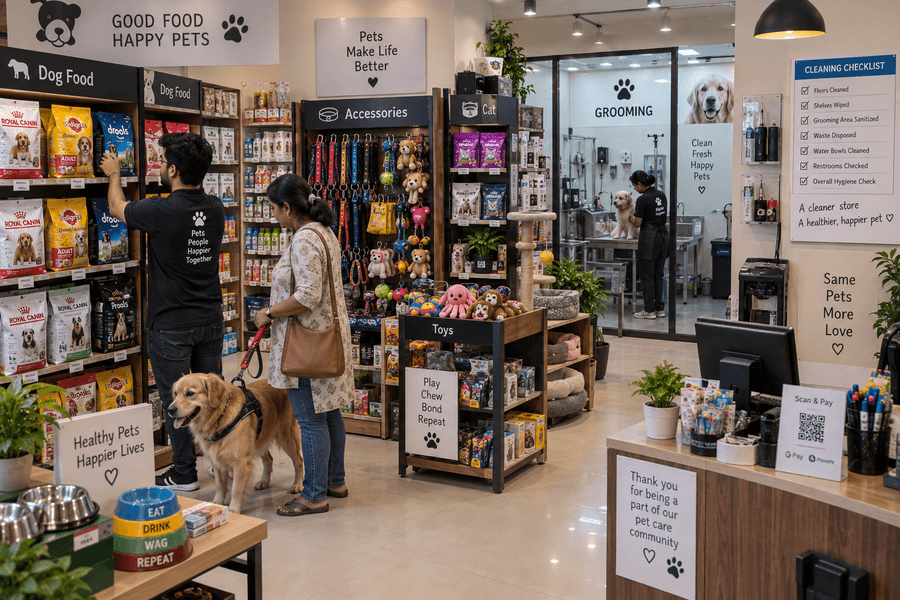
Plan layout to make browsing easy:
- Sections for dogs, cats, birds, fish, and general accessories.
- Clear grouping of food, treats, toys, leashes, beds, and grooming products.
- Billing counter located safely away from grooming and any wet areas.
- If you add grooming, a separate clean zone with proper water, drainage, and safety.
4. Complete Registrations and Compliance
Pet stores deal with food, health, and sometimes live animals, so licences and compliance are important.
Choose a business structure:
- Sole proprietorship for a simple, owner run store.
- Partnership firm if multiple partners invest and operate together.
- LLP or private limited company if you plan larger scale, multiple locations, or external investment.
Typical requirements include:
- Business registration for the chosen entity.
- PAN and a current bank account in the business name.
- Shop and Establishment or trade licence from your local municipal authority.
- GST registration once your turnover crosses thresholds or if you want to issue tax invoices and work with larger suppliers.
- FSSAI licence if you sell pet food, since it involves food safety and labeling rules.
- Pet shop registration and compliance with animal welfare rules if you keep or sell live animals, including registration with the relevant State Animal Welfare Board.
- Any drug licence required if you plan to store or sell veterinary medications, based on local regulations and guidance from authorities.
Maintain records for:
- Purchase invoices for supplies and food.
- Supplier agreements and basic terms.
- Sales bills and tax invoices.
- Health and vaccination records and conditions if you deal with live animals.
- Compliance filings such as GST returns.
Early attention to documentation reduces legal risk and makes it easier to work with vet clinics, housing societies, and institutional buyers later.
5. Plan Investment and Working Capital
Investment for a pet supplies or pet care store depends on location, size, and service mix.
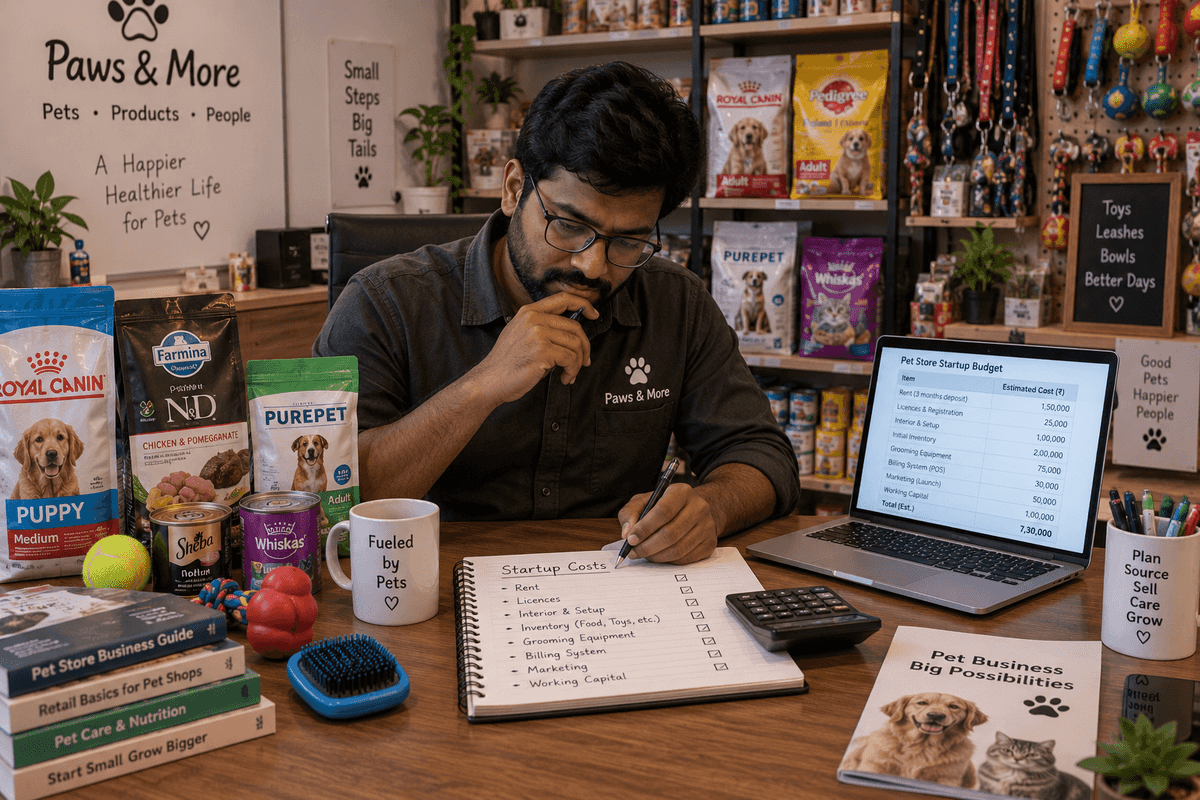
Typical initial costs include:
- Shop deposit and initial rent.
- Shelving, racks, counters, grooming tables, and other furniture.
- Billing system or POS and basic technology.
- Initial inventory of pet food, treats, toys, accessories, beds, grooming products, and any other chosen categories.
- Licences and registrations such as shop licence, GST, FSSAI, and pet shop registration where applicable.
- Initial marketing and branding such as signboards, posters, basic online presence.
Monthly costs include:
- Rent and utilities.
- Salaries for staff and any groomers.
- Ongoing inventory purchases.
- Consumables for grooming and cleaning.
- Local advertising or social media promotion.
- Software or SaaS costs if you adopt tools like Zopkit.
Margins vary by category:
- Pet food often has tighter margins but stable repeat demand.
- Accessories, toys, grooming products, and apparel can have higher margins.
- Services such as grooming can be margin rich but require careful standard of care.
Plan your working capital so you can:
- Maintain sufficient stock of core food and supplies.
- Experiment with new product ranges in small quantities.
- Handle months when demand fluctuates.
- Pay suppliers and staff on time.
6. Decide Product Categories and Services
You cannot stock everything at once. Start with a structured set of categories that match your local demand and your chosen model.
Products:
- Food
- Dry food, wet food, treats, snacks, and special diets for dogs, cats, and other pets
- Essentials
- Bowls, litter and litter trays, feeding accessories, leashes, harnesses, collars, muzzles, beds, crates, and carriers.
- Grooming
- Shampoos, conditioners, brushes, combs, nail clippers, wipes, dental care products.
- Health and hygiene
- Basic supplements, skin and coat care products, tick and flea care items, and other health products, with guidance from veterinarians.
- Toys and enrichment
- Chew toys, balls, interactive toys, scratching posts, and other play items.
- Apparel and accessories
- Simple pet clothing, bandanas, and other accessories where relevant.
Services:
- Grooming, if you choose to add it.
- Baths, haircuts, nail trims, and ear cleaning, with clear standards and hygiene.
- Training support, if you partner with trainers.
- Group or one on one sessions in collaboration with professionals.
Decide:
- Which pet types you will stock for in depth (for example, dogs and cats first).
- Whether you will focus on economical or mid range products, or offer some premium choices too.
- How many services you can safely start with while maintaining quality.
Later you can expand categories or services based on feedback and performance.
7. Set Up Suppliers, Stocking, and Pricing
Reliable suppliers and stocking routines are essential to keep the store functional.
Suppliers:
- Wholesalers and distributors for pet food and core supplies.
- Manufacturers or importers for accessories and grooming products where suitable.
- Local suppliers for basic items and economical ranges.
Evaluate suppliers by:
- Product range and depth.
- Pricing and margins.
- Delivery timelines and consistency.
- Quality control, packaging, and labeling.
- Ability to support returns or issues.
Stocking:
- Set minimum stock levels for core food and essentials.
- Track demand by category to adjust quantities.
- Identify fast moving items and slow movers over time.
- Avoid over‑buying experimental products until you see proven demand.
Pricing:
- Consider purchase cost, taxes, and expected margins.
- Align prices with local competition while respecting your costs and positioning.
- Avoid competing only on price; emphasize value, guidance, and service.
Document basic stocking and pricing rules so new staff can understand why certain items are prioritized and how to price them.
8. Design Store Layout and Hygiene Routines
Pet stores must feel safe and clean. Layout and hygiene affect both sales and reputation.
Layout:
- Separate zones by pet type and category so customers can navigate easily.
- Keep food areas away from wet grooming zones and cleaning chemicals.
- Place small accessories and impulse items near the counter.
- Allow space for customers to move comfortably, especially if pets enter the store.
Hygiene:
- Daily cleaning of floors, shelves, and grooming equipment.
- Regular sanitization of grooming areas and tools.
- Proper storage of food away from dampness and pests.
- Clear policies for handling accidents or pet waste if pets visit.
Safety:
- Rules about pet behavior inside the store for everyone’s comfort.
- Safe storage of sharp tools, chemicals, and medications.
- Basic fire and emergency preparedness.
A clean, well organized store builds trust with pet parents and makes them more likely to treat your store as their default choice.
9. Build Customer Service and Local Partnerships
The pet business is deeply emotional. Pet parents care about how you treat both them and their animals.
Customer service:
- Train staff to ask basic questions about pet type, age, health, and lifestyle before recommending products.
- Offer honest guidance, including advising vet consultation where needed.
- Help pet parents understand differences between food types, grooming products, and accessories.
- Handle complaints and issues calmly and fairly.
Local partnerships:
- Collaborate with nearby veterinary clinics for referrals and cross support.
- Partner with groomers or trainers if you do not provide certain services yourself.
- Engage with housing societies and pet groups to understand their needs and rules.
- Participate in small pet events or awareness drives.
Build trust through:
- Reliable availability of core products and planned deliveries.
- Transparent policies on returns, exchanges, and services.
- Respectful handling of pets and people in all interactions.
A pet store that becomes part of the local pet parenting routine can grow steadily without relying only on heavy advertising.
10. Use a Retail ERP and Zopkit to Run Operations
As your pet supplies and pet care store grows, managing inventory, billing, suppliers, and customers manually becomes difficult and error prone.
A structured system behind the store should connect:
- Product catalog and categories for food, accessories, and grooming products.
- Inventory tracking by category, supplier, and location.
- Purchase orders and supplier payments.
- Sales and billing data, including cash, UPI, and card receipts.
- Basic customer records and preferences, such as pet types and core product choices.
- Simple reports on sales, margins, and stock ageing.
Zopkit can support this backbone through:
- Zopkit CRM for customer data, pet profiles, segments, and campaigns.
- Zopkit Finance for invoices, supplier bills, expenses, cash flow, budgets, and basic profitability insights.
- Zopkit Project Management for store setup, launch campaigns, seasonal drives, and improvement projects.
- Zopkit HRMS for staff records, attendance, payroll, and roles.
- Zopkit Academy for training staff on customer service, product knowledge, grooming basics, and store routines.
Instead of adding more scattered spreadsheets and notes as the store grows, you can use Zopkit as the operating spine behind your pet supplies and pet care business.
Conclusion
Starting a pet supplies or pet care store in India requires more than collecting cute products. You need a clear store model, strong understanding of local pet parent demand, proper registrations and licences, realistic investment planning, reliable supplier relationships, disciplined inventory and pricing, thoughtful store layout and hygiene routines, and a customer experience rooted in trust and guidance.
A store that helps pet parents find safe food, good accessories, and quality services, while managing stock, margins, and daily operations in a structured way, has a better chance of becoming a lasting part of the neighborhood.
Zopkit supports this wider operating system through CRM, Finance, Project Management, HRMS, and Academy, helping pet supplies and pet care businesses organize customers, stock, suppliers, payments, staff, and training.
Explore how Zopkit can support your pet supplies and pet care store at zopkit.com.