How to Grow a Pet Supplies/Pet Care Store in India

Running a pet supplies or pet care store in India is not just about keeping shelves full and waiting for pet parents to walk in. Growing the business means improving product mix, increasing average bill value, building repeat customers, using services and community intelligently, adding simple online channels, tightening inventory and cash flow, and organizing people and processes so the store can run smoothly without the owner handling every detail personally.
If you are still choosing your store model, researching your local pet market, arranging registrations and licences, planning investment, and setting up suppliers, start with the “How to Start” guide first.
Related Guide:
How to Start a Pet Supplies/Pet Care Store in India
Use that guide to understand:
- Store models and product mix
- Local market and customer research
- Location, rental, and store layout
- Business registration, licences, and compliance
- Startup investment and working capital
- Supplier and service planning
- Basic inventory, pricing, and billing setup
Once the store is running, the next challenge is growth. Growing a pet supplies or pet care business is not only about more stock or more discounts. It means knowing what sells, what sits, and why pet parents come back, turning seasonal peaks into stable monthly performance, and using systems to keep the business predictable as it grows.
This guide explains how to move from a functioning pet supplies/pet care store to a stronger, more profitable, and more organized business.
Table of Contents
- Understand your current store performance
- Sharpen your product mix and categories
- Increase average bill value
- Strengthen customer relationships and loyalty
- Use services and community to drive footfall
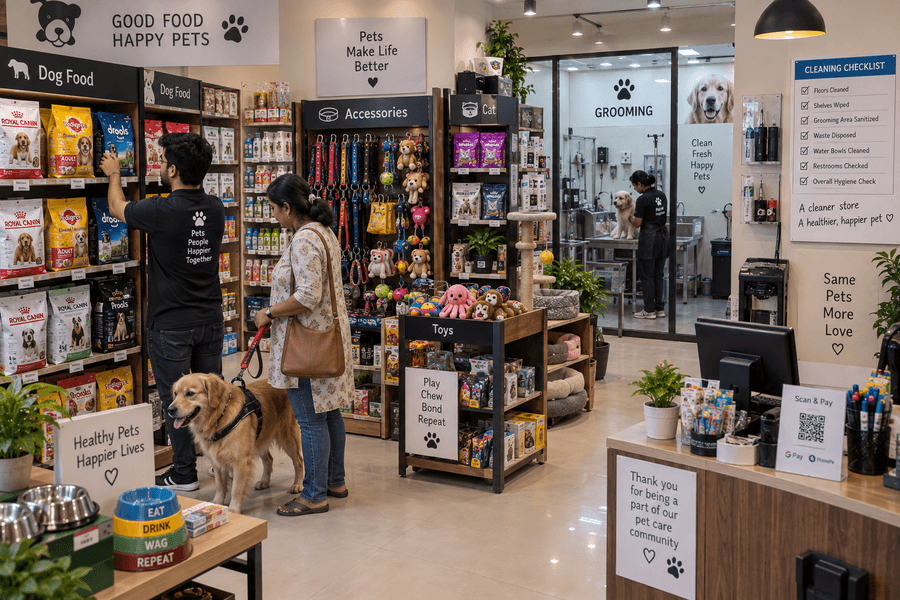
- Improve merchandising and in‑store experience
- Develop online and omnichannel presence
- Tighten supplier, inventory, and cash flow
- Build a team and store processes
- Use Zopkit and systems to organize growth
1. Understand Your Current Store Performance
Before trying to grow, you need a clear picture of how the store is performing today. A shop can feel busy and still be weak on margins or inventory.
Review the last six to twelve months and capture:
- Daily and monthly sales for products and services
- Number of bills per day and peak hours
- Average bill value per customer
- Sales by category: food, treats, toys, accessories, grooming products, health items, services such as grooming
- Fast‑moving items and genuinely slow movers
- Seasonal patterns: festivals, vacations, local events
- Return or complaint reasons
- Cash, UPI, card, and any credit or institutional billing
Build a simple performance table for yourself:
- Number of bills and footfall
- Average bill value
- Category‑wise sales and margins
- Stock ageing and dead stock
- Gross margin by broad category
- Key seasonal spikes and dips
Once you see these numbers, you will know whether growth should come from more customers, better baskets, better product mix, or tighter control on costs and stock.

2. Sharpen Your Product Mix and Categories
Growth often comes from having the right products at the right depth for your local pet parents, not just more variety everywhere.
Segment your products:
- Core food and treats for dogs and cats
- Bird, fish, and small pet supplies if relevant to your area
- Essentials such as bowls, leashes, collars, beds, litter, carriers
- Grooming products: shampoos, brushes, nail care, dental care
- Health and hygiene items: supplements, skin and coat care, tick and flea products
- Toys and enrichment items
- Apparel and accessories where there is demand
For each segment, ask:
- Is demand stable, seasonal, or occasional?
- Which price ranges move fastest?
- Which brands or product types do customers ask for by name?
- Which items create more complaints or returns?
Use this to decide:
- Which segments should be kept as “core” with always‑available stock
- Which segments can be expanded with more depth and variety
- Which slow‑moving segments should be reduced or repositioned
- Where to experiment with new products in small quantities
Place products intelligently:
- Core high demand items close to the entrance and billing counter
- Food and treats in clearly marked sections by pet type
- Grooming and health products grouped for easy browsing
- Toys and accessories in visible, attractive displays
Growth is easier when your shelves look like a well‑thought‑out catalog instead of a random collection of boxes and bags.

3. Increase Average Bill Value
One of the simplest ways to grow a pet supplies or pet care business is to increase the value of each visit by helping pet parents complete their needs in one go.
Use natural combinations:
- Food plus treats and bowls
- Leash plus collar and ID tag
- Grooming shampoo plus brush and nail clipper
- Bed plus crate or carrier for travel
- Litter plus litter tray and scooper for cats
Create:
- Starter kits for new pet parents (basic food, bowl, leash, bed)
- Grooming kits (shampoo, brush, nail clipper, wipes)
- Seasonal bundles (summer care, monsoon care, winter care)
- Health and hygiene packs (tick and flea care, supplements, dental products)
At billing, train staff to suggest relevant add‑ons:
- “Would you like a matching collar with this leash?”
- “This food brand works well with these treats for training.”
- “If you are starting grooming at home, this brush and shampoo combo is very useful.”
You can also:
- Place small, high‑turnover items near the counter
- Offer small bundle benefits for logical combinations
- Design simple loyalty or membership structures that reward larger baskets over time
The goal is not to push random products but to make shopping more complete and convenient, which naturally increases average bill value.
4. Strengthen Customer Relationships and Loyalty
Pet stores can become long‑term parts of a neighborhood’s routine if they remember pets and make life easier for pet parents.
With customer consent, maintain basic information:
- Name and mobile number
- Pet type, breed, age, and any known health or dietary needs
- Preferred categories (food brand, grooming products, toys)
- Recurrent needs (monthly food refills, regular grooming)
Segment customers:
- New pet parents
- Regular food buyers
- Grooming service users
- Premium or specialty product buyers
- Multi‑pet households
Use this information to:
- Inform customers when their usual food or products are back in stock
- Notify about relevant new arrivals or better alternatives
- Share simple care tips and reminders (vaccination season, tick and flea prevention)
- Offer small benefits to regular customers (birthday month offers, points for repeated purchases)
Avoid spamming. Instead, send useful, specific messages that match what customers actually buy and need.
Zopkit CRM can help you organize these customer and pet profiles, store preferences, and run simple, targeted campaigns without losing data in loose papers or notebooks.
5. Use Services and Community to Drive Footfall
Services and small community activities help transform a pet store into a more engaging space and create reasons for people to visit beyond purchases alone.
You can offer or expand:
- Grooming services with clear packages and standards
- Basic training guidance or referrals to trusted trainers
- Small pet care workshops or Q&A sessions with vets or experts
- Adoption support or tie‑ups with local shelters and rescue groups
- Occasional pet meetups or social events in safe, controlled environments
Keep activities:
- Modest and manageable for your space and team
- Regular enough to build habit (monthly, quarterly)
- Clearly connected to your core products and services
Use services and events to:
- Showcase specific products and care routines
- Introduce new items in a natural way
- Strengthen relationships with local vets, groomers, and pet groups
- Collect feedback on what the community wants and needs
Even small initiatives can help position your shop as a local hub for pet care, not just a transactional counter.
6. Improve Merchandising and In‑Store Experience
A tidy, well‑organized store can quietly lift sales and customer satisfaction without any discounts.
Focus on:
- Clear signage for major sections (food, treats, toys, accessories, grooming, health)
- Logical grouping of products so customers can find what they need quickly
- Simple face‑out displays for key products and new arrivals
- Attractive but practical arrangements instead of cluttered piles
- Adequate lighting and comfortable walking space
Regular routines:
- Daily shelf straightening and cleaning
- Weekly checks of display zones and new arrivals
- Monthly rearrangement based on season or local events
Trial layouts:
- Bring frequently asked items and core products closer to billing for easy access
- Create a small “new arrivals” or “recommended” corner
- Keep grooming and health sections clean, calm, and clearly explained
When customers feel relaxed and oriented inside the shop, they stay longer, ask more questions, and buy beyond their original list.
7. Develop Online and Omnichannel Presence
As the store grows, adding simple online and omnichannel elements can help reach more customers and support existing ones better.
Start small:
- Create basic business listings so people can discover your store and contact you
- Share periodic updates on new arrivals, seasonal care tips, and service packages
- Offer simple ordering or reservation over phone or messaging for regular customers
Later, consider:
- A basic website or catalog with key categories and contact options
- Online ordering for frequently needed items, especially food and grooming products
- Coordination with delivery partners or local riders for nearby drops
- Integration of in‑store inventory with online listings so stock information stays realistic
For pet supplies and care, online presence can:
- Help existing customers reorder without always visiting
- Let new customers find you and check what you offer
- Smooth communication during busy seasons or for special orders
The aim is not necessarily to become a large e‑commerce player overnight, but to extend your store’s reach and convenience steadily.
8. Tighten Supplier, Inventory, and Cash Flow
Growth becomes risky if you increase stock and expenses without tight control over suppliers, inventory, and cash.
With suppliers:
- Review payment terms and actual practices regularly
- Track which suppliers deliver on time and handle returns fairly
- Note which brands and categories consistently sell well through your store
- Avoid over‑committing to new ranges without testing demand
With inventory:
- Monitor stock ageing and mark slow‑moving products
- Identify fast movers and ensure minimum stock thresholds for them
- Plan purchases around known demand cycles and local events
- Clear genuinely dead stock through small offers, bundles, or repositioning
With cash flow:
- Record daily sales and weekly cash, UPI, and card totals
- Track major expenses monthly (rent, salaries, purchases, utilities)
- Keep a simple forward view of upcoming payments to suppliers and landlords
- Avoid locking too much cash in experimental stock beyond your risk appetite
Zopkit Finance can help capture invoices, supplier bills, expenses, basic cash flow, and simple profitability views so growth decisions come from actual numbers, not only from how busy the shop feels.

9. Build a Team and Store Processes
As sales and tasks increase, relying only on the owner for every decision becomes a bottleneck.
Clarify roles:
- Billing and cash/UPI/card handling
- Shelf and display maintenance
- Handling special orders and home deliveries
- Assisting customers with product selection and basic care guidance
- Managing stockroom and supplier deliveries
Create simple standard operating procedures:
- Opening routine: shutters, lights, initial cleaning, basic stock check, cash preparation
- Closing routine: cash tally, basic stock inspection, shutting systems and security
- Weekly routines: shelf deep cleaning, display refresh, slow‑moving stock review
- Seasonal routines: festival offers, summer and monsoon care drives, grooming promotions
Train staff in:
- Basic product knowledge (food types, grooming products, accessories, health items)
- Honest, helpful customer interactions focused on pet welfare
- Handling small complaints calmly and within store policy
- Using billing systems and recording simple information accurately
Zopkit HRMS can help track staff details, attendance, roles, and payroll, while Zopkit Academy can host training modules on store routines, customer service, and basic product and pet care understanding.
10. Use Zopkit and Systems to Organize Growth
Growth becomes much easier when the store runs on a clear backbone instead of scattered notebooks and memory.
A simple operating system behind the store should connect:
- Customers and their pet profiles
- Inventory across products and categories
- Supplier records and purchase history
- Daily sales and basic margins
- Tasks, events, and improvement projects
- Staff and training
Zopkit can support this backbone through:
- Zopkit CRM for customer and pet profiles, segments, and campaigns
- Zopkit Finance for invoices, supplier payments, expenses, cash flow, budgets, and simple profitability analyses
- Zopkit Project Management for seasonal drives, service packages, store refresh projects, and community events
- Zopkit HRMS for staff records, roles, attendance, and payroll
- Zopkit Academy for training on customer service, store operations, and product and pet care basics
Instead of adding more complexity as you grow, you can use Zopkit to organize complexity, turning growth into a series of manageable steps.
Conclusion
Growing a pet supplies or pet care business in India is not just about adding more shelves or running more discounts. It is about understanding current performance, sharpening product mix, increasing average bill value, building loyal relationships, using services and community to deepen engagement, improving merchandising, adding useful online and omnichannel elements, tightening supplier and cash flow management, and building a team that can run the store through simple, clear processes.
When these elements are supported by a structured backbone for customers, finance, projects, people, and training, the store becomes easier to grow and safer to manage.
Zopkit supports this wider operating system through CRM, Finance, Project Management, HRMS, and Academy, helping pet supplies and pet care businesses manage customers, stock, suppliers, payments, staff, and learning as they grow.
Explore how Zopkit can support your pet supplies and pet care business at zopkit.com.