How to Start a Jewellery Business in India
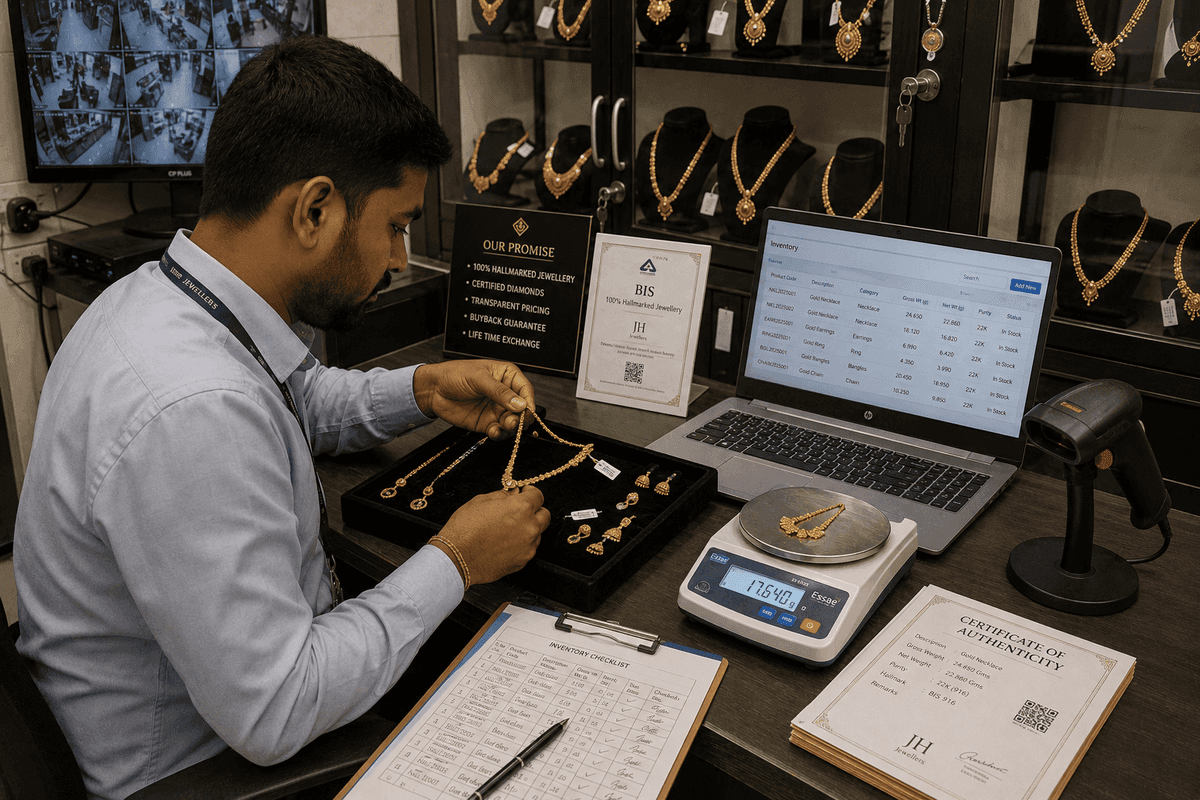
Starting a jewellery business in India is not only about choosing beautiful designs and opening a showroom. It involves selecting the right product category, understanding customer trust, managing high-value inventory, controlling purchases and payments, maintaining product records, and creating a strong experience across sales, customization, delivery, and after-sales service.
The business model also changes depending on whether you sell artificial jewellery, silver jewellery, gold, diamonds, handmade products, lab-grown diamonds, or a combination of categories. Each segment has different investment levels, compliance requirements, margins, sourcing methods, and customer expectations.
This guide explains how to start a jewellery business in India, from choosing the model and product range to registrations, sourcing, inventory, showroom setup, marketing, customer management, and business systems.
Table of Contents
- Choose your jewellery business model
- Define your niche and target customer
- Complete registrations and compliance
- Plan investment, pricing, and working capital
- Source jewellery and build supplier relationships
- Set up inventory, quality control, and security
- Create the showroom and sales experience
- Build online presence and customer relationships
- Use a Jewellery Retail ERP to manage operations
- Prepare for long-term growth
1. Choose Your Jewellery Business Model
The first decision is what kind of jewellery business you want to build.
Possible models include:
- Gold jewellery showroom.
- Silver jewellery store.
- Diamond jewellery brand.
- Artificial or fashion jewellery business.
- Handmade jewellery brand.
- Online-first jewellery store.
- Custom and made-to-order jewellery studio.
- Bridal and occasion-wear jewellery business.
- Lab-grown diamond jewellery brand.
- Wholesale or export jewellery business.
Your model affects:
- Initial investment.
- Product sourcing.
- Security requirements.
- Customer trust.
- Compliance.
- Inventory risk.
- Pricing.
- Sales cycle.
Artificial or fashion jewellery may allow you to start with a leaner inventory and sell online or through pop-ups. Precious jewellery requires stronger controls for purity, hallmarking, security, valuation, insurance, and customer documentation.
You should also decide whether your brand will compete on:
- Affordable everyday jewellery.
- Premium design.
- Customization.
- Heritage craftsmanship.
- Bridal collections.
- Sustainable or ethical sourcing.
- Modern minimalism.
- Regional or handcrafted identity.
Do not try to serve every price segment in the beginning. A focused product and customer segment makes sourcing, branding, and marketing much clearer.
2. Define Your Niche and Target Customer
A jewellery business grows when customers understand what makes it different.
Choose a specific customer direction, such as:
- Everyday office jewellery.
- Affordable gifting.
- Bridal and wedding jewellery.
- Silver jewellery for young buyers.
- Minimal jewellery for urban professionals.
- Traditional regional designs.
- Handmade or artisan products.
- Premium custom jewellery.
- Fashion jewellery for social-commerce customers.
Study your market and competitors:
- What price points are common?
- Which designs sell repeatedly?
- Are customers looking for customization?
- What are the return and exchange expectations?
- Do competitors offer certificates or authenticity details?
- Is the market driven by weddings, festivals, gifting, or daily wear?
- Are customers discovering products online before visiting a store?
Your product range should answer:
- Who is this jewellery for?
- What occasion is it suitable for?
- What price range does it occupy?
- Why should a customer trust this brand?
- What makes the design or material different?
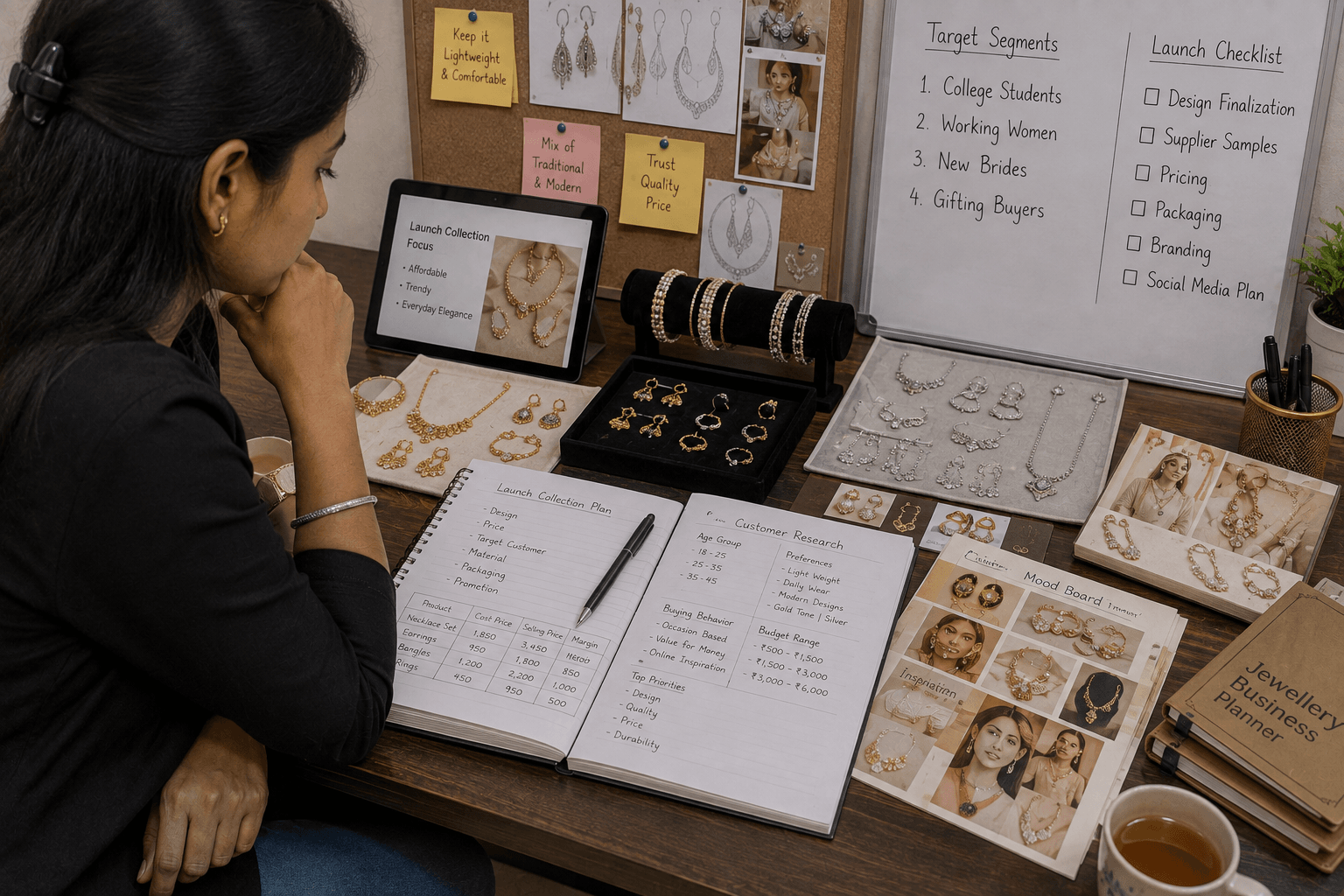
Create a small launch collection instead of buying too many designs. A focused collection makes it easier to understand demand and avoid cash being locked in slow-moving inventory.
3. Complete Registrations and Compliance
Choose an appropriate business structure:
- Sole proprietorship.
- Partnership firm.
- LLP.
- Private limited company.
- One Person Company.
A small handmade or fashion jewellery business may begin as a sole proprietorship, while a larger showroom, partnership, or funded brand may require an LLP or private limited company.
Typical setup requirements may include:
- Business registration.
- PAN and current bank account.
- GST registration, where applicable.
- Shops and Establishments registration.
- Local municipal trade license.
- Udyam registration if eligible.
- Trademark registration for your brand name and logo.
- Import Export Code if you import or export products.
- Insurance and security arrangements for valuable inventory.
If you sell hallmarked gold or silver jewellery, BIS registration and hallmarking requirements become important. BIS provides an official jeweller registration process for businesses selling hallmarked gold and silver jewellery or artefacts.
For precious jewellery, verify:
- Applicable hallmarking requirements.
- Purity declarations.
- HUID or product identification requirements where applicable.
- Certificates for diamonds or gemstones.
- Invoice and product documentation.
- Customer exchange and buyback policies.
- KYC and high-value transaction procedures.
Requirements may vary depending on the jewellery type, material, business model, state, and whether you manufacture, import, export, or only retail. Consult a qualified professional before launching.
4. Plan Investment, Pricing, and Working Capital
Jewellery investment varies significantly by category.
Fashion or artificial jewellery
Main costs may include:
- Initial inventory.
- Packaging.
- Photography.
- Website or marketplace setup.
- Pop-up or showroom costs.
- Marketing.
- Working capital.
Silver jewellery
Costs may include:
- Inventory.
- Product testing and documentation.
- Packaging.
- Security.
- Store or online operations.
- Working capital for restocking.
Gold and diamond jewellery
Costs may include:
- High-value inventory.
- Showroom interiors.
- Vault and security.
- Insurance.
- Hallmarking and certification.
- Staff.
- Working capital.
- Supplier advances.
Build your pricing from the full cost:
- Material cost.
- Making or manufacturing charges.
- Stones and embellishments.
- Packaging.
- Certification.
- Shipping.
- Insurance.
- Retail overhead.
- Payment charges.
- Marketing.
- Expected margin.
For fashion jewellery, price should reflect design, durability, packaging, positioning, and customer willingness to pay—not only the cost of raw materials.
For precious jewellery, maintain clear separation between:
- Metal value.
- Stone value.
- Making charges.
- Taxes.
- Discounts.
- Exchange or buyback terms.
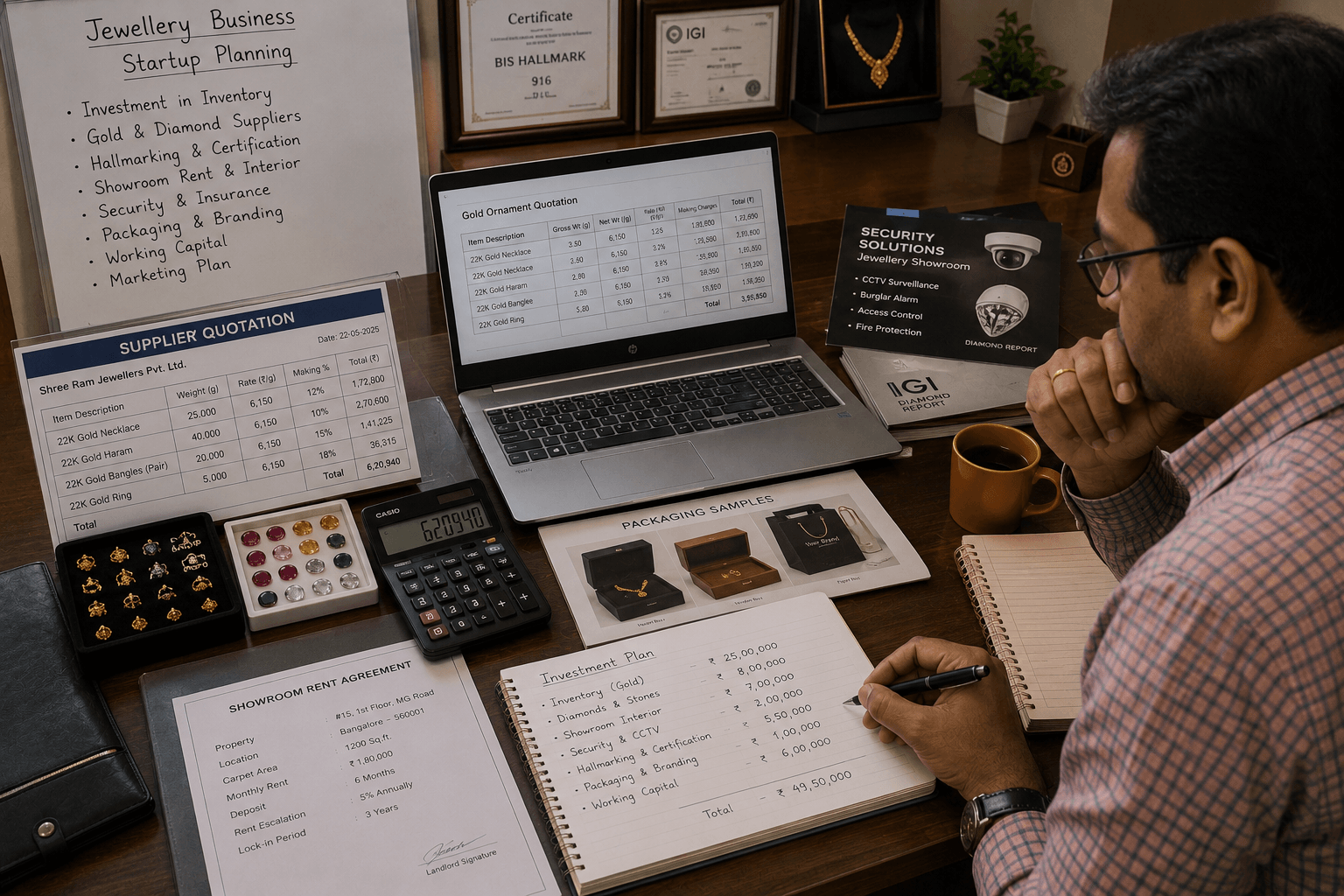
Do not put the entire budget into inventory. Keep working capital for supplier payments, custom orders, marketing, repairs, returns, packaging, and slow-moving stock.
5. Source Jewellery and Build Supplier Relationships
Your suppliers affect product quality, pricing, delivery time, customization, and customer trust.
Possible sources include:
- Jewellery manufacturers.
- Local artisans.
- Gold and silver suppliers.
- Wholesale markets.
- Gemstone suppliers.
- Importers.
- Regional craft clusters.
- Private-label manufacturers.
- Export-oriented manufacturers.
Evaluate suppliers based on:
- Product quality.
- Purity and certification.
- Design consistency.
- Minimum order quantity.
- Customization capability.
- Production time.
- Payment terms.
- Defect and replacement policy.
- Packaging.
- Documentation.
- Ability to meet repeat orders.
Before purchasing large quantities, test:
- Finish quality.
- Stone setting.
- Clasp and fastening.
- Tarnish resistance.
- Weight accuracy.
- Packaging durability.
- Size consistency.
- Customer comfort.
For custom jewellery, create written specifications covering:
- Design.
- Material.
- Purity.
- Weight.
- Stone details.
- Size.
- Finish.
- Delivery date.
- Payment schedule.
- Approval process.
- Changes and cancellation.
Maintain supplier records with purchase rates, payment terms, certificates, delivery history, quality issues, and pending balances.
6. Set Up Inventory, Quality Control, and Security
Jewellery inventory should be tracked at piece level, especially for valuable products.
Record:
- Product code.
- Category.
- Material.
- Purity.
- Weight.
- Size.
- Stone details.
- Design.
- Purchase cost.
- Selling price.
- Supplier.
- Certificate or hallmark details.
- Location.
- Display status.
- Customer order status.
Separate inventory into:
- Display stock.
- Saleable stock.
- Reserved stock.
- Custom-order stock.
- Returned stock.
- Repair stock.
- Damaged stock.
- Consignment stock.
Conduct regular checks:
- Physical stock count.
- Weight verification.
- Certificate matching.
- Display-to-system reconciliation.
- Damage and repair review.
- Slow-moving stock review.
Security should include:
- CCTV.
- Secure display cases.
- Controlled access.
- Alarm systems.
- Insurance.
- Daily opening and closing checks.
- Employee responsibility records.
- Secure stock transfer procedures.
For online jewellery, packaging and shipping controls are equally important. Use tamper-evident packaging, insured shipping where appropriate, delivery confirmation, and clear return policies.
7. Create the Showroom and Sales Experience
Jewellery is an emotional and trust-based purchase. Customers should feel comfortable asking questions and comparing products.
Your showroom should provide:
- Secure display counters.
- Good lighting.
- Mirrors.
- Comfortable seating.
- Product cards.
- Clear pricing or quotation process.
- Private consultation space for high-value purchases.
- Safe storage.
- Professional packaging.
Train sales staff to understand:
- Materials and purity.
- Product weight.
- Gemstone details.
- Care instructions.
- Size and fit.
- Customization options.
- Exchange and buyback policies.
- Delivery timelines.
- Certification and hallmarking.
Ask customers:
- What occasion are they buying for?
- Is the purchase for themselves or a gift?
- What style do they prefer?
- What is their budget?
- Do they need customization?
- Are they looking for everyday, bridal, or occasion jewellery?
Avoid pressuring customers. A helpful consultation builds more trust than aggressive selling.
Create a clear handover process:
- Confirm product details.
- Verify weight and certification.
- Explain price components.
- Generate the invoice.
- Share care and warranty information.
- Package the product securely.
- Record customer details with consent.
- Schedule follow-up where appropriate.
8. Build Online Presence and Customer Relationships
Jewellery customers often discover products online before visiting a store or placing an order.
Use:
- Instagram.
- Pinterest.
- WhatsApp Business.
- Google Business Profile.
- Your own website.
- Marketplaces where suitable.
- Influencer and creator partnerships.
- Pop-ups and exhibitions.
Content should show:
- Product close-ups.
- Scale and dimensions.
- Styling ideas.
- Material and craftsmanship.
- Packaging and unboxing.
- Customer testimonials.
- Customization examples.
- Care instructions.
- Behind-the-scenes production.
Maintain customer records with:
- Contact details.
- Product preferences.
- Occasion.
- Budget range.
- Purchase history.
- Custom requests.
- Follow-up dates.
- Warranty or repair information.
Zopkit CRM can help organize customer profiles, inquiries, follow-ups, purchase history, loyalty segments, and campaigns. Zopkit Project Management can help coordinate collection launches, photoshoots, influencer campaigns, exhibitions, and seasonal promotions.
The aim is to build a long-term relationship rather than treat every jewellery sale as a one-time transaction.
9. Use a Jewellery Retail ERP to Manage Operations
As the business grows, separate systems for inventory, customer records, purchases, billing, supplier payments, repairs, and staff can create gaps.
A Jewellery Retail ERP should help connect:
- Product catalog.
- Piece-level inventory.
- Weight and purity details.
- Certificates and hallmark records.
- Supplier purchases.
- Customer orders.
- Customization.
- Payments.
- Repairs.
- Returns and exchanges.
- Store reporting.
Zopkit can support the wider operating structure through:
- Zopkit CRM: Customers, inquiries, preferences, purchase history, and follow-ups.
- Zopkit Finance: Invoices, supplier bills, payments, expenses, cash flow, budgets, and profitability.
- Zopkit Project Management: Collection launches, custom orders, photoshoots, exhibitions, and store projects.
- Zopkit HRMS: Employees, attendance, payroll, roles, and onboarding.
- Zopkit Academy: Product knowledge, sales training, hallmarking explanations, customer service, and complaint handling.
For high-value products, detailed jewellery-specific inventory and hallmarking software may still be required. Zopkit can provide the wider CRM, finance, people, project, and training backbone around those specialized workflows.
10. Prepare for Long-Term Growth
Once the business has stable demand and reliable operations, possible growth paths include:
- Expanding the collection.
- Opening a showroom.
- Launching a website.
- Adding bridal or premium collections.
- Offering custom jewellery.
- Building corporate gifting.
- Entering marketplaces.
- Partnering with stylists and designers.
- Opening another location.
- Expanding into export or wholesale.
Before expanding, confirm that:
- Product quality is consistent.
- Suppliers can meet repeat demand.
- Inventory records are accurate.
- Margins are understood.
- Customer follow-up is organized.
- Staff can handle sales and documentation.
- Security and insurance are adequate.
- Cash flow can support additional inventory.
Expand one category or channel at a time. A smaller, trusted jewellery brand with strong customer relationships can be more sustainable than a large but poorly controlled inventory business.
Conclusion
Starting a jewellery business in India requires more than attractive designs. It requires a clear customer segment, reliable suppliers, proper product documentation, careful inventory control, secure operations, transparent pricing, and a sales experience that builds confidence.
Whether you sell fashion jewellery, silver, gold, diamonds, handmade pieces, or custom designs, the foundation remains the same: know your customer, protect your inventory, maintain clear records, and deliver consistently.
Zopkit supports the wider business structure through CRM, Finance, Project Management, HRMS, and Academy, helping jewellery businesses manage customers, money, collections, projects, staff, and training as they grow.
Explore how Zopkit can support your jewellery business at zopkit.com.