How to Grow a Jewellery Business in India
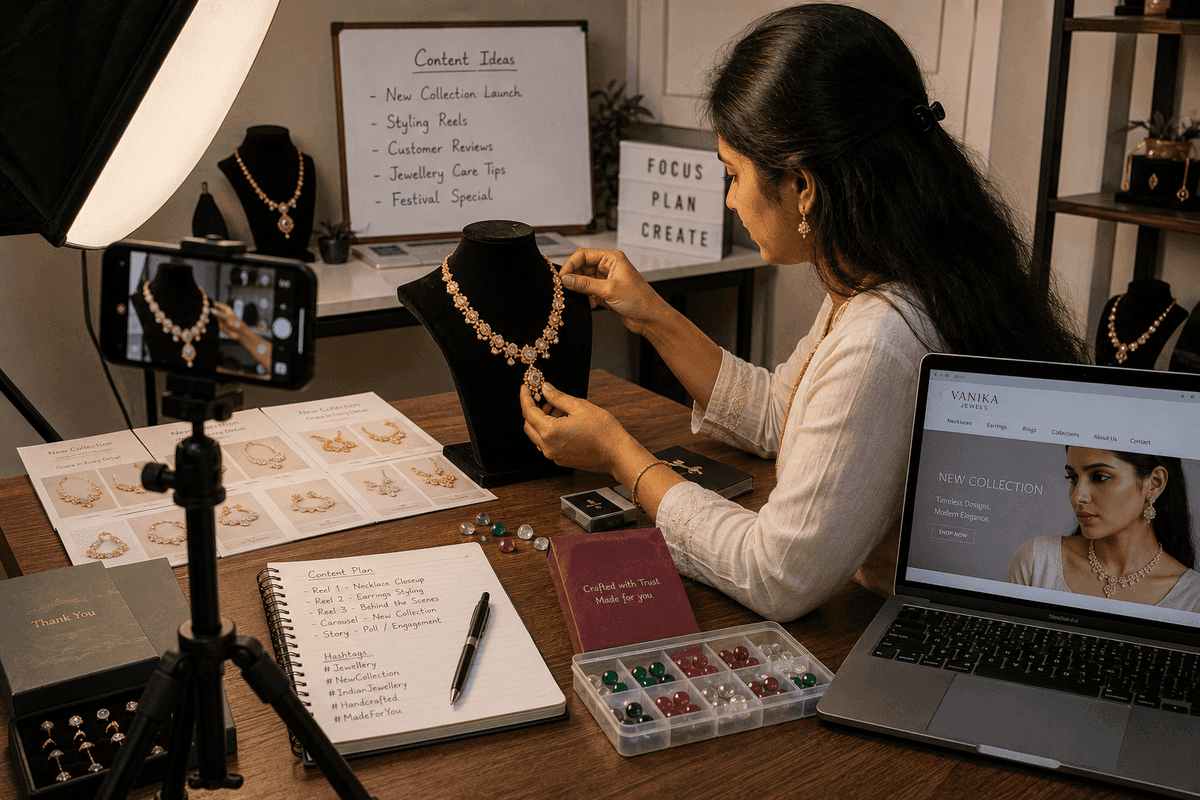
Starting a jewellery business begins with choosing the right category, finding reliable suppliers, understanding product documentation, securing inventory, and building customer trust.
If you are still deciding your jewellery model, sourcing products, planning investment, arranging compliance, or preparing your first collection, begin with the guide below.
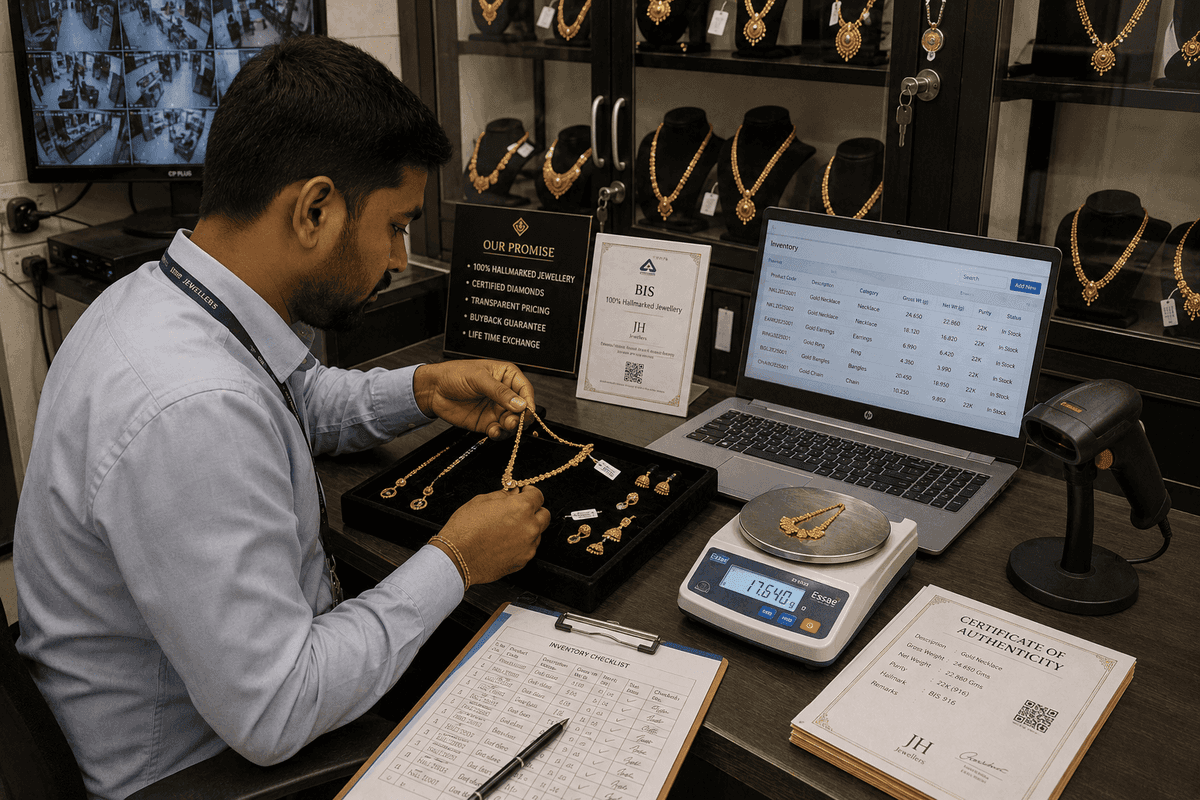
Related Guide:
How to Start a Jewellery Business in India
Use this guide to understand:
- Jewellery business models.
- Niche and customer selection.
- Registrations and hallmarking.
- Investment and working capital.
- Supplier selection.
- Inventory and security.
- Showroom and online setup.
Once the business is running, the next challenge is growth. Growing a jewellery business means improving product turnover, increasing average order value, building repeat customers, creating stronger collections, improving online and offline sales, controlling high-value inventory, and offering a better customer experience.
This guide explains how to move from a functioning jewellery business to a more profitable, trusted, and organized brand.
Table of Contents
- Understand your current business performance
- Strengthen your product and collection strategy
- Increase average order value
- Improve consultations and customer experience
- Build repeat customers and referrals
- Grow online and omnichannel sales
- Improve inventory, sourcing, and quality control
- Protect margins and cash flow
- Use a Jewellery Retail ERP to organize growth
- Prepare for expansion
1. Understand Your Current Business Performance
Before trying to grow, understand which parts of the business are already working.
Review the last six to twelve months and track:
- Sales by category.
- Sales by price range.
- Average order value.
- Best-selling designs.
- Slow-moving inventory.
- Custom-order sales.
- Repeat customers.
- Customer acquisition sources.
- Exchange and repair requests.
- Gross margin by product group.
- Inventory value.
- Cash tied up in stock.
A jewellery business may have strong sales but weak cash flow if too much money is locked in slow-moving designs. It may have good footfall but low conversion if customers are not receiving enough guidance.
Use this performance table:
Metric | What it helps you understand |
|---|---|
Average order value | How much each customer spends |
Conversion rate | How well inquiries become purchases |
Repeat purchase rate | Strength of customer relationships |
Inventory age | Risk of slow-moving stock |
Margin by category | Where profit is generated |
Custom-order value | Demand for personalization |
Repair and exchange rate | Product and service issues |
Campaign revenue | Which marketing activities work |
Review these numbers monthly. Growth should come from improving the right bottleneck instead of applying the same strategy everywhere.
2. Strengthen Your Product and Collection Strategy
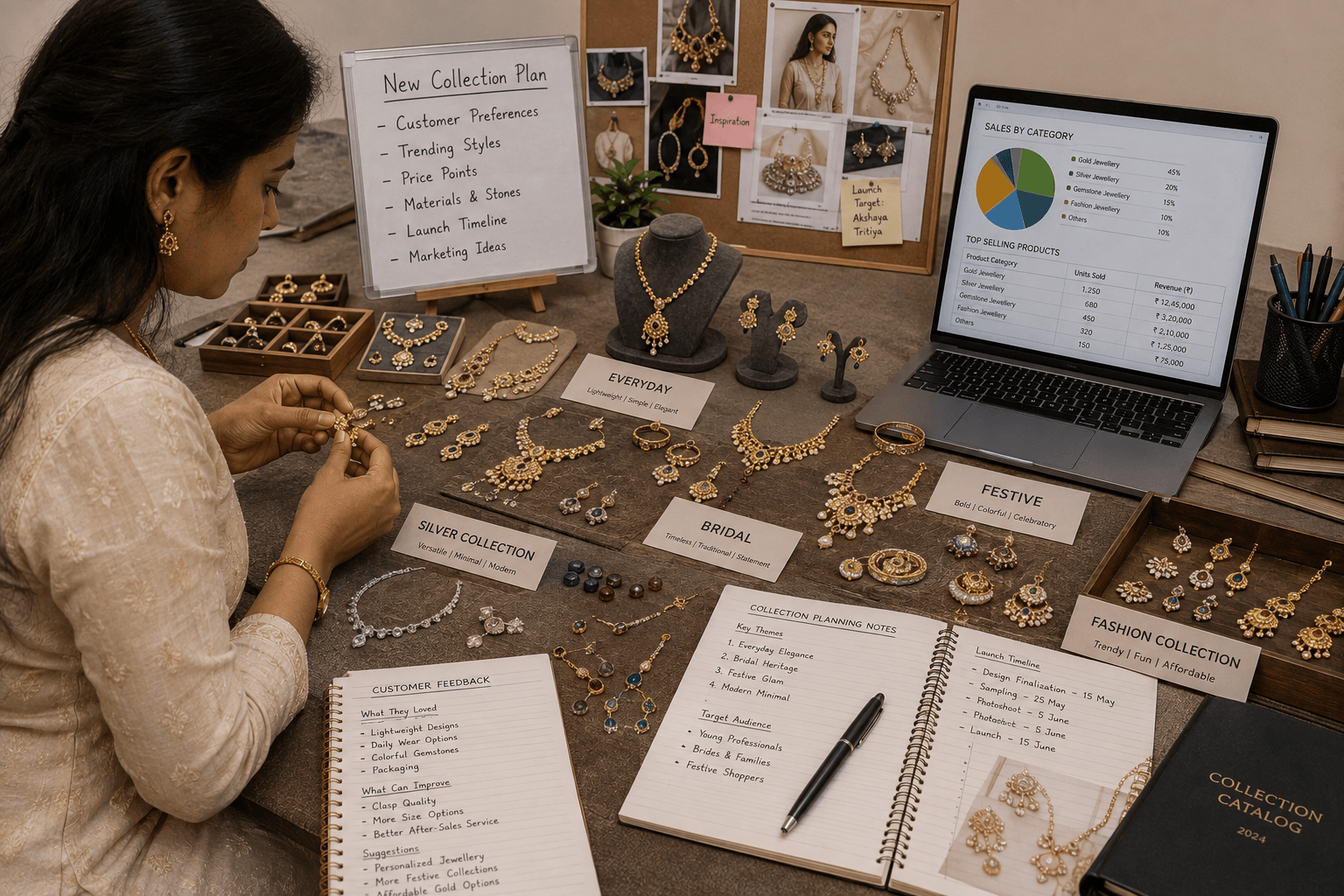
Jewellery customers often buy around occasions, style preferences, and budgets. A strong collection strategy makes it easier for customers to find something relevant.
Organize your products into:
- Everyday jewellery.
- Gifting jewellery.
- Bridal and wedding collections.
- Festival and occasion jewellery.
- Custom jewellery.
- Premium pieces.
- Silver or fashion jewellery.
- Men’s jewellery.
- Children’s or family jewellery.
Build collections instead of displaying unrelated products. For example:
- Office-wear essentials.
- Wedding guest edit.
- Minimal gold collection.
- Festive gifting collection.
- Personalized initials collection.
- Bridal statement pieces.
Review each collection using four questions:
- Does it attract the right customer?
- Does it have enough variety at different price points?
- Does it contribute healthy margin?
- Does it strengthen the brand?
Reduce products that remain unsold for long periods or require excessive discounting. For precious jewellery, review the capital locked in each design. For fashion jewellery, review style relevance, quality, and repeat demand.
Use customer feedback to decide what to launch next. Requests for specific sizes, colors, materials, or occasions can reveal better opportunities than copying competitor collections.
3. Increase Average Order Value
Jewellery growth often comes from helping customers complete a look or purchase for more than one occasion.
Use relevant combinations such as:
- Earrings with necklaces.
- Rings with bracelets.
- Bridal sets with matching accessories.
- Gifting jewellery with premium packaging.
- Everyday pieces with layering options.
- Fashion jewellery with storage or care accessories.
Create clear options:
- Entry-level choice.
- Better-value option.
- Premium choice.
This lets customers compare products without feeling pressured.
You can increase order value through:
- Curated sets.
- Gift packaging.
- Personalization.
- Matching products.
- Occasion-based collections.
- Loyalty benefits.
- Complimentary styling guidance.
- Customization services.
For high-value jewellery, explain price components clearly:
- Metal value.
- Stone value.
- Making charges.
- Certification.
- Taxes.
- Customization charges.
- Delivery or insurance.
Transparency can improve trust and reduce confusion during negotiation.
Do not recommend products that are unrelated to the customer’s needs. The best cross-selling feels like styling or problem-solving, not forced selling.
4. Improve Consultations and Customer Experience
Jewellery is an emotional and trust-based purchase. Customers may need help choosing the right design, material, size, and occasion.
Train staff to ask:
- What occasion are you buying for?
- Is the purchase for yourself or a gift?
- What style do you prefer?
- What is your budget?
- Do you need customization?
- What material or color do you usually wear?
- When do you need the product?
Instead of showing every design, show three or four relevant options and explain:
- Material.
- Weight.
- Size.
- Finish.
- Care requirements.
- Certification.
- Delivery timeline.
- Exchange or return terms.
Create a consistent sales process:
- Understand the requirement.
- Show relevant designs.
- Explain product details.
- Share the price clearly.
- Record the customer’s preferences.
- Confirm the next follow-up.
- Complete the handover professionally.
For high-value products, maintain documentation for purity, hallmarking, certificates, weight, and invoice details. BIS provides a jeweller registration process for businesses selling hallmarked gold and silver jewellery, so relevant requirements should be kept up to date.
5. Build Repeat Customers and Referrals
Jewellery purchase cycles can be long, but customers often return for weddings, festivals, birthdays, anniversaries, gifting, and family occasions.
Maintain customer records with consent:
- Contact details.
- Style preference.
- Budget range.
- Purchase history.
- Important occasions.
- Custom requests.
- Repair and warranty information.
- Follow-up dates.
Create customer groups such as:
- Bridal customers.
- Repeat buyers.
- Premium customers.
- Gifting customers.
- Fashion jewellery buyers.
- Custom jewellery customers.
- Customers who made inquiries but did not purchase.
Useful retention activities include:
- New collection previews.
- Festival reminders.
- Birthday and anniversary messages.
- Early access to limited designs.
- Care and maintenance tips.
- Referral benefits.
- Repair and polishing reminders.
- Personalized recommendations.
Do not send the same promotion to everyone. A customer who bought bridal jewellery should receive different communication from someone who regularly buys affordable fashion jewellery.
Zopkit CRM can help manage customer profiles, purchase history, preferences, follow-ups, and campaigns. This allows the business to build relationships instead of treating every sale as a new transaction.
6. Grow Online and Omnichannel Sales
Jewellery customers often discover products online before visiting a store. Your digital presence should make the customer more confident, not just show attractive images.
Use:
- Instagram.
- Pinterest.
- WhatsApp Business.
- Google Business Profile.
- Your own website.
- Marketplaces where suitable.
- Influencer partnerships.
- Pop-ups and exhibitions.
Content should show:
- Product close-ups.
- Scale and dimensions.
- Styling ideas.
- Material and craftsmanship.
- Packaging.
- Customer testimonials.
- Customization examples.
- Care instructions.
- Behind-the-scenes production.
Connect your channels so customers can:
- Discover online.
- Ask questions on WhatsApp.
- Book a showroom appointment.
- Request a quote.
- Purchase online or offline.
- Receive delivery updates.
- Access the same loyalty benefits.
Omnichannel jewellery selling works best when inventory, customer data, product information, and loyalty are connected across physical and digital touchpoints.
Do not list every product online immediately. Begin with collections that are easy to photograph, explain, price, and ship safely.
7. Improve Inventory, Sourcing, and Quality Control
Jewellery inventory should be tracked at piece level, especially for precious or high-value products.
Record:
- Product code.
- Material.
- Purity.
- Weight.
- Size.
- Stone details.
- Certificate or hallmark information.
- Purchase cost.
- Selling price.
- Supplier.
- Location.
- Display status.
- Customer order status.
Separate inventory into:
- Display stock.
- Saleable stock.
- Reserved stock.
- Custom-order stock.
- Returned stock.
- Repair stock.
- Damaged stock.
- Consignment stock.
Conduct regular checks for:
- Physical stock.
- Weight.
- Certificate matching.
- Hallmark or product details.
- Damage.
- Slow-moving pieces.
- Missing items.
- Stock transfers.
For custom jewellery, use a written specification covering design, material, weight, stones, size, finish, delivery date, payment schedule, and customer approval.
Maintain supplier records with:
- Rates.
- Payment terms.
- Quality history.
- Delivery time.
- Defect and replacement policy.
- Certification documents.
- Pending balances.
A Jewellery Retail ERP can help connect inventory, billing, accounting, hallmark or purity information, suppliers, customer records, repairs, and multi-store operations.
8. Protect Margins and Cash Flow
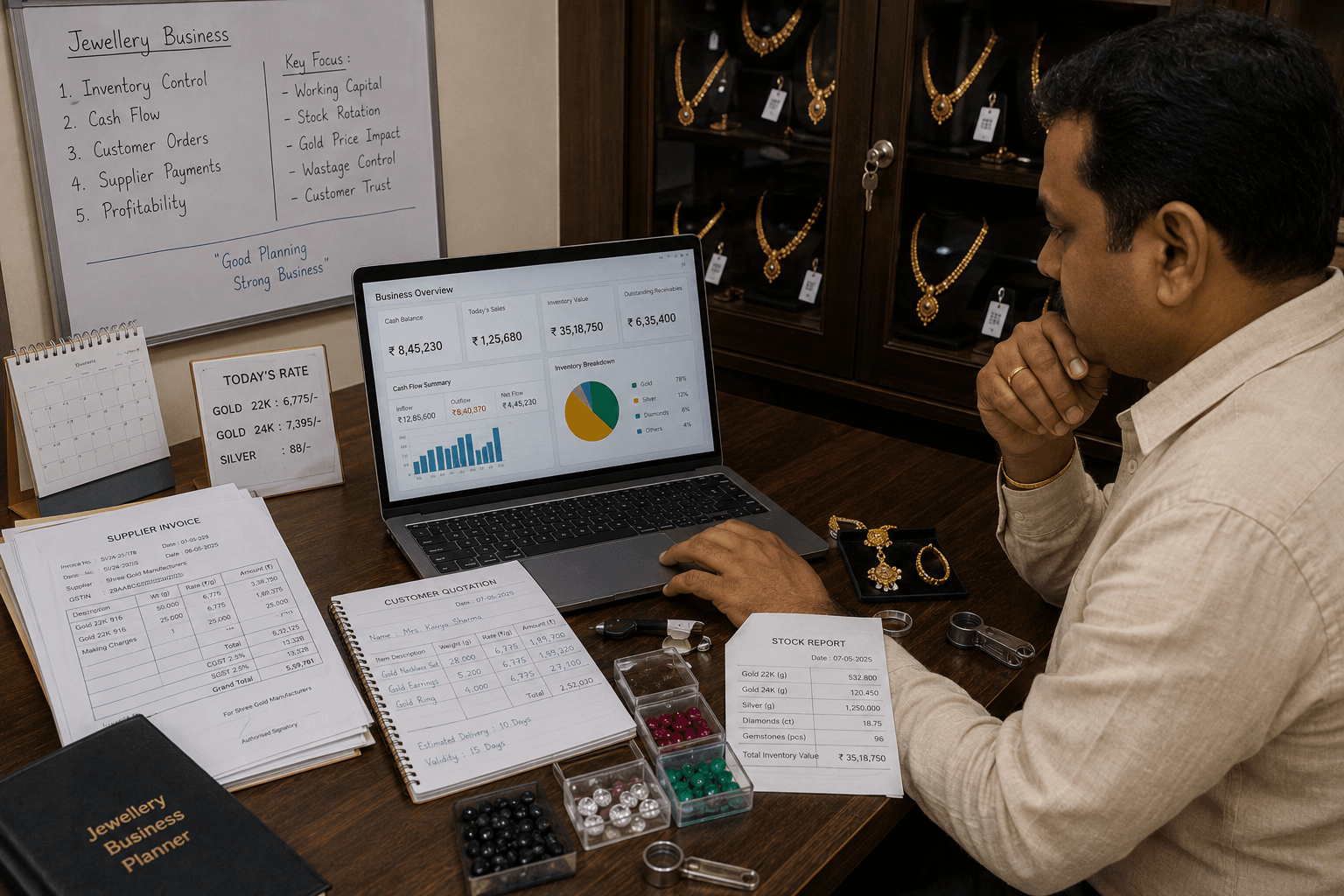
Jewellery businesses can carry significant value in inventory. Growth without financial control can leave cash locked in stock.
Track:
- Material cost.
- Making charges.
- Stone cost.
- Packaging.
- Certification.
- Shipping and insurance.
- Discounts.
- Marketing.
- Repairs.
- Returns and exchanges.
- Staff commissions.
Review profitability by:
- Collection.
- Product category.
- Price range.
- Customer segment.
- Sales channel.
- Custom order.
Create controls for:
- Discounts.
- Customer advances.
- Custom-order payments.
- Supplier payments.
- Buyback and exchange terms.
- Refunds.
- Repair approvals.
- Inventory transfers.
Run a monthly finance review covering:
- Sales.
- Gross margin.
- Inventory value.
- Slow-moving stock.
- Customer payments due.
- Supplier balances.
- Marketing spend.
- Cash available.
Zopkit Finance can help organize customer invoices, supplier bills, payments, expenses, cash flow, budgets, and profitability reporting for a growing jewellery business.
9. Use a Jewellery Retail ERP to Organize Growth
As the business grows, separate tools for inventory, billing, customer records, purchases, repairs, supplier payments, and staff can create gaps.
A Jewellery Retail ERP should help connect:
- Piece-level inventory.
- Weight and purity.
- Hallmark and certificate information.
- Product catalog.
- Supplier purchases.
- Customer orders.
- Customization.
- Payments.
- Repairs.
- Returns and exchanges.
- Store reporting.
Zopkit can support the wider operating structure through:
- Zopkit CRM: Customers, inquiries, preferences, purchase history, and follow-ups.
- Zopkit Finance: Invoices, supplier bills, payments, expenses, cash flow, budgets, and profitability.
- Zopkit Project Management: Collections, custom orders, photoshoots, exhibitions, and store projects.
- Zopkit HRMS: Employees, attendance, payroll, roles, and onboarding.
- Zopkit Academy: Product knowledge, sales training, hallmarking explanations, customer service, and complaint handling.
For detailed gold, weight, and hallmark workflows, a specialized jewellery ERP may still be needed. Zopkit can provide the wider CRM, finance, people, project, and training backbone around those specialized processes.
10. Prepare for Expansion
Once the business has stable demand and reliable operations, consider:
- New collections.
- A larger showroom.
- An online store.
- Bridal and premium collections.
- Custom jewellery services.
- Corporate gifting.
- Designer partnerships.
- Pop-ups and exhibitions.
- A second location.
- Wholesale or export opportunities.
Before expanding, confirm that:
- Product quality is consistent.
- Suppliers can meet repeat demand.
- Inventory records are accurate.
- Margins are understood.
- Customer follow-up is organized.
- Staff can handle sales and documentation.
- Security and insurance are adequate.
- Cash flow can support additional inventory.
Expand one category, channel, or location at a time. A trusted jewellery business with strong customer relationships is often more sustainable than a large business with poor inventory and financial controls.
Conclusion
Growing a jewellery business in India requires more than launching new designs. It requires better collections, stronger consultations, higher order values, consistent customer follow-up, reliable inventory control, transparent pricing, and a digital and showroom experience that customers trust.
The business becomes easier to grow when customer data, product records, supplier information, payments, repairs, projects, staff, and training are connected through clear systems.
Zopkit supports that wider business structure through CRM, Finance, Project Management, HRMS, and Academy, helping jewellery businesses manage customers, money, collections, projects, employees, and training as they expand.
Explore how Zopkit can support your jewellery business at zopkit.com.