How to Start a Furniture & Home Decor Store Business in India
How to Start a Furniture & Home Decor Store Business in India
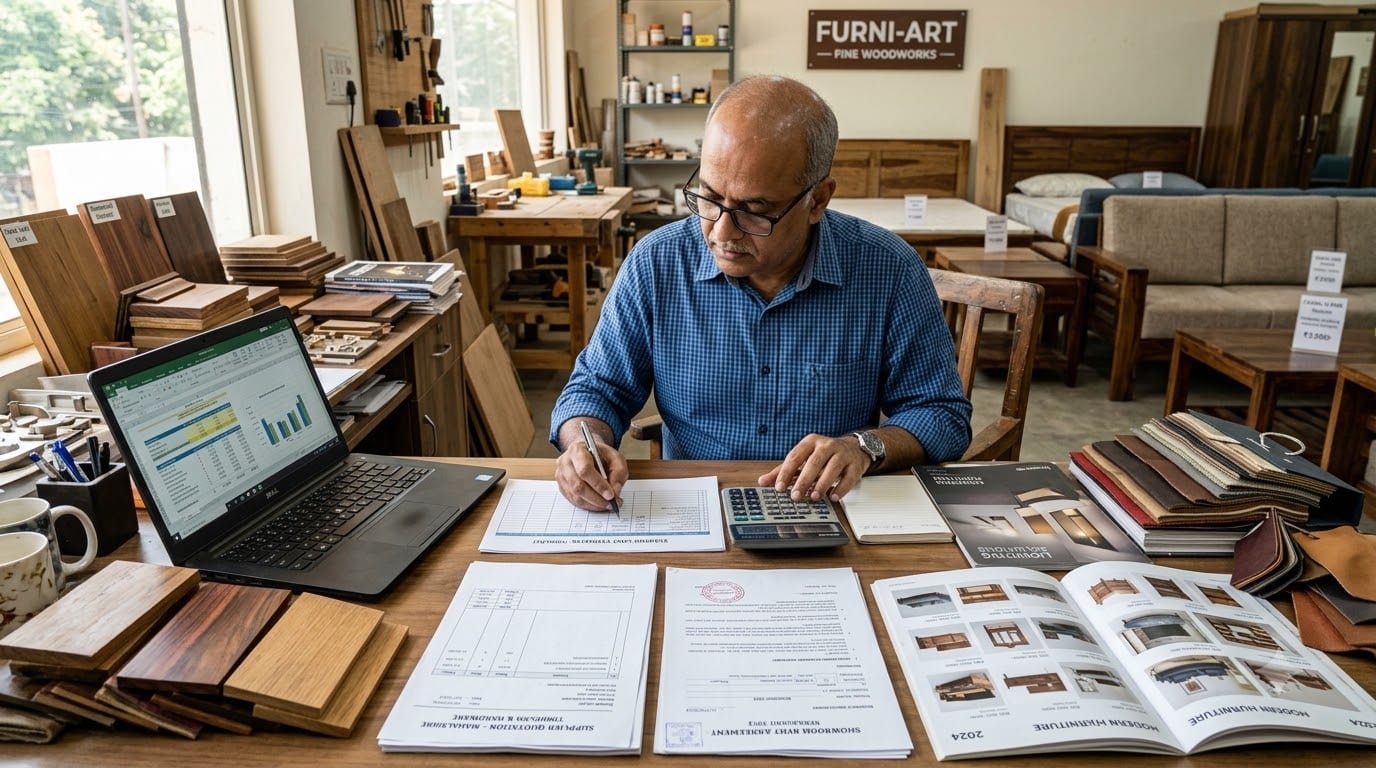
Starting a furniture and home decor store in India is not only about displaying attractive products. It is about choosing the right customer segment, sourcing reliable products, managing high-value inventory, controlling delivery and installation, and creating a showroom experience that helps customers imagine those products in their own homes.
Furniture has a longer buying cycle than everyday retail. Customers may compare prices, materials, sizes, finishes, delivery timelines, and customization options before making a decision. Home decor products may sell faster, but they can also create issues around fragile inventory, seasonal demand, and changing styles.
This guide explains how to start a furniture and home decor store business in India, from choosing your niche and location to sourcing, pricing, operations, marketing, customer management, and business systems.
Table of Contents
- Choose your furniture and decor business model
- Study your market and customer segment
- Select the right location and showroom format
- Complete registrations and licenses
- Plan investment, pricing, and working capital
- Source products and build supplier relationships
- Set up inventory, delivery, and installation
- Build sales, marketing, and customer relationships
- Use a Retail ERP to manage operations
- Build a foundation for long-term growth
1. Choose Your Furniture and Decor Business Model
The first decision is what kind of business you want to build.
Possible models include:
- Furniture showroom.
- Home decor store.
- Custom furniture studio.
- Modular furniture business.
- Online-first furniture store.
- Furniture and interior styling store.
- Specialty store for office, outdoor, children’s, or premium furniture.
- Hybrid store with showroom, website, and catalog-based ordering.
You may also choose a specific design direction:
- Modern minimalist.
- Scandinavian.
- Traditional Indian.
- Rustic and handcrafted.
- Premium luxury.
- Budget-friendly.
- Sustainable or natural-material furniture.
- Small-space and apartment furniture.
Avoid trying to sell furniture for every customer at every price point. A clearer positioning helps you decide what to display, which suppliers to work with, how to design the showroom, and what kind of marketing content to create.
For example, a store focused on compact urban apartments may prioritize:
- Foldable dining tables.
- Storage beds.
- Modular shelves.
- Compact sofas.
- Wall-mounted furniture.
- Space-saving decor.
A premium home styling studio may instead focus on custom finishes, designer lighting, statement furniture, and consultation services.
2. Study Your Market and Customer Segment
Furniture is a high-consideration purchase, so market research must go beyond counting footfall.
Study:
- Local household income.
- New apartment projects.
- Home renovation activity.
- Interior designers in the area.
- Competitor price ranges.
- Popular materials and finishes.
- Delivery expectations.
- Demand for customization.
- Office and commercial projects nearby.
Visit competing stores and note:
- Product categories.
- Display quality.
- Price points.
- Waiting time.
- Customization options.
- Delivery and installation policies.
- Warranty terms.
- Customer service experience.
Speak to potential customers and ask:
- What furniture are they planning to buy?
- What is their approximate budget?
- Do they prefer ready-made or customized products?
- What causes them to delay a purchase?
- Are delivery and installation major concerns?
- Do they want financing or installment options?
- Which styles and materials do they prefer?
Your store should solve a specific buying problem. That might be affordable furniture, quick delivery, custom sizing, curated home decor, or professional guidance for furnishing a new home.
3. Select the Right Location and Showroom Format
A furniture store does not always need the highest-footfall retail location. It needs enough space, accessibility, visibility, and customer convenience.
Look for:
- Good road access.
- Parking for customers.
- Space for loading and unloading.
- Easy access for delivery vehicles.
- Nearby residential development.
- Proximity to interior designers or construction projects.
- Adequate showroom depth.
- Storage or warehouse availability.
Before signing a lease, confirm:
- Commercial-use permission.
- Rent, deposit, lock-in, and escalation clauses.
- Signboard permissions.
- Loading and unloading rights.
- Electricity capacity.
- Fire and safety requirements.
- Responsibility for repairs and maintenance.
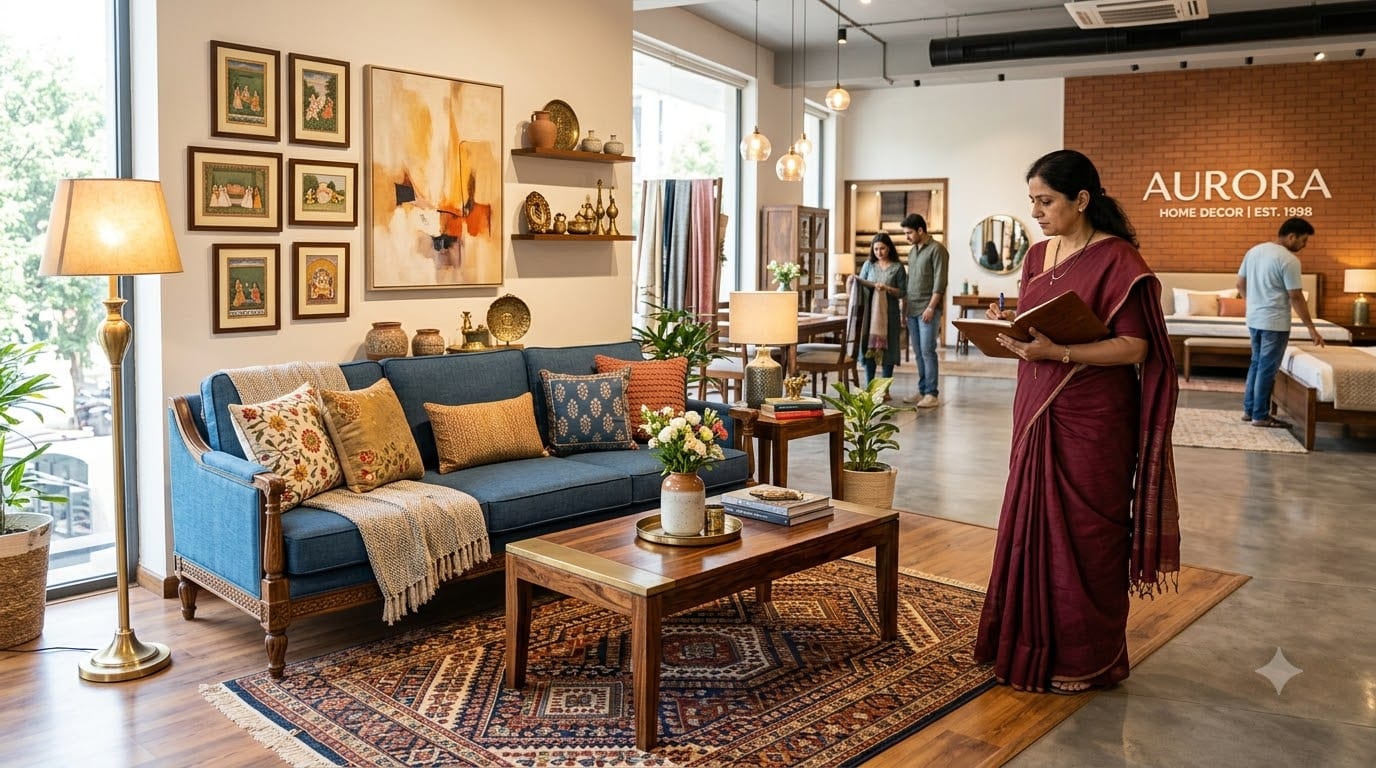
The showroom should not be treated as a storage room. Display products in complete room settings so customers can visualize how pieces work together.
For example, instead of displaying one sofa alone, show:
- Sofa.
- Coffee table.
- Rug.
- Side table.
- Lighting.
- Cushions.
- Wall decor.
This increases the chance of cross-selling and gives customers a more complete buying experience.
4. Complete Registrations and Licenses
Choose a suitable legal structure:
- Sole proprietorship.
- Partnership firm.
- LLP.
- Private limited company.
- One Person Company.
For a small owner-operated store, a sole proprietorship may be a practical starting point. If multiple people are investing or you plan to build a larger brand, an LLP or private limited company may be more appropriate.
Typical setup requirements may include:
- Business name and entity registration.
- PAN and current bank account.
- GST registration, where applicable.
- Shops and Establishments registration.
- Local municipal trade license.
- Udyam registration if eligible.
- Trademark registration for your brand name and logo.
- Fire and safety clearances where applicable.
- Additional permissions for workshops, manufacturing, storage, or finishing operations.
Furniture businesses may have different requirements depending on whether they only sell products or also manufacture, polish, upholster, paint, or operate machinery. Verify requirements with a qualified local professional.
GST and business registration requirements depend on turnover, business structure, state, product category, and selling model. Shops and Establishments registration is generally handled under the relevant state process, with requirements varying by state.
Maintain a compliance calendar for:
- GST returns if registered.
- Tax filings.
- License renewals.
- Employee obligations.
- Fire and safety checks.
- Vendor documentation.
- Warranty and product records.
5. Plan Investment, Pricing, and Working Capital
Furniture businesses require careful cash planning because products are expensive, large, and slower-moving than everyday retail products.
Typical startup expenses include:
- Security deposit and rent.
- Showroom interiors.
- Display furniture.
- Lighting and signage.
- Warehouse or storage.
- Delivery vehicle or logistics arrangement.
- Initial inventory.
- Packaging materials.
- Billing and business software.
- Marketing and photography.
- Professional fees.
- Working capital.
Published estimates for starting a furniture business in India vary widely by store size, city, inventory model, and showroom format. Some estimates place initial investment in the range of ₹5 lakh to ₹20 lakh or more.
Do not invest the entire budget in display stock. Keep funds for:
- Supplier payments.
- Custom orders.
- Delivery and installation.
- Repairs and replacements.
- Marketing.
- Salaries.
- Rent and utilities.
- Slow-moving inventory.
Pricing should include:
- Product or manufacturing cost.
- Packaging.
- Transportation.
- Installation.
- Customization.
- Sales commission.
- Rent and showroom overhead.
- Marketing cost.
- Warranty or replacement risk.
- Desired margin.
A product that appears profitable before delivery and installation costs may become much less profitable after the sale is completed.
6. Source Products and Build Supplier Relationships
Your supplier network determines product quality, pricing, customization, and delivery reliability.
Possible sourcing options include:
- Local furniture manufacturers.
- Regional wholesalers.
- Artisan workshops.
- Direct manufacturers.
- Importers.
- Handicraft clusters.
- Modular furniture suppliers.
- Lighting and decor distributors.
Evaluate suppliers based on:
- Material quality.
- Finishing.
- Product consistency.
- Customization capability.
- Minimum order quantity.
- Production timeline.
- Packaging quality.
- Damage and replacement policy.
- Payment terms.
- Ability to provide samples.
Before committing to large quantities, test:
- Product durability.
- Dimensions.
- Finish quality.
- Hardware.
- Upholstery.
- Packaging.
- Delivery handling.
- Assembly and installation.
Maintain a supplier file containing:
- Product catalog.
- Purchase rates.
- Lead times.
- Payment terms.
- Warranty terms.
- Defect history.
- Replacement process.
- Contact information.
For custom furniture, create written specifications covering:
- Measurements.
- Materials.
- Color or finish.
- Hardware.
- Delivery date.
- Installation responsibility.
- Payment schedule.
- Change and cancellation terms.
This reduces confusion between the showroom, supplier, customer, and installation team.
7. Set Up Inventory, Delivery, and Installation
Furniture inventory needs more than a simple quantity count.
Track:
- Product code.
- Dimensions.
- Material.
- Finish.
- Color.
- Supplier.
- Cost.
- Selling price.
- Location.
- Display or sale status.
- Customization status.
- Delivery status.
- Warranty information.
For decor products, also track fragile items, seasonal items, and slow-moving designs.
Create a delivery process:
- Confirm the customer order.
- Verify product specifications.
- Check payment status.
- Confirm stock or production completion.
- Schedule delivery.
- Prepare packaging.
- Assign the delivery team.
- Complete installation.
- Capture customer sign-off.
- Record any damage or pending work.
Furniture delivery is part of the customer experience. A good showroom sale can still become a poor review if the product arrives late, damaged, incomplete, or without proper installation.
Use an order checklist for every custom or high-value sale. This should include product specifications, delivery address, access restrictions, payment status, installation requirements, and customer contact details.

8. Build Sales, Marketing, and Customer Relationships
Furniture customers often need more guidance than customers buying ordinary retail products. Your sales team should understand:
- Product dimensions.
- Material and finish.
- Maintenance.
- Delivery timelines.
- Customization options.
- Warranty.
- Suitable room sizes.
- Matching products.
- Payment terms.
Use consultation-based selling instead of only displaying prices. Ask:
- What room is the product for?
- What is the available space?
- What style does the customer prefer?
- What is the expected use?
- Is the customer moving into a new home?
- Are they furnishing or renovating?
- What is the expected delivery date?
Marketing channels may include:
- Instagram and Pinterest.
- Google Business Profile.
- Website catalog.
- Interior designer partnerships.
- Builder and architect relationships.
- Home exhibitions.
- Apartment-community events.
- Referral programs.
- Before-and-after room content.
Strong content should show:
- Complete room setups.
- Product dimensions.
- Material close-ups.
- Customization examples.
- Customer homes, with permission.
- Delivery and installation.
- Care and maintenance.
- Comparisons between materials or styles.
Maintain customer records with:
- Contact details.
- Room requirements.
- Budget range.
- Products viewed.
- Quotations shared.
- Follow-up date.
- Purchase history.
- Delivery and warranty details.
Zopkit CRM can help organize customer profiles, follow-ups, quotations, purchase history, and project-related communication, helping the store stay connected with customers throughout a longer buying cycle.
9. Use a Retail ERP to Manage Operations
A furniture and home decor business needs visibility across products, suppliers, quotations, orders, customers, payments, delivery, installation, and staff.
A Retail ERP or connected business system can help manage:
- Product catalog.
- Inventory.
- Purchase orders.
- Supplier records.
- Customer quotations.
- Sales orders.
- Payments.
- Delivery schedules.
- Installation tasks.
- Warranty information.
- Store performance.
Zopkit can support the wider business structure through:
- Zopkit CRM: Customer profiles, inquiries, quotations, follow-ups, and purchase history.
- Zopkit Finance: Customer billing, supplier payments, expenses, cash flow, budgets, and profitability.
- Zopkit Project Management: Showroom setup, custom furniture orders, delivery projects, interior collaborations, and store expansion.
- Zopkit HRMS: Employee records, attendance, payroll, roles, and onboarding.
- Zopkit Academy: Training for product knowledge, customer consultation, sales processes, installation, and complaint handling.
For custom or project-based furniture orders, Project Management is particularly useful because each sale may involve several steps, suppliers, deadlines, and customer approvals.
10. Build a Foundation for Long-Term Growth
Once your store has consistent sales and reliable operations, you can consider:
- A larger showroom.
- A second location.
- An online catalog.
- Custom furniture services.
- Interior design partnerships.
- Corporate and hospitality projects.
- A private-label furniture range.
- A warehouse or centralized distribution setup.
Before expanding, confirm that:
- Orders and payments are properly recorded.
- Suppliers deliver consistently.
- Delivery and installation are reliable.
- Staff can handle customer inquiries without constant owner involvement.
- Slow-moving inventory is under control.
- Product margins are understood.
- Customer follow-ups are organized.
- Cash flow can support the next investment.
A furniture business grows more safely when it expands through a repeatable process rather than simply adding more products or renting a larger showroom.
Conclusion
Starting a furniture and home decor store business in India requires a combination of product curation, customer understanding, supplier control, showroom planning, delivery discipline, and financial management.
The store should not only look attractive. It should also help customers make decisions, deliver products reliably, manage custom orders properly, and maintain clear records across sales, suppliers, payments, and installation.
Zopkit provides a connected business backbone across CRM, Finance, Project Management, HRMS, and Academy, helping furniture and home decor businesses manage customers, money, projects, people, and training in one organized system.
Explore how Zopkit can support your furniture and home decor business at zopkit.com.