How to Grow a Furniture & Home Decor Store Business in India
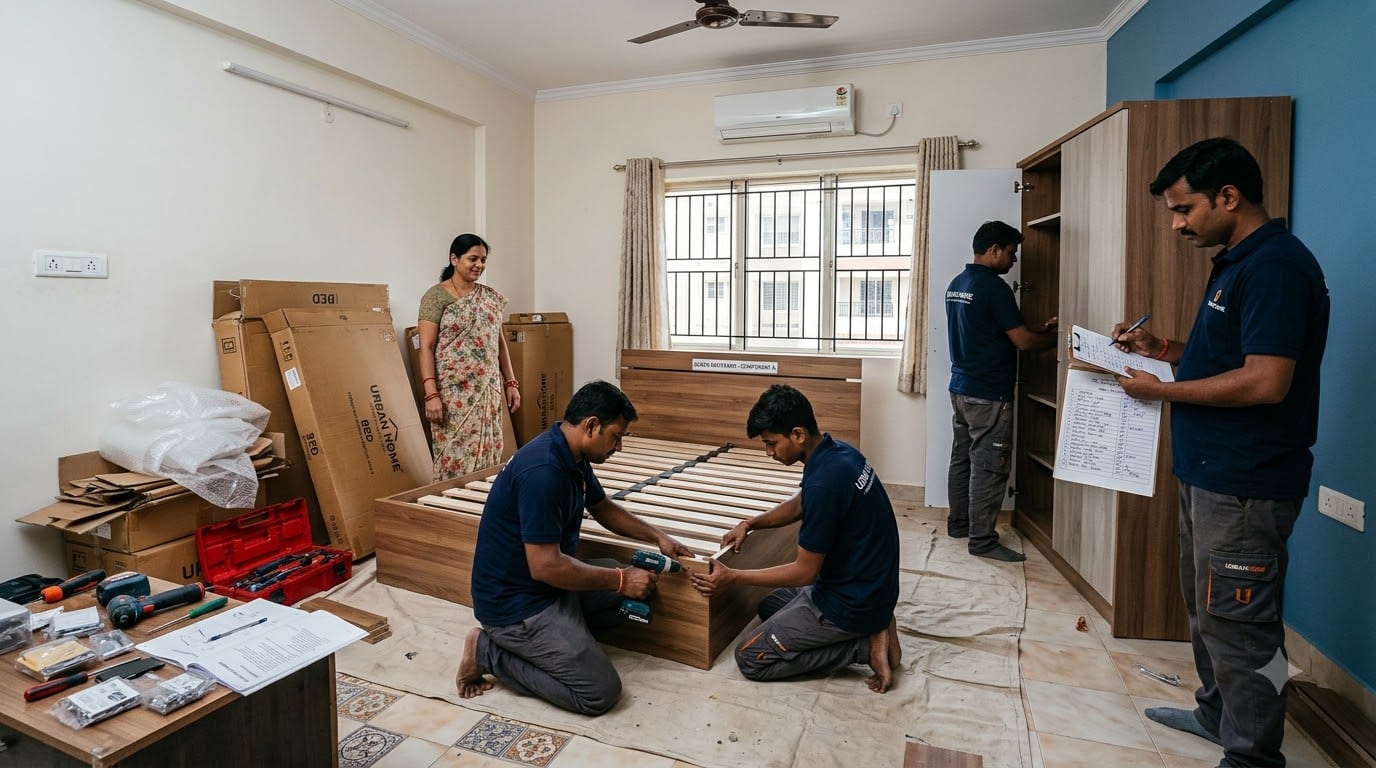
Starting a furniture and home decor store is about choosing your niche, setting up a showroom, finding suppliers, and building the basics of delivery and installation.
If you are still in that stage deciding your positioning, arranging registrations, setting up the showroom, and sourcing initial inventory use the starting guide first.
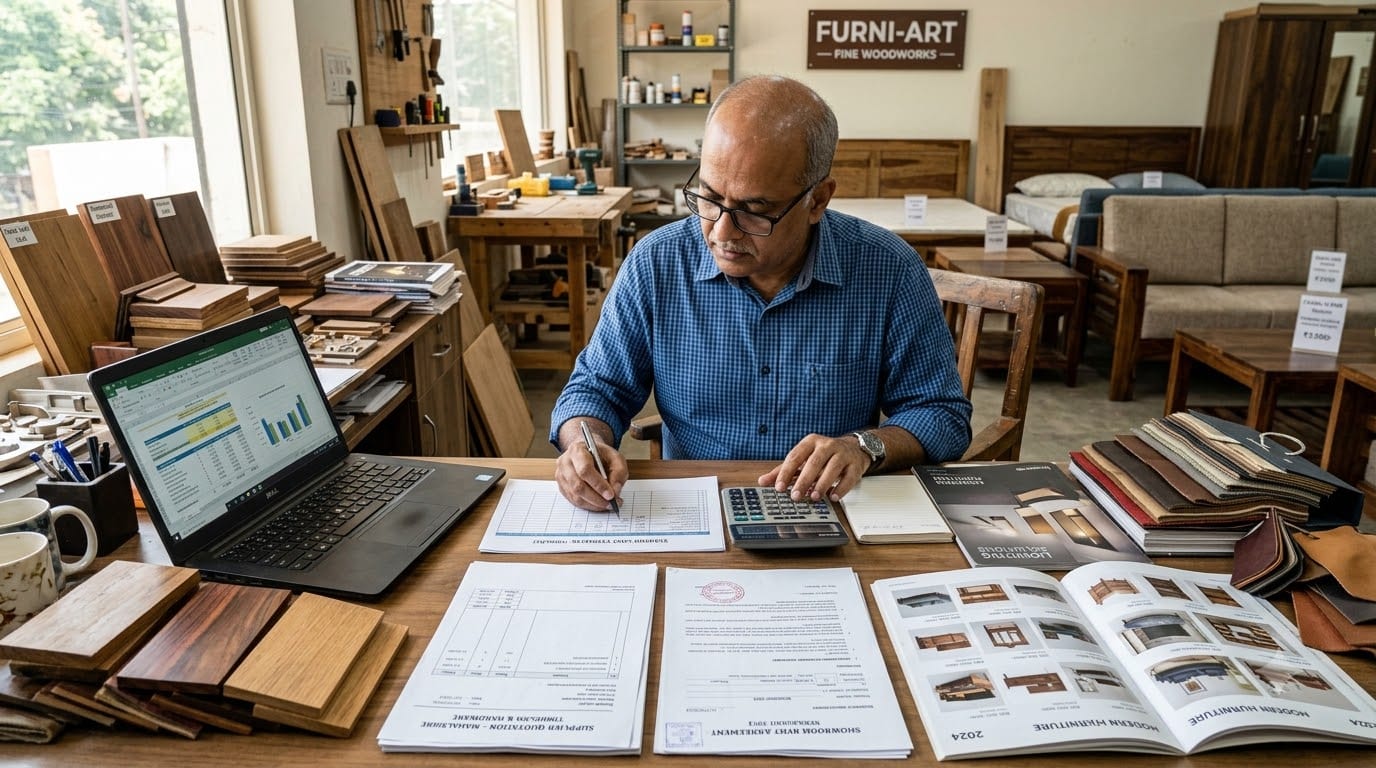
Related Guide:
How to Start a Furniture & Home Decor Store Business in India
Use this guide to understand:
- Business model and positioning
- Market research
- Location and showroom setup
- Registrations and licenses
- Investment planning
- Supplier selection
- Inventory, delivery, and installation basics
- Sales and customer consultation
Once the store is running, the next question is: How do we grow this business?
Growing a furniture and home decor store in India is not just about adding more products or posting more photos. It is about improving showroom performance, increasing average bill value, building repeat customers, combining offline and online journeys, reducing delivery and installation problems, and using better systems to manage longer sales cycles and high-value orders.
This guide focuses on how to grow a furniture and home decor business from a functioning showroom into a more profitable, customer-focused, and system-driven operation.
Table of Contents
- Understand your current performance
- Strengthen product mix and merchandising
- Increase average order value and cross-sell
- Build a better consultation and sales process
- Develop an omni-channel experience
- Improve delivery, installation, and after-sales
- Use customer data and loyalty
- Control margins, cash flow, and inventory risk
- Use a Retail ERP to connect front and back end
- Create a roadmap for larger projects and expansion
1. Understand Your Current Performance
Before trying to grow, understand how the store performs today.
Review the last six to twelve months and identify:
- Total sales.
- Sales by category (living, bedroom, dining, office, decor).
- Average order value.
- Number of orders.
- Lead-to-sale conversion rate.
- Custom order vs ready-stock ratio.
- Delivery timelines.
- Installation issues.
- Returns, repairs, or complaints.
- Gross margin by product and category.
- Marketing spend and source of leads.
- Top reasons for lost sales (e.g., price, size, material, timeline).
Many furniture stores see good footfall but poor conversion. Others may sell well but lose margin in delivery, installation, and complaints. Growth strategies differ depending on where the bottleneck is.
For example:
- If many customers visit but do not buy, you may need better consultation and product relevance.
- If sales are good but margins are weak, pricing and cost control need improvement.
- If delivery and installation cause repeated complaints, operational improvements become more important than new marketing.
A simple performance table can help:
Metric | Insight |
|---|---|
Leads and walk-ins | Whether marketing is working |
Conversion rate | How well the showroom and sales process perform |
Average order value | How much each customer spends |
Category mix | Which categories drive revenue |
Delivery and installation issues | Operational reliability |
Margin by category | Where profit actually comes from |
Use this review to set specific growth goals, not just “sell more.”
2. Strengthen Product Mix and Merchandising
Growing a furniture and decor store often comes from better product curation rather than simply adding more items.
Separate your range into:
- Anchor pieces: Sofas, beds, dining tables, wardrobes.
- Supporting pieces: Side tables, storage units, chairs, benches.
- Accent pieces: Decor, lighting, cushions, rugs, art.
- Custom offerings: Built-to-measure items.
- Premium lines: High-margin designer or unique products.
Ask:
- Which products draw customers into the store?
- Which products frequently feature in final orders?
- Which items customers repeatedly ask for but you do not stock?
- Which designs rarely sell and occupy display space?
- Which categories offer better margins without hurting perceived value?
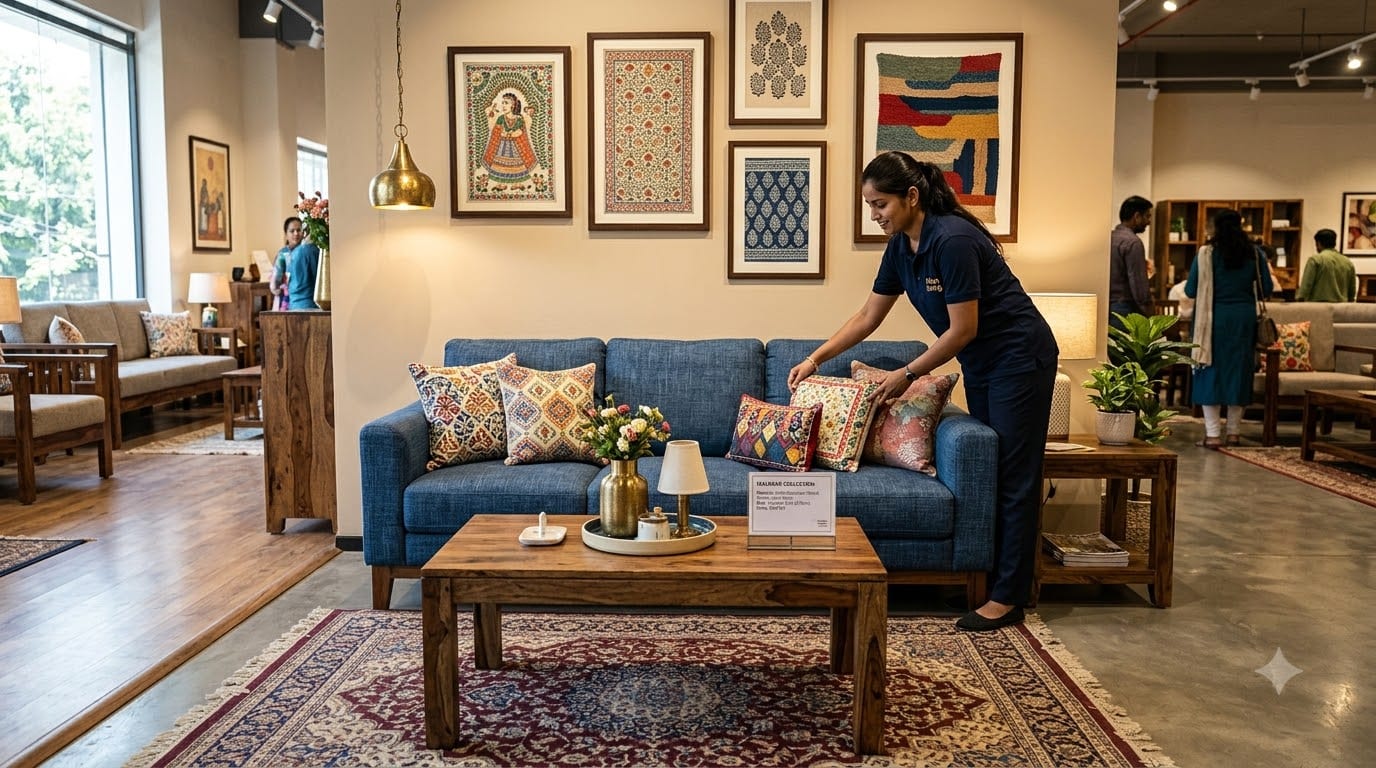
Use merchandising to tell stories:
- Create room setups that reflect how your target customers actually live.
- Show multiple combinations: budget, mid-range, premium options.
- Place supporting decor to make each setup feel complete.
- Use signage to highlight dimensions, materials, usage, and key selling points.
Make the showroom feel like a set of solutions, not a warehouse of disconnected items. This helps customers imagine multiple purchases in one visit.
3. Increase Average Order Value and Cross-Sell
Furniture growth often comes from selling “rooms” instead of single pieces.
Use every lead and visit to explore:
- What other rooms the customer is planning to furnish.
- Whether they need complementary products (tables, storage, art, lighting).
- Which decor and accessories would complete the selected furniture.
Practical ways to increase average order value:
- Offer curated room packages (e.g., “2BHK living + dining starter set”).
- Suggest matching products during consultation.
- Show setups where customers can choose “everything you see in this corner.”
- Create “good, better, best” options for each requirement.
- Use small discounts on bundles instead of heavy discounts on single items.
- Offer simple EMI or financing options where relevant.
Do not push irrelevant products. When recommendations make the room more functional and attractive, customers are likelier to accept them.
4. Build a Better Consultation and Sales Process
Furniture and decor sales are often lost because customers do not get enough help making decisions.
Improve your sales process by:
- Asking about space dimensions and layout.
- Asking about usage (daily, occasional, extended family, pets, children).
- Clarifying style preferences and common colors.
- Discussing budget range and timeline.
- Showing 2–3 options that fit the customer’s reality instead of overwhelming them with all designs.
- Keeping a simple measurement and configuration toolkit (e.g., predefined combinations for typical Indian apartment sizes).
Train your sales team to:
- Explain materials and finishes clearly.
- Be honest about pros and cons (e.g., maintenance, weight, durability).
- Present delivery and installation timelines clearly.
- Guide customers into creating a sequence (buying room by room over time) rather than trying to sell everything at once.
Use Zopkit CRM to record:
- Customer details and contact information.
- Rooms they are planning to furnish.
- Design preferences.
- Quotations shared.
- Follow-up dates.
- Decisions made (bought, postponed, rejected).
This allows you to follow up intelligently instead of sending generic messages.
5. Develop an Omni-Channel Experience
Indian furniture brands increasingly use omnichannel strategies where customers:
- See products in the showroom.
- Browse information online.
- Chat on WhatsApp.
- Receive proposals by email.
- Place an order through the website or at the store.
- Track delivery and installation updates digitally.
As you grow, aim for:
- A simple, clear online catalog—even if you cannot list every product.
- Updated availability for key designs.
- A way for customers to request quotes or consultation online.
- Consistent pricing across channels.
- Easy appointment booking for store visits.
- Online tracking for custom orders.
Customers should not get confused when moving between:
- Showroom.
- Website.
- WhatsApp.
- Instagram.
- Phone calls.
If the price, promises, and visuals change too much across channels, trust is weakened.
6. Improve Delivery, Installation, and After-Sales
For furniture and decor, growth can be undone by poor delivery and installation.
Identify common issues:
- Late deliveries.
- Damaged products.
- Incomplete installation.
- Missing hardware.
- Miscommunication about access (stairs vs lift).
- Poor coordination between sales and installation teams.
Improve operations by:
- Using checklists for each order (product, dimensions, finish, access, payment, scheduled date).
- Confirming customer availability before dispatch.
- Training delivery teams on handling and basic customer interaction.
- Documenting any damage or issues immediately.
- Establishing clear repair, replacement, and warranty workflows.
- Keeping spare parts and hardware for quick fixes.
Use Zopkit Project Management to treat each custom or high-value order as a project, with tasks such as “manufacture,” “quality check,” “dispatch,” “install,” and “post-install follow-up.”
Customers will remember how the order ended, not just how the showroom looked.
7. Use Customer Data and Loyalty
Furniture buying cycles are long. A customer who buys a sofa today might come back months later for a dining table or decor, or refer friends and relatives.
Record and use customer data to:
- Identify customers who only completed part of their planned furnishing.
- Offer targeted suggestions for the next room.
- Share new designs that match the customer’s style and budget.
- Introduce loyalty benefits for repeat purchases (e.g., small discounts or complementary decor items).
- Invite happy customers to give reviews or allow content from their homes, with consent.
Avoid spamming customers with generic promotions. Use segments:
- New home owners.
- Repeat buyers.
- Premium buyers.
- Decor-focused buyers.
- Office or commercial customers.
Zopkit CRM allows you to store customer profiles, preferences, quotations, purchase history, and follow-ups in one place, making loyalty work more systematic.
8. Control Margins, Cash Flow, and Inventory Risk
Furniture margins can be attractive, but high-value inventory and long sales cycles also create risk. Retail margins in furniture can range widely depending on product type and positioning.
Watch for:
- Too much money locked in slow-moving designs.
- Overstock in one category and understock in others.
- High-cost custom orders with delayed payments.
- Regular discounting eroding margins.
- Return, repair, and warranty costs.
- Delivery and installation expenses.
Use a regular financial review to understand:
- Sales by category.
- Gross margin and net contribution.
- Inventory value.
- Outstanding customer payments.
- Supplier dues.
- Operational expenses.
- Cash position.
- Marketing ROI.
Zopkit Finance helps organize invoices, supplier bills, purchase orders, payments, banking, cash flow, budgets, and profitability. This is crucial for furniture businesses where a few large orders can affect cash flow significantly.
9. Use a Retail ERP to Connect Front and Back End
As a furniture and home decor business grows, it needs visibility across:
- Product catalog and stock.
- Custom orders and specifications.
- Supplier plans and deliveries.
- Customer quotations and confirmations.
- Payments and outstanding balances.
- Delivery and installation schedules.
- Warranty and service records.
- Store or multi-store performance.
Retail ERP systems for furniture retail often emphasize order tracking, inventory, delivery, assembly, and multi-location management.
Zopkit can support parts of that operating backbone through:
- Zopkit CRM: Customers, inquiries, quotes, purchase history, and follow-ups.
- Zopkit Finance: Orders, invoices, supplier bills, cash flow, budgets, and profitability.
- Zopkit Project Management: Custom orders, deliveries, installations, store changes, and expansion projects.
- Zopkit HRMS: Employees, attendance, payroll, and roles.
- Zopkit Academy: Training for sales, operations, installation, and customer handling.
The goal is to reduce reliance on separate notebooks, emails, and ad-hoc coordination, and move toward a system that tracks the journey from showroom visit to final installation.
10. Create a Roadmap for Larger Projects and Expansion
Once your current store has:
- Stable sales.
- Reliable systems.
- Trained staff.
- Satisfied customers.
- Clean financial visibility.
you can consider:
- Serving interior designers and builders more formally.
- Taking on corporate or hospitality projects.
- Building an online sales channel.
- Opening a second showroom.
- Creating a centralized warehouse.
- Launching a private-label furniture line.
Define a phased roadmap:
- Strengthen existing store operations and order workflows.
- Build a structured consultation model and customer database.
- Add a basic online presence for catalog and lead capture.
- Create partnerships with interior designers and builders.
- Test small project-based work with clear contracts.
- Introduce centralized inventory and multi-store thinking.
- Expand into new locations or formats when the system and cash flow support it.
Expansion should be driven by data and process readiness, not only by ambition.
Conclusion
Growing a furniture and home decor store in India is not simply about adding more products or spending more on advertising. It is about improving product curation, showroom storytelling, consultation, average order value, omni-channel journeys, delivery and installation, customer loyalty, margin control, and operational discipline.
As sales volume, custom orders, and delivery commitments increase, the business needs a stronger backbone connecting customers, inventory, orders, suppliers, staff, and cash flow.
Zopkit provides that structure across CRM, Finance, Project Management, HRMS, and Academy, helping furniture and home decor businesses move from “good showroom” to “well-run retail and project operation.”
Learn more at zopkit.com.