How to scale an online marketplace seller
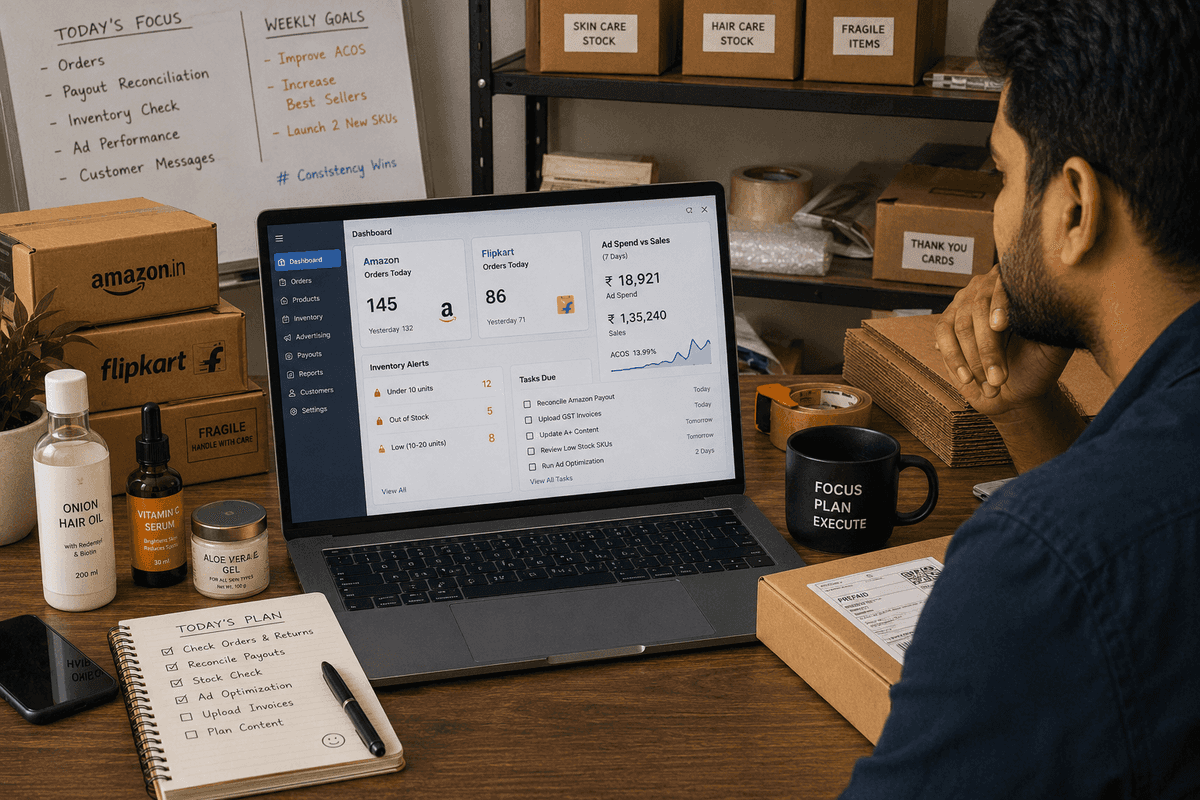
Scaling an online marketplace seller business on Amazon and Flipkart in India is not only about increasing orders. It means turning a working seller account into a repeatable, multi‑platform, brand‑led operation with disciplined catalog, ads, fulfilment, margins, and systems.
If you are still setting up your accounts, listings, and basic operations, start with the How to Start guide first. If you are still fixing listings, margins, returns, and basic growth levers, use the How to Grow guide before thinking about scale.
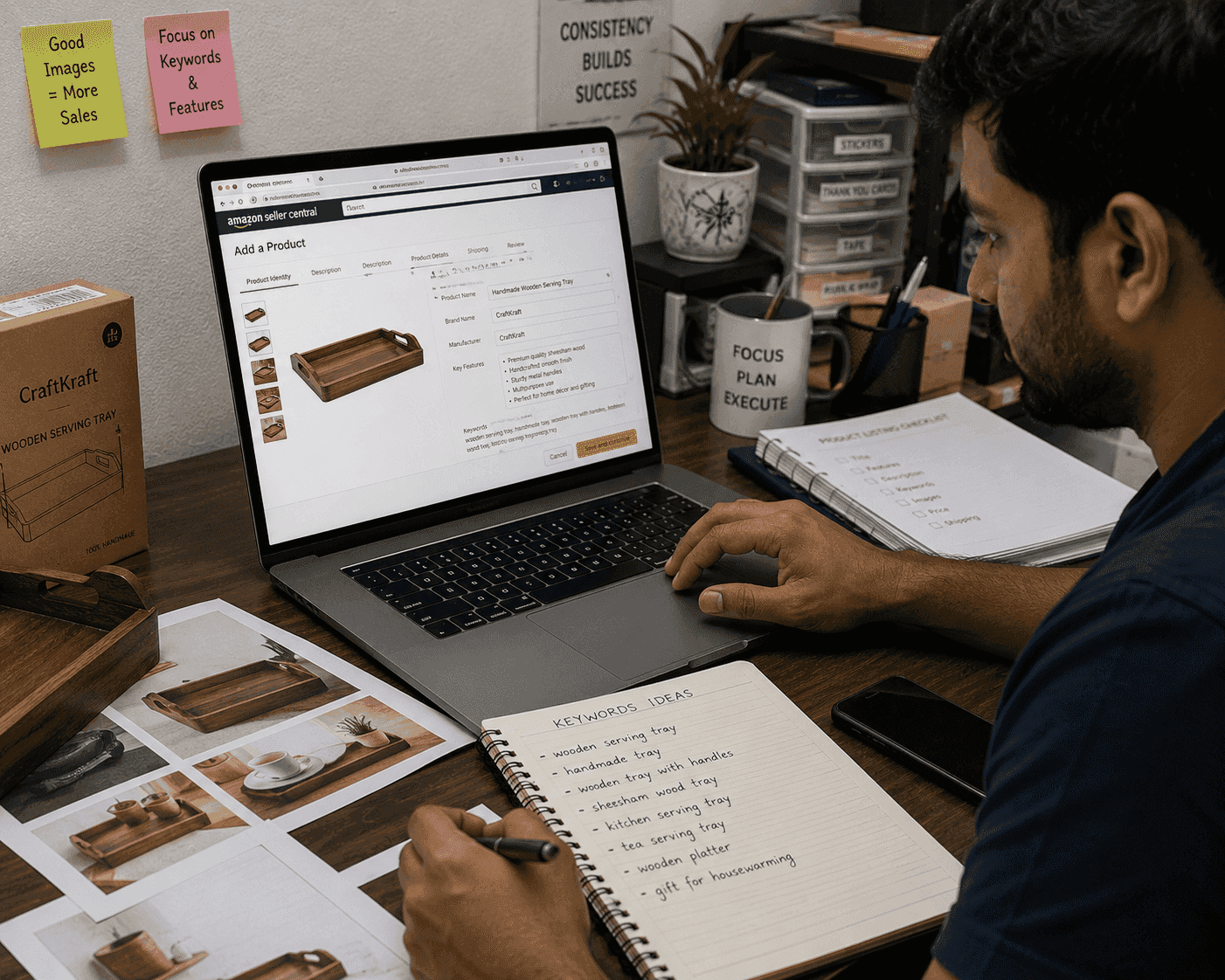
Related Guide:
How to Start an Online Marketplace Seller (Amazon/Flipkart) Business in India
Use that guide to understand:
- Business and entity model
- GST registration and marketplace onboarding
- Initial product selection and sourcing
- Listing creation and fulfilment setup
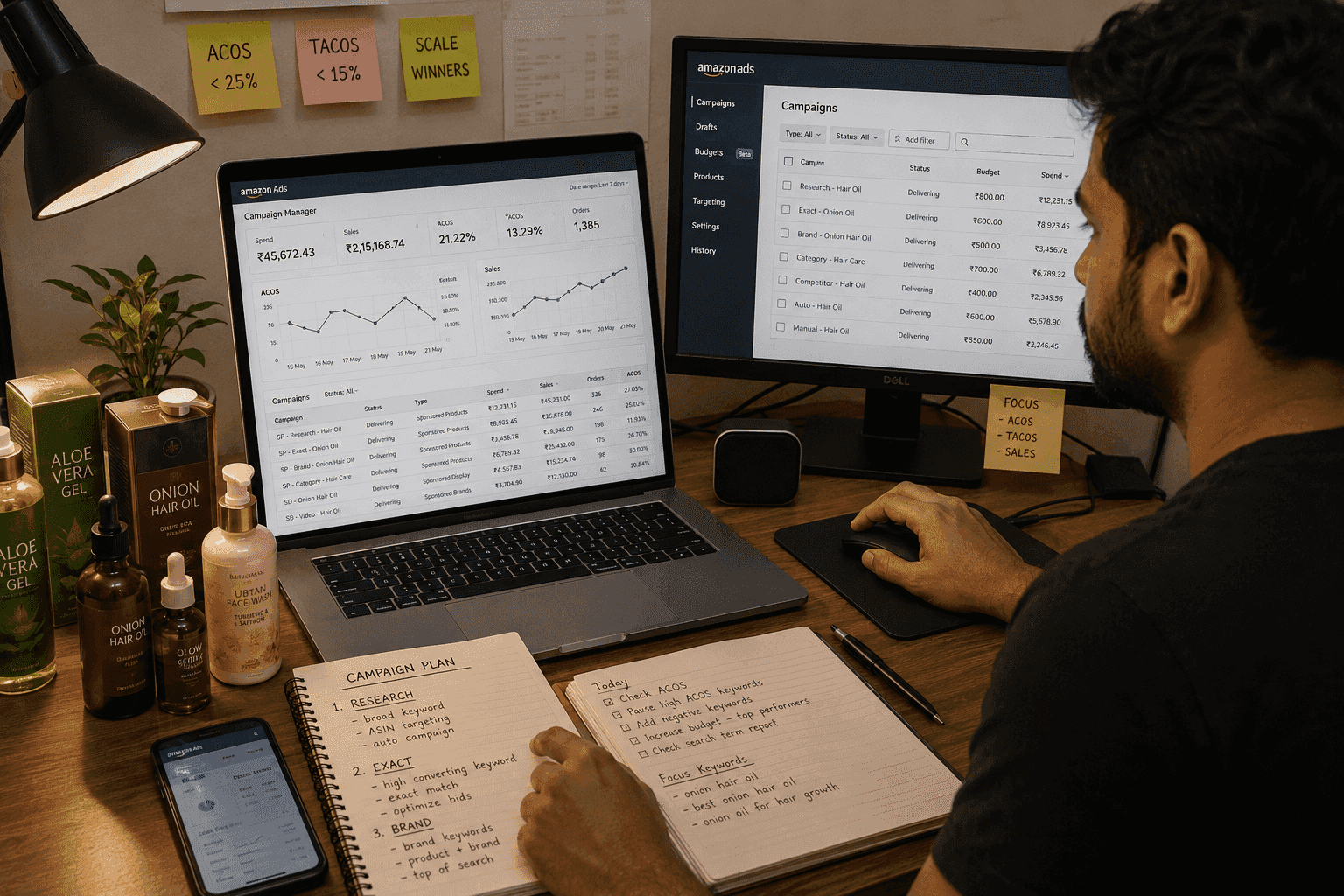
Related Guide:
How to Grow an Online Marketplace Seller (Amazon/Flipkart) Business in India
Use that guide to understand:
- Performance metrics and catalog planning
- Average order value and listing optimization
- Reviews, ads, and external traffic
- Inventory, fulfilment, and GST control
Once the business is started and growing, the next question is how to scale without losing control.
Scaling a marketplace seller business is not simply listing more SKUs or joining more platforms. It means building a repeatable system that can manage multiple marketplaces, thousands of listings, frequent campaigns, stock across locations, returns, customer service, and cash flow, while still protecting margins and reputation.
This guide explains how to move from a successful Amazon/Flipkart seller account to a more structured, multi‑platform, and scalable marketplace business.
Table of Contents
- Confirm that the core business is ready
- Standardize the customer and operations experience
- Build a scalable catalog strategy
- Centralize inventory and platform data
- Create a repeatable campaign and launch process
- Build online and omnichannel sales beyond individual marketplaces
- Strengthen customer retention and brand trust
- Protect margins, cash flow, and compliance
- Use marketplace tools and Zopkit to manage scale
- Plan a phased expansion roadmap
1. Confirm That the Core Business Is Ready
Before scaling, confirm that the existing marketplace business is stable and predictable.
Check whether you have:
- Consistent monthly orders and revenue
- Healthy account health scores on Amazon and Flipkart
- Reliable suppliers and replenishment routines
- Accurate stock and dispatch records
- Controlled return and cancellation rates
- Ads and promotions that produce predictable outcomes
- Basic GST and payout reconciliation under control
Track:
- Orders and revenue per platform
- Average order value and units per order
- Conversion rate on top products
- Return rate, cancellation rate, and reasons
- ACOS and TACOS for ads
- Margin per SKU and per category
If listings are inconsistent, returns are high, and operations depend heavily on the founder checking everything personally, the business is not ready for scale. Scaling should extend a working model, not multiply operational weaknesses.
2. Standardize the Customer and Operations Experience
A scalable marketplace business needs a consistent way of working, regardless of the platform or campaign.
Standardize key workflows:
- Listing creation: titles, images, bullets, specs, and compliance checks
- Catalog updates: when and how you update prices, photos, and details
- Order handling: daily routines for packing, dispatching, and updating status
- Customer service: tone, response SLAs, and resolution rules within platform policies
- Return handling: inspection, restocking or write‑off, and root cause analysis
Create simple SOPs for:
- New product introduction
- Stock checks on fast movers
- Ad campaign launch and pause rules
- Festival or event preparation
- Customer issue escalation and review monitoring
Your goal is that the same quality of listing, fulfilment, and customer handling happens even when you add more SKUs, more staff, or more platforms.
Zopkit Project Management can help turn these workflows into projects and recurring tasks, so catalog work, campaign setups, and operational improvements are documented and repeatable.
3. Build a Scalable Catalog Strategy
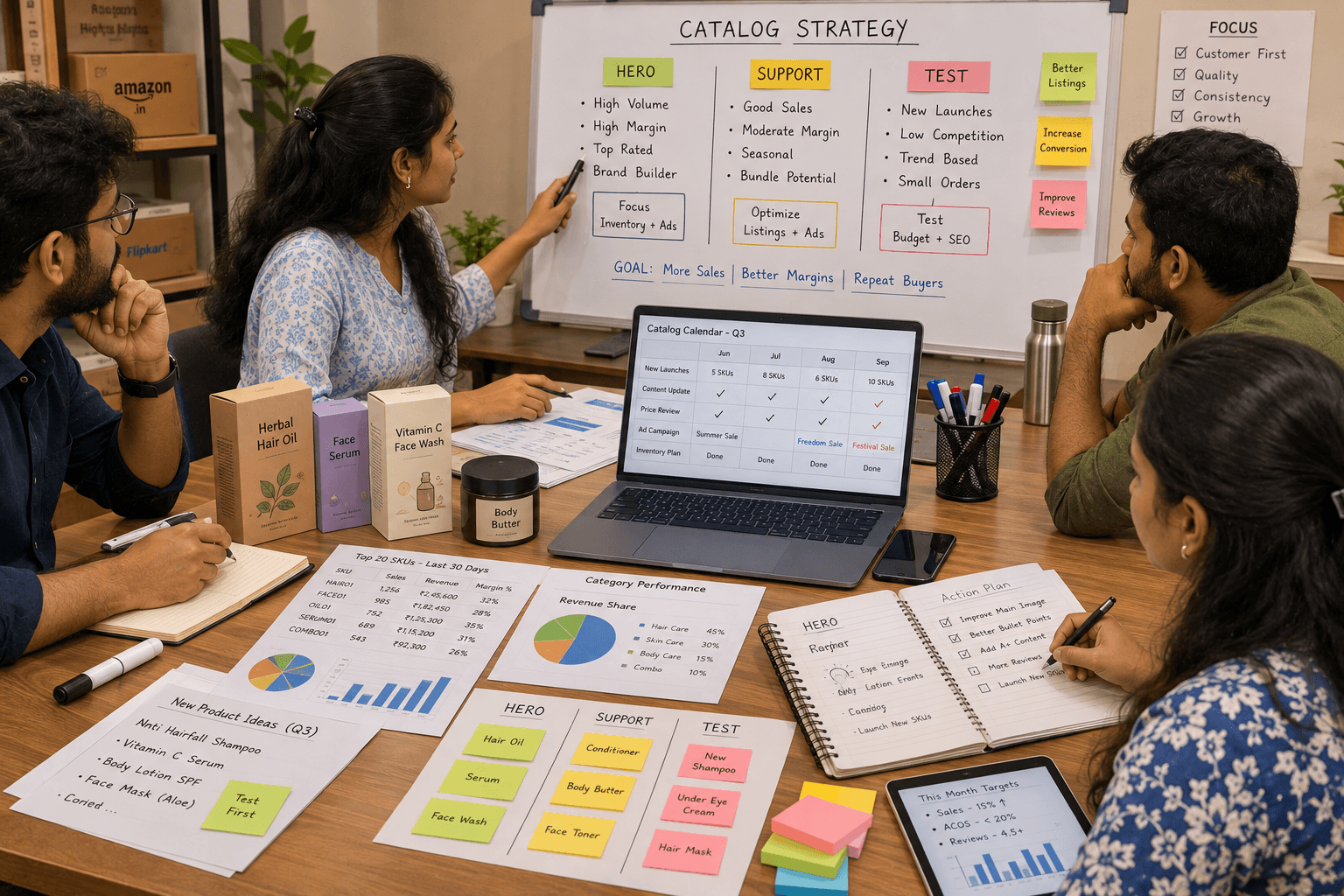
Scaling catalog is not about listing everything you can source. It is about building a structured, defensible catalog.
Organize products into:
- Core SKUs that drive steady revenue
- High‑margin complementary products for bundles and upsells
- Seasonal or event‑specific products
- Test SKUs for experimentation
Use a catalog framework:
- Hero products: strong demand, clear differentiation, and solid margins
- Supporting products: bundles, accessories, and variations that increase AOV
- Experimental products: small‑batch tests to learn new categories or trends
Build a catalog calendar:
- Launch windows for new SKUs and bundles
- Photography and content creation schedule
- Pricing and promotion plans around events
- Review and optimization checkpoints
As you expand, keep a central view of which SKUs belong to which category, campaign, and platform. Avoid the trap of selling a long tail of weak products that consume listing and support effort but never build the business.
4. Centralize Inventory and Platform Data
Scaling across Amazon, Flipkart, and other channels requires centralized inventory and data control.
Create a central view of:
- SKUs, product codes, and master data
- Stock per location (warehouse, FBA, Flipkart fulfilment, own store)
- Listings per platform (ASINs, Flipkart listings, other IDs)
- Price per platform and channel
- Orders per platform and major campaign
Practices:
- Map each physical SKU to all its marketplace listing IDs
- Keep a master spreadsheet or system for price, stock, and listing status
- Track transfers between warehouse and fulfilment centers
- Periodically reconcile platform stock with actual stock
Without central control, you risk:
- Overselling and stockouts
- Duplicate listings with inconsistent information
- Lost inventory between platforms and fulfilment centers
Centralization makes it easier to add new platforms or regions because the underlying data and stock logic are already organized.
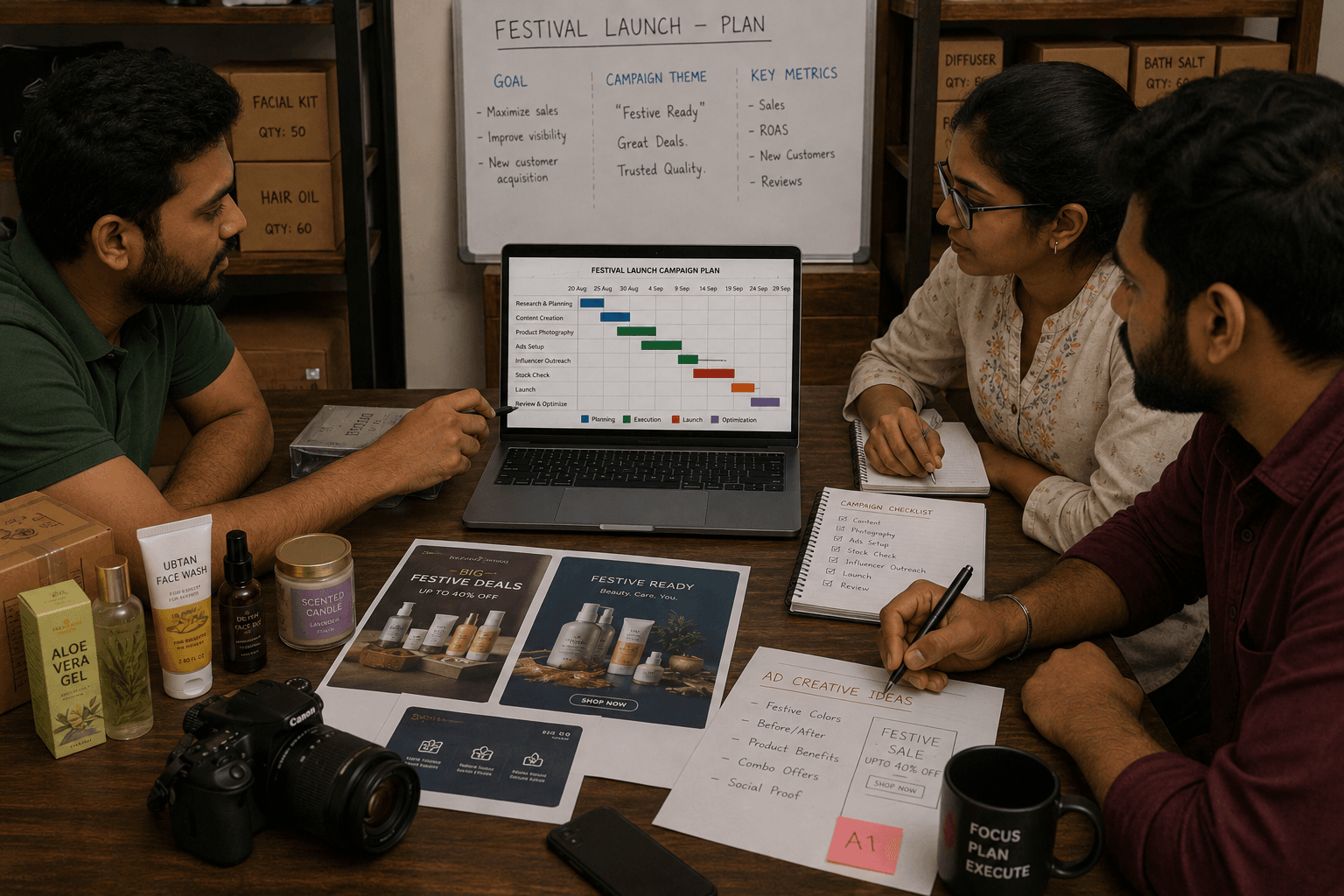
5. Create a Repeatable Campaign and Launch Process
As you scale, you will run more launches and campaigns: new SKUs, bundles, seasonal offers, and festival events.
Turn launches into repeatable processes:
- Pre‑launch: finalize product, content, pricing, and stock; set expectations for margins and targets
- Setup: build or update listings, images, enhanced content, and keywords
- Ads: plan initial ads and budgets, including test campaigns and scaling rules
- Monitoring: track performance for the first few weeks, adjusting bids and content based on results
- Retrospective: document what worked, what did not, and what to reuse next time
Campaigns:
- Event campaigns (festival, sale days, seasonal themes)
- Evergreen campaigns for specific hero products
- Cross‑platform campaigns that coordinate Amazon and Flipkart together
Use Zopkit Project Management to define launch templates, assign responsibilities, set deadlines, and keep notes. This way, scaling campaigns does not depend on memory but on a shared playbook.
6. Build Online and Omnichannel Sales Beyond Individual Marketplaces
Scaling often means expanding beyond a single marketplace into multi‑platform and, eventually, omnichannel.
Layers:
- Multi‑platform: selling on Amazon, Flipkart, and possibly other marketplaces that fit your category
- Brand presence: building your brand store pages within marketplaces and consistent branding across them
- Own channels: simple website, social commerce, and WhatsApp flows where it makes sense
- Offline touchpoints: small experience zones, pop‑ups, or partner counters for certain categories
Principles:
- Keep product information consistent across platforms
- Maintain unified policies on pricing, returns, and quality expectations
- Connect inventory and orders across channels to avoid mismatches
- Treat marketplaces and own channels as parts of one business, not separate silos
You do not need full offline expansion to be “omnichannel”, but scaling will be smoother if you plan how marketplaces, website, and other channels fit into one operating model.
7. Strengthen Customer Retention and Brand Trust
Marketplace scaling depends on brand and trust, not just visibility.
Retention and brand levers:
- Consistent quality and accurate product information
- Thoughtful packaging and reliable fulfilment
- Systematic review generation within platform rules
- Responsive and helpful customer service
- A recognizable brand identity across listings and platforms
Even though marketplaces limit direct CRM, customers still make mental connections:
- They recognize your brand name and style in search results
- They notice consistent product experience across different SKUs
- They are more willing to purchase multiple products from you over time
Use any allowed tools (brand storefronts, followed brand features, or off‑platform communities where rules permit) to build ongoing familiarity. Long‑term trust makes scaling safer because you rely less on discounts and more on reputation.
8. Protect Margins, Cash Flow, and Compliance
As volumes grow, margin and compliance discipline become make‑or‑break.
Margins:
- Track true margin by SKU and category after all platform fees, shipping, returns, ads, packaging, and overhead
- Focus scaling on SKUs and campaigns that consistently meet your margin threshold
- Avoid chasing high volume on low margin products that strain cash flow
Cash flow:
- Monitor payouts from each platform against supplier payments, logistics, and ad bills
- Plan inventory spending around proven demand and upcoming events
- Keep a buffer for returns, account holds, or seasonality dips
Compliance:
- Maintain up‑to‑date GST records and reconciliations for all marketplace transactions
- Ensure listings and operations follow platform and tax rules as you scale
- Treat compliance as part of scaling, not an afterthought
Scaling is sustainable when profits, cash cycles, and compliance stay healthy while volume rises.

9. Use Marketplace Tools and Zopkit to Manage Scale
Marketplace dashboards are powerful, but scaling usually needs a broader operating system.
You may need:
- Central catalog and inventory management
- Unified reporting across platforms and campaigns
- Finance tools for budgets, expenses, and profitability
- Project tracking for launches and operational improvements
- HR management for staff handling listings, ads, warehousing, and support
Zopkit can support this backbone:
- Zopkit CRM: Manage customer segments and service notes where external relationships exist.
- Zopkit Finance: Track payouts, supplier bills, expenses, cash flow, budgets, and margin analysis.
- Zopkit Project Management: Coordinate catalog growth, campaigns, platform expansion, and process improvements.
- Zopkit HRMS: Manage staff records, attendance, payroll, and roles across marketplace operations.
- Zopkit Academy: Host training for marketplace rules, listing standards, ads, fulfilment SOPs, and customer service.
Instead of scaling through fragmented spreadsheets and memory, you can scale through a connected operating system with Zopkit at the center.
10. Plan a Phased Expansion Roadmap
Scaling works best when it follows a phased roadmap instead of sudden jumps.
Possible phases:
Phase 1: Stabilize current platforms and SKUs
- Clean up listings, returns, and account health
- Clarify margins and cash flow
Phase 2: Deepen catalog and campaigns
- Add more depth to proven categories
- Build bundles and AOV strategies
- Develop repeatable campaign and launch templates
Phase 3: Add more platforms
- Introduce a new marketplace that fits your products
- Synchronize catalog, stock, and policies
Phase 4: Strengthen brand and retention
- Improve storefronts, creative consistency, and review base
- Explore controlled external traffic and communities
Phase 5: Consider own channels or limited offline touchpoints
- Pilot a simple site or social commerce
- Add offline components only when backend systems can support them
At each phase, move forward only when the previous phase is stable and repeatable. Scaling is easier when systems grow with the business, not after it.
Conclusion
Scaling an online marketplace seller business on Amazon and Flipkart in India is not just about listing more products or spending more on ads. It is about turning a working seller account into a repeatable, multi‑platform operation with standardized workflows, structured catalog, connected inventory, disciplined campaigns, brand trust, healthy margins, and strong compliance.
When marketplace operations are supported by a wider backbone for finance, projects, HR, and training, scaling becomes more predictable and less stressful.
Zopkit supports this operating backbone through CRM, Finance, Project Management, HRMS, and Academy, helping marketplace sellers manage customers, money, catalog, campaigns, people, and training as they expand.
Explore how Zopkit can support your marketplace seller business at zopkit.com.