How to grow an online marketplace seller business

Growing an online marketplace seller business on Amazon and Flipkart in India is not only about adding more SKUs or increasing ad spend. It means improving listing quality, product and catalog strategy, average order value, reviews, operations, GST compliance, and brand presence so your account becomes more profitable and resilient.
If you are still setting up registrations, onboarding on Amazon/Flipkart, and listing your first products, start with the How to Start guide first.
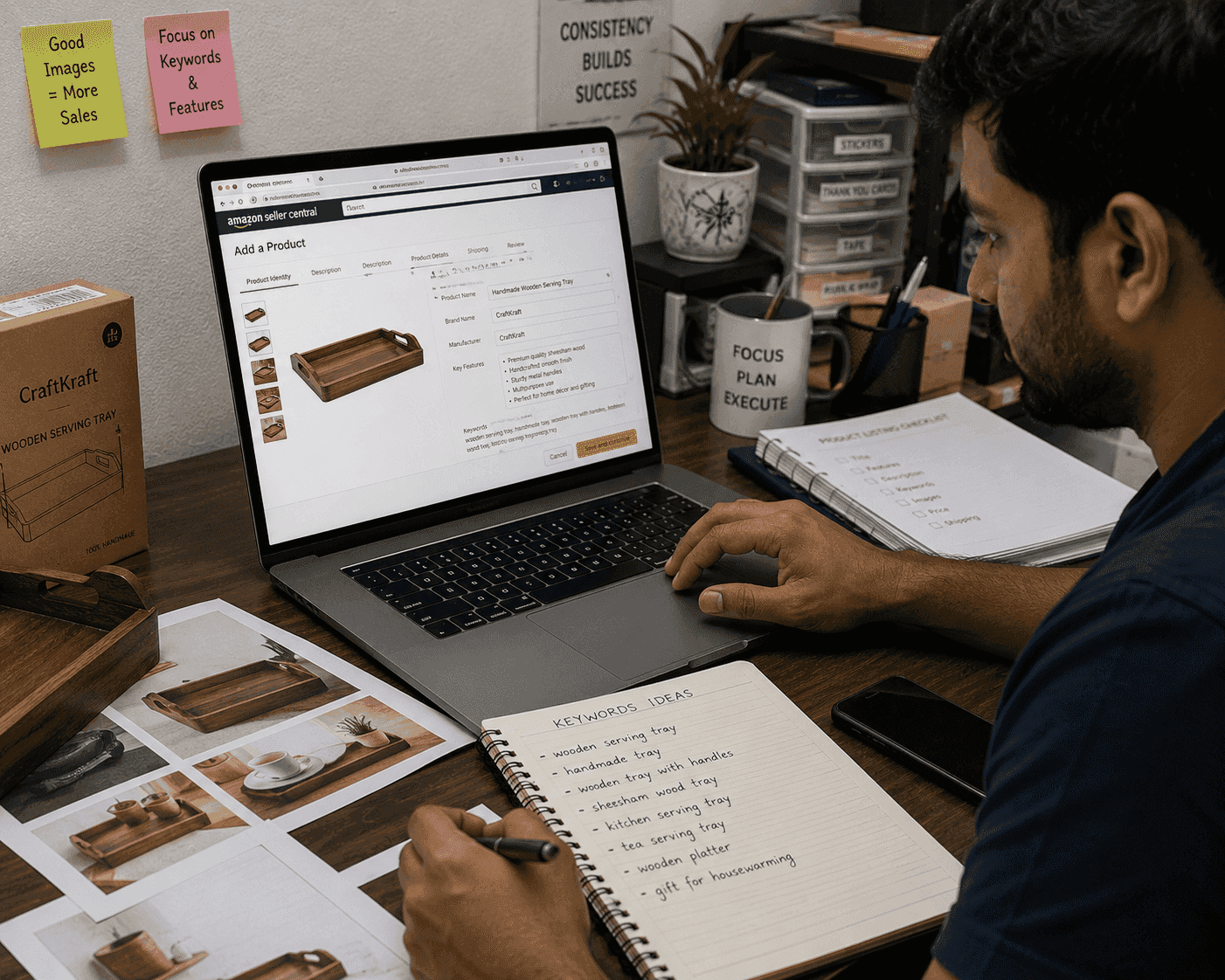
Related Guide:
How to Start an Online Marketplace Seller (Amazon/Flipkart) Business in India
Use that guide to understand:
- Business model and entity selection
- GST registration and compliance basics
- Amazon and Flipkart seller onboarding
- Initial product selection and sourcing
- Listing creation and fulfilment setup
Once basic operations are running, the next challenge is growth. This guide explains how to move from a working marketplace seller account to a more profitable, organized, and brand‑driven business.
Table of Contents
- Understand your current business performance
- Strengthen product and catalog strategy
- Increase average order value (AOV)
- Improve listing quality and customer experience
- Build reviews, repeat customers, and brand trust
- Grow ads and external traffic carefully
- Improve inventory, fulfilment, and returns control
- Protect margins, cash flow, and GST compliance
- Use tools and Zopkit to organize growth
- Prepare for expansion across platforms and channels
1. Understand Your Current Business Performance
Before trying to grow, understand how your marketplace business is performing today.
Review at least the last three to six months:
- Orders and revenue by platform (Amazon vs Flipkart)
- New vs repeat customers, if visible via reports or brand analytics
- Average order value (AOV) and units per order
- Conversion rate on top products (sessions vs orders)
- Return and cancellation rates
- Ad spend and ACOS/TACOS (advertising cost of sales)
- Category‑wise and SKU‑wise margins
- Stockouts and overstock situations
Use a simple performance table:
Metric | What it tells you |
|---|---|
AOV | Cash collected per order |
Conversion rate | How well listings turn views into orders |
Return rate | Listing clarity and product quality |
Ad ACOS/TACOS | Efficiency of paid visibility |
Margin by SKU | Where profit is actually generated |
Stockouts | Missed sales and poor forecasting |
Once you see the numbers, growth should focus on fixing the main bottlenecks rather than pushing ads everywhere.
2. Strengthen Product and Catalog Strategy
Many sellers grow faster by curating the right catalog rather than listing everything they can source.
Consider:
- Focus categories where you can sustain quality and support (e.g., kitchen, home, beauty, fashion accessories).
- Depth in proven products instead of shallow stock across many unrelated items.emerge.fibre2fashion+1
- Phasing: launch core products first, then add complementary SKUs that build bundles and upsells.
Use data to refine catalog decisions:
- Identify top 10–20 percent SKUs that drive most revenue and profit.
- Spot SKUs with high views but low conversion, and fix listings or discontinue.
- Map competitors: which features, price points, and bundles win in your category.
A stronger catalog strategy makes ad spend, reviews, and operations more effective because you’re backing products that have clear demand and sustainable margins.

3. Increase Average Order Value (AOV)
AOV is one of the main levers you control alongside traffic and conversion.
Ways to lift AOV on marketplaces:
- Bundles: group complementary items (e.g., mixer + jar set, storage containers in sets) and price them slightly better than buying individually.
- Add‑on items: small, high‑margin products that customers often buy along with main products.
- Tiered options: basic, better, and premium versions so customers can upgrade.
- Quantity packs: multi‑packs of consumables where it makes sense.
Monitor:
- AOV by product, campaign, and platform.
- Contribution margin per order, not just higher revenue, to avoid over‑discounting.
Higher AOV helps absorb platform fees and shipping costs, making growth more sustainable.
4. Improve Listing Quality and Customer Experience
Marketplace algorithms weigh listing quality and conversion rate heavily.
Checklist for stronger listings:
- Titles: include main keywords, size, material, and key benefit; follow marketplace formatting rules.
- Images: aim for multiple high‑quality images showing product details, usage, dimensions, and lifestyle context.
- Bullets and descriptions: lead with benefits, then clearly list specifications; avoid vague claims.
- A+ Content / Enhanced Content (where available): use comparison modules, rich images, and brand story to differentiate.
Better listings:
- Increase organic traffic via improved ranking.
- Reduce returns by setting clear expectations
- Improve conversion, which also improves ad efficiency.
5. Build Reviews, Repeat Customers, and Brand Trust
Reviews and reputation are crucial for marketplace growth.
Review strategy:
- Use platform features like Amazon’s Request a Review systematically.
- Provide good packaging and post‑purchase experience so positive reviews become more natural.
- Monitor reviews across your catalog to identify quality issues early.
Trust and brand:
- Maintain consistent quality; avoid sudden changes in material or specifications without updating listings.
- Respond politely and constructively to negative reviews when platform rules allow.
Repeat purchasers are harder to track on marketplaces than on your own site, but:
- Strong, consistent experience increases the chance customers search for your brand again.
- Brand stores and consistent visuals make it easier for customers to recognize you.
6. Grow Ads and External Traffic Carefully
Ads can accelerate growth, but they must be used with discipline.
Advertising:
- Use structured PPC campaigns on Amazon and Flipkart, separating research, exact, and broad keywords.
- Monitor ACOS and TACOS, not just clicks; adjust bids based on event days and weekends.
- Pause or reduce ads when stock is low to avoid wasted spend.
External traffic:
- Drive traffic from social media, influencers, and email to your marketplace listings where appropriate.
- Use tracking features like Amazon Attribution to measure impact of external channels.
The goal is profitable visibility, not just more impressions. Align ads with strong listings, reviews, and inventory so growth doesn’t burn cash.
7. Improve Inventory, Fulfilment, and Returns Control
Operational reliability is a major ranking and trust factor.
Inventory:
- Maintain accurate stock levels to avoid cancellations and “out of stock” situations.
- Track top SKUs more frequently and plan replenishment around sales events.
Fulfilment:
- Use reliable fulfilment models (FBA, Flipkart assured) where they make sense for conversion and Prime/assured badges.
- Standardize packing to reduce damage and returns.
Returns:
- Investigate high return SKUs to see if issues are with product, listing clarity, or expectations.
- Refine descriptions, images, or discontinue problematic products when necessary.
A stable fulfilment and returns process makes growth easier and improves long‑term account health.
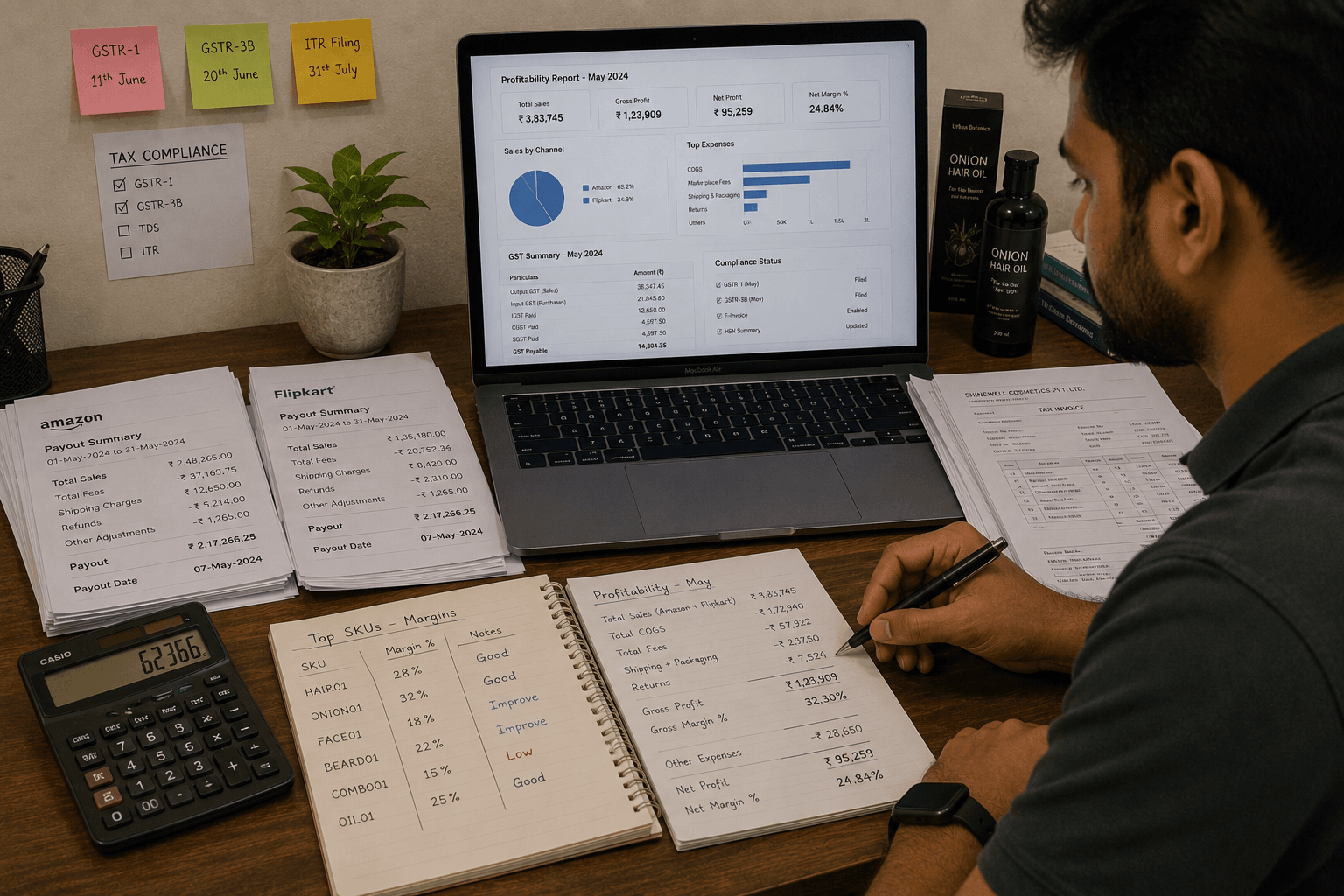
8. Protect Margins, Cash Flow, and GST Compliance
Marketplace growth can hide margin problems if you only look at top‑line sales.
Margins and cash flow:
- Regularly calculate true margin after product cost, platform fees, shipping, packaging, ads, and returns
- Track cash inflows from marketplaces vs outflows to suppliers, logistics, ads, and operations.
GST and compliance:
- Remember that GST registration is mandatory for e‑commerce sellers from day one, regardless of turnover.
- Reconcile marketplace reports with your own records for GST returns and TCS credits.
- File GSTR‑1 and GSTR‑3B on time to avoid penalties and compliance issues.
Growth is safer when you understand which SKUs and campaigns are actually profitable and GST compliance is under control.
9. Use Tools and Zopkit to Organize Growth
As your marketplace business grows, relying only on Amazon and Flipkart dashboards can become limiting.
You may need:
- A finance layer for invoices, expenses, and profitability by SKU and campaign
- A CRM or customer notes system (where allowed) for service and brand work
- Project tracking for catalog work, launches, and operational improvements
- HR records for staff handling listings, ads, warehousing, and support
Zopkit can support this backbone:
- Zopkit CRM: Manage customer segments, service notes, and campaigns where external relationships exist.
- Zopkit Finance: Track marketplace payouts, supplier bills, expenses, cash flow, budgets, and profitability.
- Zopkit Project Management: Coordinate listing optimization projects, new product launches, sourcing work, and operational changes.
- Zopkit HRMS: Handle staff records, attendance, payroll, and roles across catalog, fulfilment, and support.
- Zopkit Academy: Host training modules for marketplace rules, listing standards, ads, packing SOPs, and customer communication.
This lets you grow a marketplace business as a proper operation, not just as isolated dashboards.
10. Prepare for Expansion Across Platforms and Channels
Once Amazon and Flipkart performance is stable, consider controlled expansion.
Options:
- Add SKUs in proven categories before entering new ones.emerge.
- Expand to additional marketplaces (e.g., Myntra, Meesho, Nykaa, or quick commerce) for diversified revenue.
- Build brand pages and stores to strengthen recognition and repeat behaviour.
- Add your own website or D2C channel when you are ready for deeper brand and retention work.
Expansion should follow:
- Listings and operations that are already stable
- Clear margin and cash‑flow understanding
- Basic brand recognition and reviews in core products
Growing across platforms and channels is easier when your marketplace business runs on structured systems rather than ad hoc decisions.
Conclusion
Growing an online marketplace seller business on Amazon and Flipkart in India is not just about listing more products or spending more on ads. It is about improving catalog strategy, listing quality, AOV, reviews, ads and external traffic, operations, GST compliance, and your underlying business systems so the account becomes profitable and durable.
With clear performance tracking and a backbone like Zopkit for CRM, Finance, Project Management, HRMS, and Academy, marketplace sellers can organize customers, money, projects, people, and training, making growth more controlled and less stressful.
Explore how Zopkit can support your marketplace seller business at zopkit.com.