How to Scale an Electronics/Mobile Retail Shop Business in India
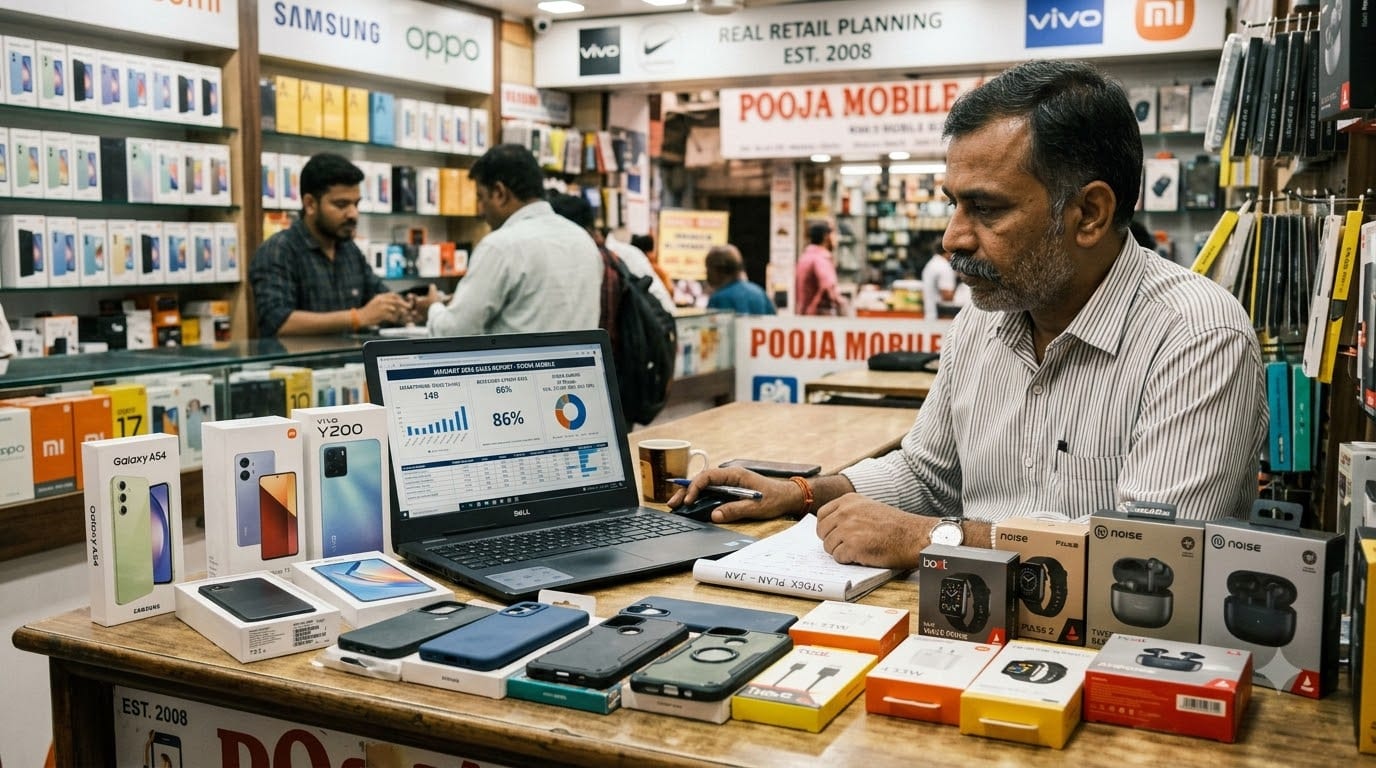
Starting an electronics or mobile retail shop begins with selecting the right location, finding reliable distributors, building a suitable product range, managing IMEI and warranty records, and creating trust with customers.
If you are still deciding your store model, arranging registrations, planning investment, selecting suppliers, or preparing your first inventory, begin with the guide below.
Related Guide:
How to Start an Electronics/Mobile Retail Shop Business in India
Use this guide to understand:
- Store models and product categories
- Market research
- Location and showroom setup
- Registrations and compliance
- Investment and working capital
- Distributor selection
- Inventory, billing, and warranty basics
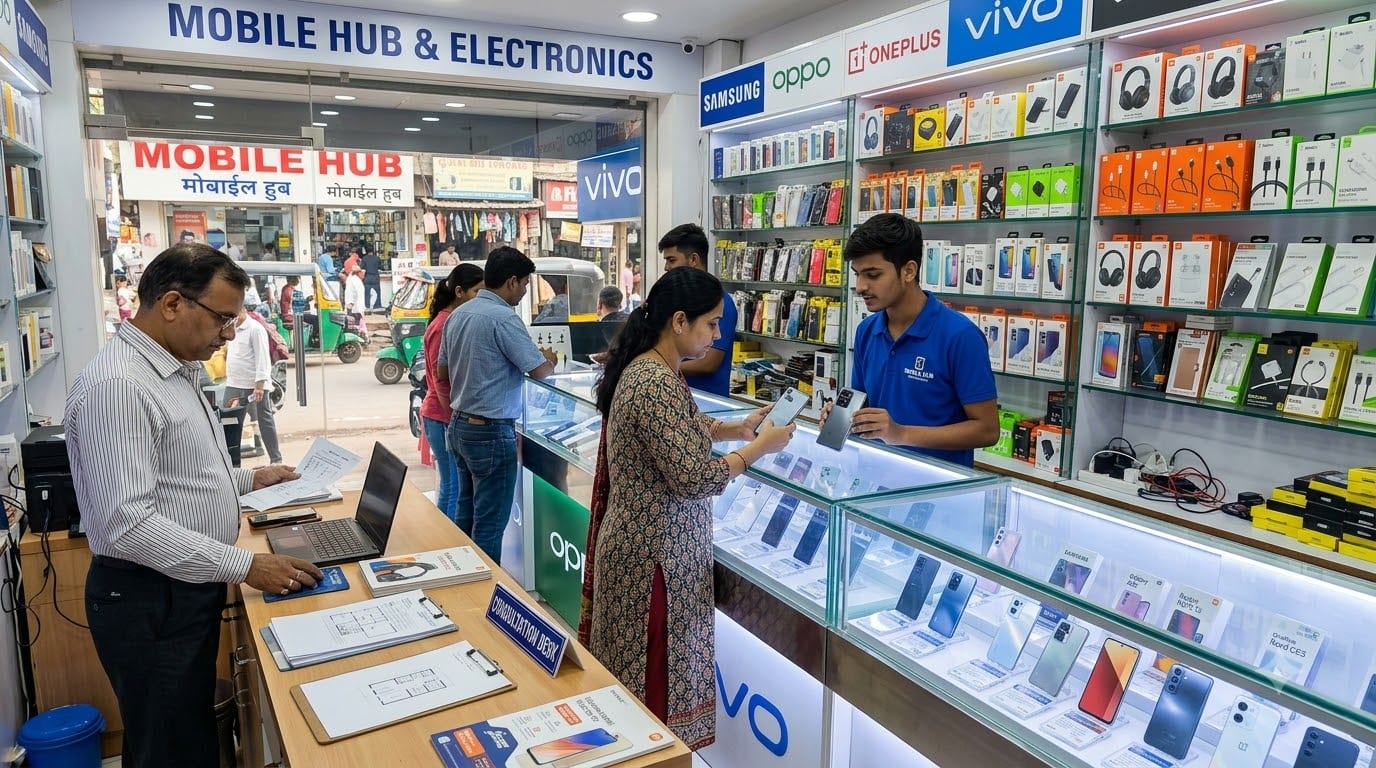
Once the shop is running, the next challenge is growth. Growing an electronics or mobile retail store means improving product turnover, increasing accessory and service revenue, managing warranty and exchange experiences, building repeat customers, and creating better inventory and cash-flow control.
If you are still trying to improve sales, product movement, supplier management, customer service, or store operations, refer to the guide below before focusing on expansion.
Related Guide:
How to Grow an Electronics/Mobile Retail Shop Business in India
Use this guide to understand:
- Store performance and product mix
- Smartphone and accessory sales
- Customer service and local loyalty
- Warranty and after-sales support
- Inventory and IMEI control
- Finance and cash-flow management
- Team workflows and daily operations
After starting and growing the business, the next question is how to scale without losing control.
Scaling an electronics or mobile retail shop is not simply about opening another outlet or adding more brands. It means building a repeatable business that can manage high-value inventory, changing product prices, serial numbers, warranty cases, suppliers, employees, repairs, and customers across multiple stores and sales channels.
Electronics retailers also face a fast-moving product cycle. New models, price changes, exchange offers, and changing customer preferences can quickly affect stock value. That makes centralized inventory, serial-number tracking, warranty records, and multi-store reporting especially important.logicerp+1
This guide explains how to move from a successful mobile shop to a more organized, multi-location, and system-driven electronics retail business.
Table of Contents
- Confirm that the first store is ready
- Standardize the customer experience
- Build a profitable product and service mix
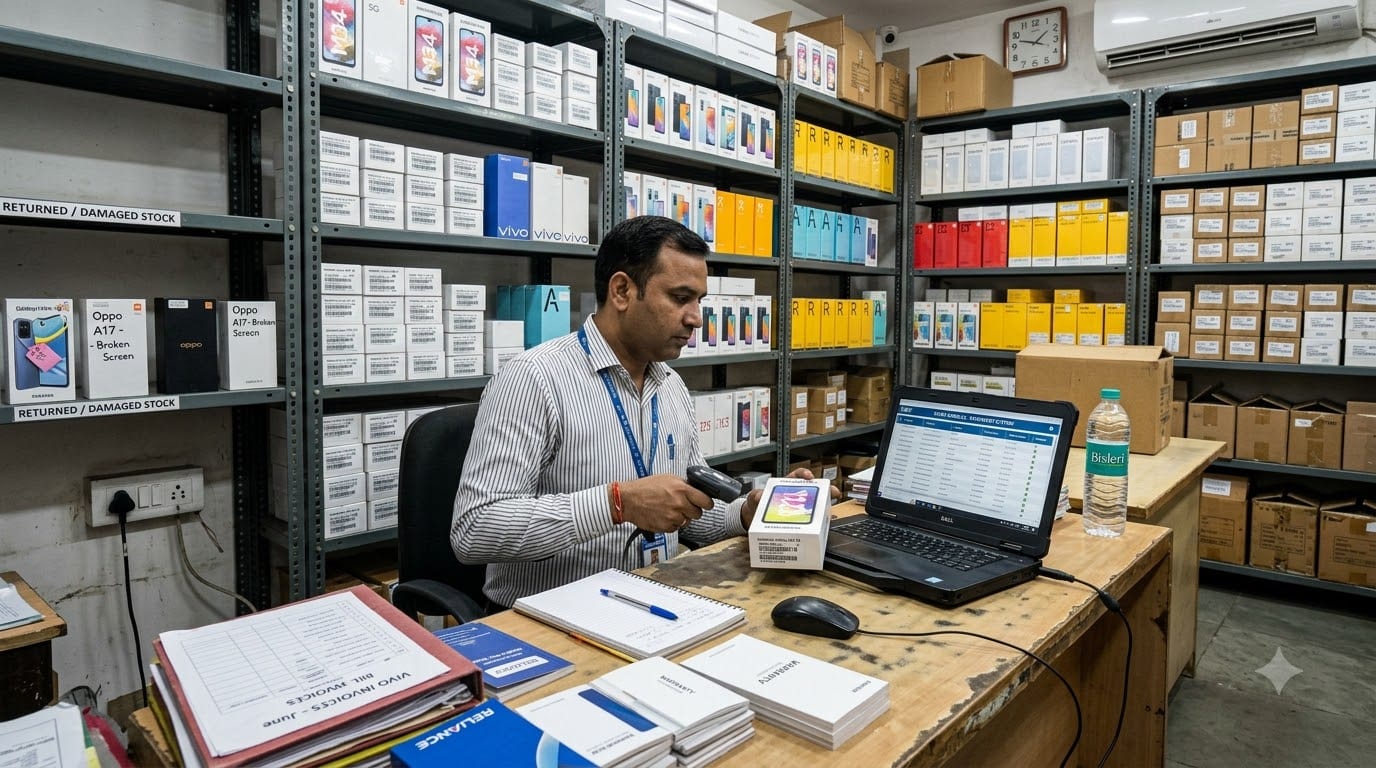
- Centralize inventory and IMEI control
- Create a stronger after-sales system
- Connect online and offline sales
- Strengthen suppliers, margins, and cash flow
- Build a team-led management structure
- Use an Electronics Retail ERP to manage scale
- Plan a phased expansion roadmap
1. Confirm That the First Store Is Ready
Opening a second store before the first one is stable can multiply problems instead of revenue.
Before expanding, check whether the first store has:
- Stable monthly sales.
- Predictable cash flow.
- Reliable distributors.
- Accurate stock and IMEI records.
- Controlled warranty and return processes.
- Consistent accessory and service sales.
- Repeat customers.
- Trained staff.
- A senior employee who can manage daily operations without constant owner supervision.
Review more than revenue:
- Average bill value.
- Smartphone sales by price segment.
- Accessory attachment rate.
- Repair and setup revenue.
- Stock age.
- Warranty cases.
- Customer complaints.
- Supplier dues.
- Customer credit.
- Cash and digital collections.
If the store sells many phones but accessories are not moving, stock is ageing, or warranty problems are unresolved, opening another outlet may increase costs without improving profitability.
A second store should repeat a working model. It should not multiply problems that already exist.
2. Standardize the Customer Experience
A scalable electronics brand needs a consistent way to serve customers.
Document how staff should handle:
- Greeting and requirement discovery.
- Product comparison.
- Price and offer explanation.
- Exchange evaluation.
- Accessory recommendations.
- Data transfer and setup.
- Invoice and warranty handover.
- Complaint escalation.
Train staff to ask:
- What will the device be used for?
- Is camera, battery, gaming, storage, or performance most important?
- What is the budget?
- Is the customer upgrading from an older phone?
- Do they need setup or data transfer?
- Which accessories are genuinely useful?
Standardize:
- Product comparison sheets.
- Discount approval.
- Exchange rules.
- Warranty explanation.
- Setup charges.
- Return and replacement communication.
- Opening and closing routines.
A customer should receive the same level of clarity and service whether they visit the owner, a senior salesperson, or a new employee.
Zopkit Project Management can help organize store SOPs, product launches, promotional campaigns, service workflows, and recurring reviews.
3. Build a Profitable Product and Service Mix
Phones may bring customers into the store, but the product mix determines how much value each visit creates.
Organize the range into:
- Entry-level smartphones.
- Mid-range smartphones.
- Premium devices.
- Feature phones where relevant.
- Cases and screen protectors.
- Chargers and cables.
- Earphones and headphones.
- Power banks.
- Smartwatches.
- Bluetooth speakers.
- Routers and other small electronics.
Think of products by role:
- Traffic products: Popular models that attract customers.
- Profit products: Accessories and services with stronger contribution.
- Premium products: Flagship devices and high-value electronics.
- Repeat products: Cases, cables, protectors, and replacements.
- Service products: Setup, data transfer, and repair coordination.
Create relevant bundles:
- Phone plus case and screen protector.
- Phone plus charger and cable.
- Phone plus earbuds.
- Router plus setup service.
- Smartwatch plus protection accessory.
Do not recommend irrelevant products. Useful recommendations improve the customer experience and increase the likelihood of repeat business.
Review slow-moving models quickly because electronics can lose value when new models launch or prices change.
4. Centralize Inventory and IMEI Control
Multi-store electronics retail cannot depend on separate spreadsheets maintained by each outlet.
Create a master product catalog containing:
- Brand.
- Model.
- Storage.
- Color.
- IMEI or serial-number rules.
- Purchase cost.
- Selling price.
- Supplier.
- Warranty period.
- Store location.
Track inventory by:
- Store.
- Warehouse.
- Display stock.
- New saleable stock.
- Returned stock.
- Damaged stock.
- Warranty stock.
- Repair stock.
- Reserved stock.
Use a clear inventory flow:
Supplier bill → Stock entry → IMEI capture → Store transfer → Sale invoice → Warranty record
Conduct:
- Daily verification of high-value sales.
- Weekly IMEI audits.
- Monthly physical stock reconciliation.
- Immediate recording of returns and adjustments.
- Separate tracking of demo devices.
Centralized inventory helps answer:
- Which store has this model?
- Which branch sells it fastest?
- Where is stock ageing?
- Which accessories should be transferred?
- Which products require urgent replenishment?
- Which products should not be reordered?
Electronics retail platforms commonly support IMEI or serial-level tracking, warranty management, multi-store inventory, and branch reporting.
5. Create a Stronger After-Sales System
As the business grows, after-sales service can become a major differentiator.
Offer:
- Device setup.
- Data transfer.
- Screen-protector installation.
- Accessory replacement.
- Warranty coordination.
- Basic troubleshooting.
- Repair referrals.
- Exchange assistance.
- Local delivery.
- Upgrade reminders.
Create a warranty workflow:
- Record customer and product details.
- Capture the IMEI or serial number.
- Store the invoice and warranty information.
- Record the customer’s issue.
- Assign the case to the responsible person.
- Track service-centre or supplier communication.
- Update the customer.
- Close the case after resolution.
Customers should know what documents are required, how long the process may take, and who is responsible for the next update.
Maintain customer records for:
- Product purchased.
- Purchase date.
- Warranty period.
- Accessories purchased.
- Service history.
- Preferred brands.
- Expected upgrade period.
Zopkit CRM can help organize customer details, purchase history, follow-up activities, service communication, and upgrade reminders.
6. Connect Online and Offline Sales
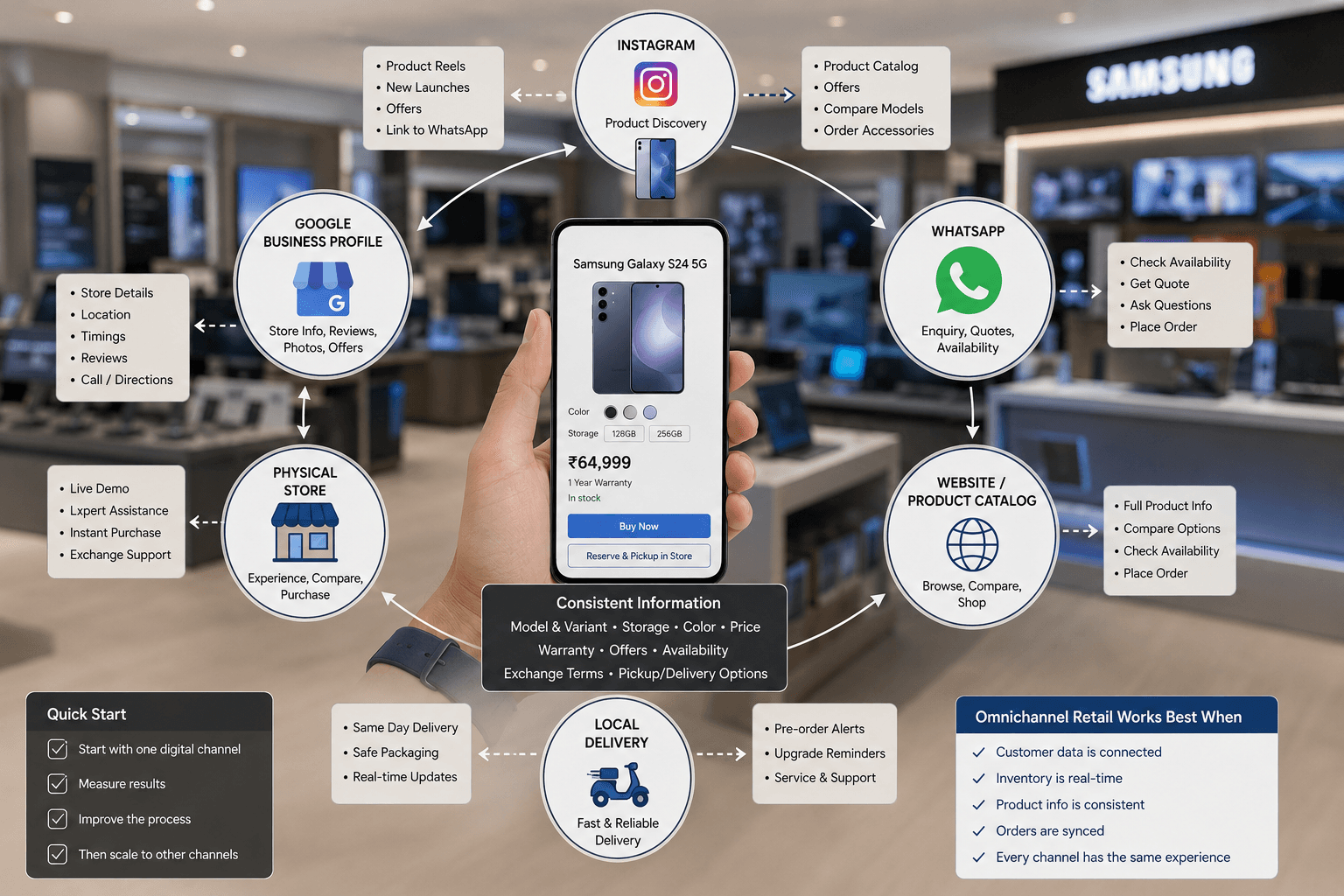
Customers may discover a product on Instagram, ask about availability on WhatsApp, compare options online, and visit the store to complete the purchase.
Connect:
- Google Business Profile.
- Instagram.
- WhatsApp.
- Website or product catalog.
- Physical store.
- Local delivery.
Keep information consistent across all channels:
- Model and variant.
- Storage.
- Color.
- Price.
- Warranty.
- Offers.
- Availability.
- Exchange terms.
- Pickup or delivery options.
You can add:
- Reserve online and collect in store.
- WhatsApp quotations.
- Local delivery.
- Pre-order notifications.
- Upgrade reminders.
- Online accessory ordering.
- Store appointment requests.
Omnichannel retail works best when customer data, inventory, product information, and orders remain connected across channels.
Start with one digital channel, measure its results, and improve the process before adding more complexity.
7. Strengthen Suppliers, Margins, and Cash Flow
As the business expands, supplier and finance management become more complex.
Evaluate suppliers based on:
- Brand authorization.
- Purchase rates.
- Credit terms.
- Delivery reliability.
- Warranty support.
- Replacement policy.
- Promotional schemes.
- Product availability.
- Invoice quality.
Use a structured purchase process:
- Review sales and stock age.
- Identify reorder requirements.
- Check upcoming launches and price changes.
- Compare supplier terms.
- Create a purchase order.
- Receive and verify goods.
- Capture serial or IMEI details.
- Record the supplier bill.
- Schedule payment.
Monitor cash pressure from:
- New inventory.
- Price reductions.
- Supplier dues.
- Warranty replacements.
- Rent and salaries.
- Marketing.
- Financing costs.
Smartphone margins can be tight, while accessories and services may provide stronger contribution. Industry references commonly report smartphone retail margins around 3%–10%, although actual results vary by brand, distributor, location, and product.
Zopkit Finance can help organize invoices, supplier bills, payments, expenses, cash flow, budgets, and profitability reports. This helps the owner understand whether sales growth is generating healthy returns.
8. Build a Team-Led Management Structure
A small mobile shop may depend on the owner for every sale and warranty decision. A growing business needs clear ownership.
Assign responsibilities for:
- Sales.
- Billing.
- Product setup.
- Accessory merchandising.
- Stock receiving.
- IMEI verification.
- Warranty coordination.
- Repairs.
- Customer follow-up.
- Daily closing.
Train staff on:
- Product comparison.
- Honest selling.
- Exchange policies.
- Invoice and warranty handover.
- Digital payments.
- Data privacy during setup.
- Complaint handling.
- Stock security.
Use weekly reviews to discuss:
- Sales by staff member.
- Accessory attachment.
- Customer complaints.
- Warranty cases.
- Stock differences.
- Supplier delays.
- Pending payments.
Zopkit HRMS can help manage employee records, attendance, shifts, payroll, leave, onboarding, and responsibilities. Zopkit Academy can support product training, sales scripts, warranty procedures, and customer service.
A store becomes scalable when employees can follow clear processes without asking the owner about every decision.
9. Use an Electronics Retail ERP to Manage Scale
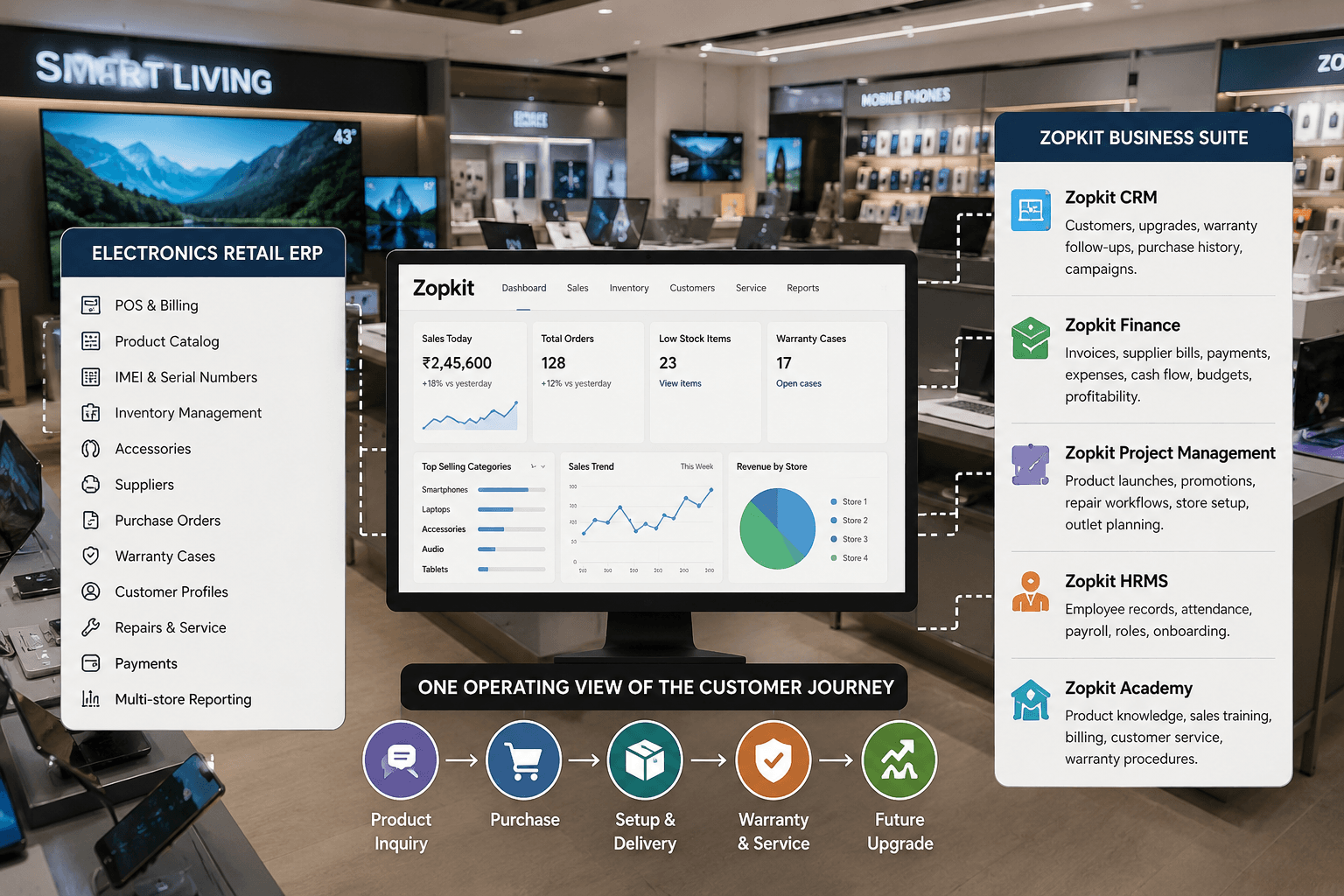
As the business grows, separate tools for billing, IMEI tracking, suppliers, warranties, customers, repairs, staff, and finance create operational gaps.
An Electronics Retail ERP should connect:
- POS and billing.
- Product catalog.
- IMEI and serial numbers.
- Inventory.
- Accessories.
- Suppliers.
- Purchase orders.
- Warranty cases.
- Customer profiles.
- Repairs and service.
- Payments.
- Multi-store reporting.
Zopkit can support the wider business structure through:
- Zopkit CRM: Customers, upgrades, warranty follow-ups, purchase history, and campaigns.
- Zopkit Finance: Invoices, supplier bills, payments, expenses, cash flow, budgets, and profitability.
- Zopkit Project Management: Product launches, promotions, repair workflows, store setup, and outlet planning.
- Zopkit HRMS: Employee records, attendance, payroll, roles, and onboarding.
- Zopkit Academy: Product knowledge, sales training, billing, customer service, and warranty procedures.
The objective is to create one operating view of the customer journey—from product inquiry and purchase to setup, warranty, service, and future upgrade.
10. Plan a Phased Expansion Roadmap
Phase 1: Improve the first store
Focus on product mix, accessory sales, IMEI accuracy, warranty support, staff performance, and cash flow.
Phase 2: Add services
Introduce setup, data transfer, screen-protector installation, repair coordination, exchange assistance, and upgrade reminders.
Phase 3: Build digital ordering
Add WhatsApp availability, an online catalog, local delivery, reserve-and-collect, and product launch notifications.
Phase 4: Expand categories
Add laptops, tablets, smartwatches, gaming products, home appliances, or smart-home products only when demand and margins are clear.
Phase 5: Open another outlet
Choose a location based on customer demand, delivery orders, competition, rent, supplier access, and working capital.
Phase 6: Build a recognizable retail brand
Standardize store layout, product range, pricing, warranty communication, staff training, customer support, and reporting.
Expansion should follow operational readiness instead of simply responding to the availability of a new shop.
Conclusion
Scaling an electronics or mobile retail shop in India is not simply about opening more stores or selling more phones. It is about building a complete retail system around every device through product advice, accessories, setup, warranty support, repairs, upgrades, and after-sales service.
The business becomes easier to scale when inventory, IMEI records, suppliers, customers, warranty cases, staff, payments, and campaigns are connected through clear processes.
Zopkit supports the wider operating backbone through CRM, Finance, Project Management, HRMS, and Academy, helping electronics retailers manage customers, payments, projects, staff, and training as the business expands.
Explore how Zopkit can support your electronics and mobile retail business at zopkit.com.