How to Grow a Skincare/Cosmetics Business in India
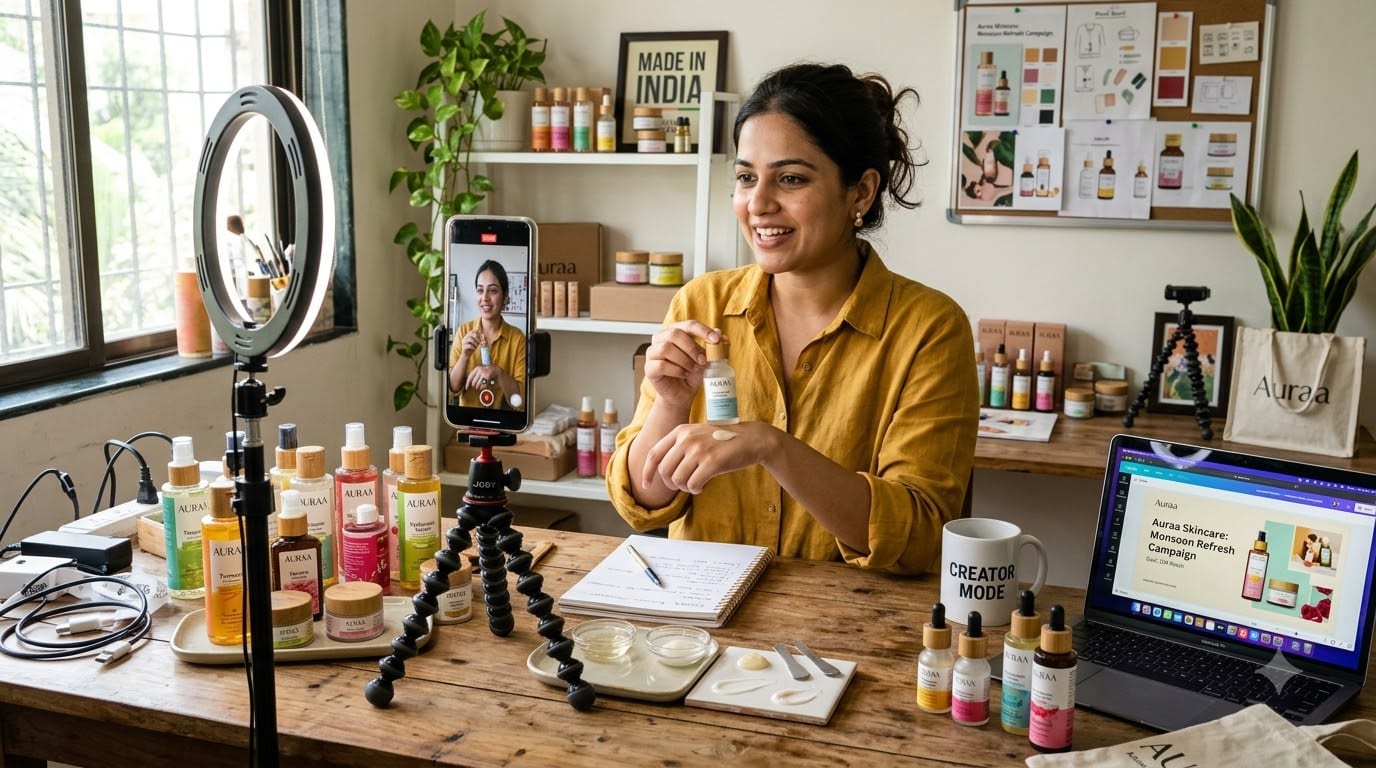
Growing a D2C skincare or cosmetics business in India is not just about increasing ad spend or launching more products. It is about building a stronger brand, improving repeat purchases, making the product portfolio more profitable, tightening inventory and fulfillment, and creating systems that help the business serve more customers without losing trust.
Many skincare businesses get their first traction through social media, influencers, or a successful hero product. But growth becomes difficult when customer data is scattered, repeat sales are not tracked, inventory is poorly planned, margins are unclear, and every campaign or product launch depends on the founder personally. This guide explains how to grow a D2C skincare/cosmetics business with better product decisions, customer retention, content, finance, operations, team structure, and business systems.
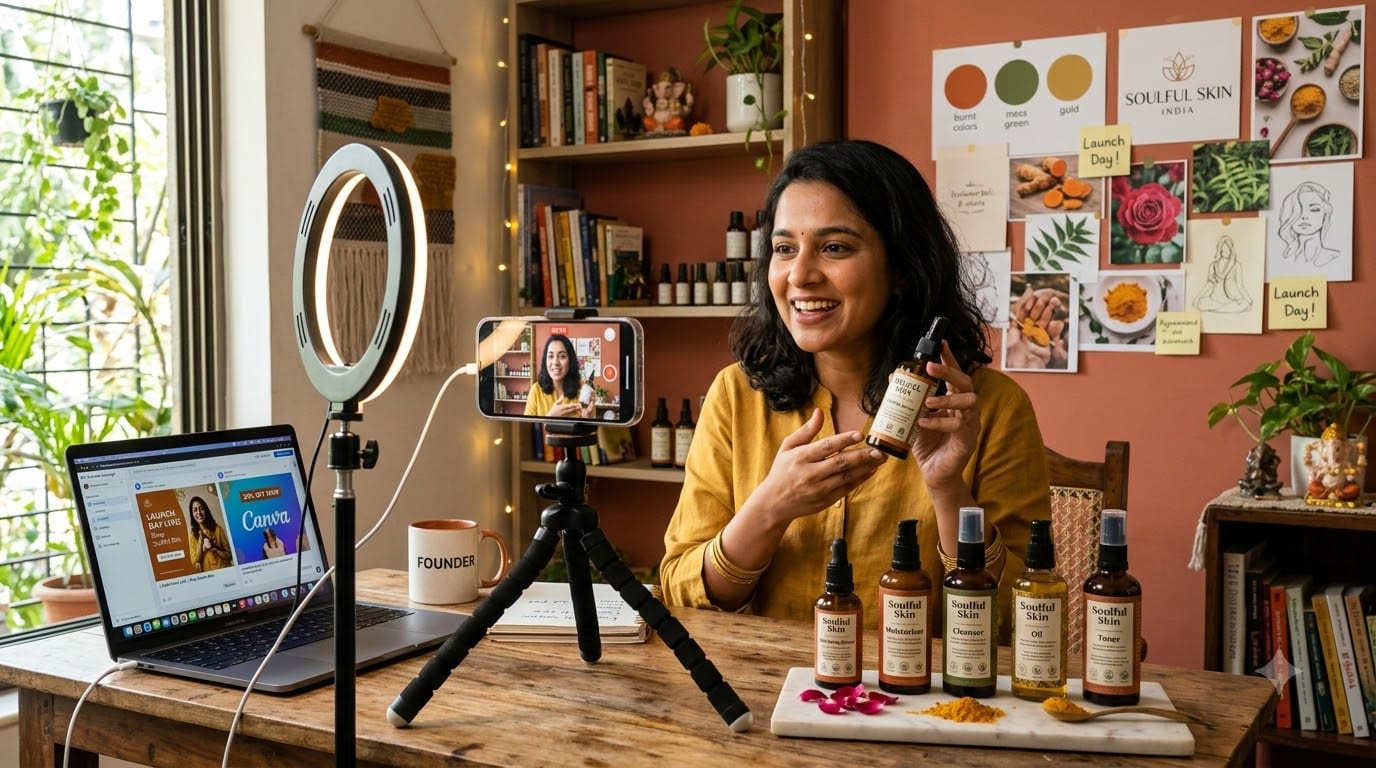
Related Guide:
How to Start a D2C Skincare/Cosmetics Brand in India
Use that guide to understand:
- D2C meaning and beauty brand models
- Niche selection and target audience
- Product development, testing, and manufacturing partnerships
- Branding, packaging, and positioning
- Website, tech stack, and basic logistics
- Initial marketing and launch strategy
Once the brand is live and you’ve made some sales, the next challenge is growth. This guide focuses on how to move from an early‑stage D2C beauty brand to a stronger, more profitable, retention‑driven D2C skincare/cosmetics business.
Table of Contents
- Understand what is already working
- Strengthen your product portfolio
- Improve repeat purchases and retention
- Build a content and creator growth engine
- Improve pricing, margins, and cash flow
- Strengthen inventory and fulfillment
- Improve customer experience and support
- Build team-led workflows
- Use Zopkit to organize growth
- Prepare for long-term scale
- Conclusion and CTA
1. Understand What Is Already Working
Before trying to grow, understand where your existing traction is coming from. Many founders increase marketing spend without knowing which products, audiences, campaigns, or channels are already producing profitable results.
Review your last three to six months of business data and identify:
- Best-selling products by units and revenue.
- Products with the highest repeat purchase rate.
- Customer acquisition source, such as Instagram, influencers, ads, organic search, referrals, or marketplaces.
- Average order value.
- Gross margin by product.
- Customer segments with the highest lifetime value.
- Campaigns that generated purchases rather than only views.
- Products that receive the most complaints, returns, or questions.
You should separate attention metrics from business metrics. Likes, views, and follower growth are useful, but they do not automatically mean the brand is growing. A smaller campaign that produces repeat customers may be more valuable than a viral video that produces only one-time curiosity.
Create a monthly business review with five questions:
- What sold the most?
- What generated the most profit?
- Which customers came back?
- Which channel produced the strongest results?
- What should we stop, improve, or repeat next month?
Growth becomes more predictable when decisions are based on actual customer and sales behavior instead of assumptions.

2. Strengthen Your Product Portfolio
A D2C skincare brand does not need dozens of products to grow. It needs the right product structure.
A healthy product portfolio usually includes:
- Hero products that attract new customers.
- Supporting products that solve related problems.
- Bundles that increase average order value.
- Replenishment products that encourage repeat purchases.
- Premium products that improve brand perception and margins.
Review each product using four questions:
- Does it attract new customers?
- Does it encourage repeat purchases?
- Does it have a healthy contribution margin?
- Does it strengthen the overall brand?
If a product sells only when deeply discounted, creates frequent complaints, or blocks cash in slow-moving inventory, it may need better positioning, reformulation, a smaller production batch, or removal from the portfolio.
Avoid adding new SKUs simply because competitors have them. Every new product creates additional work across formulation, packaging, compliance, content, inventory, customer education, and fulfillment.
Instead, build a clear product journey. For example:
- A cleanser introduces the customer to the brand.
- A serum addresses a specific concern.
- A moisturizer supports daily use.
- A bundle increases order value.
- A replenishment reminder encourages the next purchase.
This turns your catalog into a connected skincare routine rather than a random collection of products.
3. Improve Repeat Purchases and Retention
For skincare brands, repeat purchases are one of the most important growth levers. Acquiring a customer once is useful, but the business becomes stronger when that customer returns regularly.
Build a customer retention process around the full product journey.
After the first order:
- Send usage instructions.
- Explain how much product to use and how often.
- Set realistic expectations about results.
- Provide guidance on combining products.
- Ask for feedback after a reasonable usage period.
- Remind the customer when the product may need replenishment.
Track useful customer information, such as:
- Skin concern or product need.
- Products purchased.
- Date of last order.
- Expected reorder period.
- Response to campaigns.
- Customer service issues.
- Preference for bundles, subscriptions, or new launches.
Segment customers into groups such as:
- First-time buyers.
- Repeat buyers.
- High-value customers.
- Customers who have not reordered.
- Customers interested in acne care, sensitive skin, glow, or hair care.
- Customers who purchased during a specific campaign.
This allows the brand to send relevant communication instead of sending the same message to everyone. A customer who purchased a face serum should not receive an unrelated message about a product that does not match their concern.
Retention should not depend entirely on discounts. Education, convenience, trust, product guidance, and timely reminders can be just as important.
4. Build a Content and Creator Growth Engine
Content is one of the strongest growth tools for a D2C skincare business, but content should do more than make the brand look attractive.
Your content should help customers understand:
- What problem the product addresses.
- Who should use it.
- How to apply it.
- What the texture looks and feels like.
- Which ingredients are included and why.
- How long consistent use may take.
- How the product fits into a routine.
- What makes the brand different.
Useful content formats include:
- Ingredient explainers.
- Product application videos.
- Skincare routine guides.
- Founder-led education.
- Customer testimonials.
- Frequently asked questions.
- Texture and unboxing videos.
- Comparisons between product formats.
- Honest customer journeys.
Creator marketing can help the brand reach new audiences, but it should be managed carefully. Instead of selecting creators only by follower count, look at:
- Audience relevance.
- Engagement quality.
- Content style.
- Trust with their audience.
- Previous brand collaborations.
- Conversion or affiliate performance.
For a structured creator program, use clear campaign briefs, defined deliverables, tracking links, approval processes, payment terms, and performance reporting. Zopkit’s affiliate and influencer capabilities can support product promotion, creator campaigns, tracking links, commission rules, campaign deliverables, and payout visibility in one workflow.
This is especially useful when a brand moves from occasional influencer posts to a consistent creator and affiliate growth channel.
5. Improve Pricing, Margins, and Cash Flow
Revenue growth is not enough if the business is losing money on every order.
Review the economics of each product and order, including:
- Manufacturing or purchase cost.
- Packaging cost.
- Shipping cost.
- Payment gateway fees.
- Discounts.
- Influencer or affiliate commissions.
- Advertising cost.
- Returns and replacements.
- Customer support cost.
Track the difference between:
- Revenue.
- Gross margin.
- Contribution margin.
- Net cash generated.
A product may have a good gross margin but become unprofitable after advertising, shipping, discounts, and commissions. This is why product-level profitability matters.
Create a monthly finance review covering:
- Total sales.
- Gross profit.
- Marketing spend.
- Cost of goods sold.
- Inventory purchased.
- Vendor payments due.
- Customer refunds and replacements.
- Cash available.
- Upcoming expenses.
- Budget versus actual performance.
Zopkit Finance can help organize customer invoices, vendor bills, purchase orders, payments, bank movements, cash-flow views, budgets, and financial reports. This gives founders a clearer view of whether growth is creating profit or only increasing activity.
You should also create rules for:
- Maximum discount levels.
- Campaign budgets.
- Creator commissions.
- Purchase approvals.
- Vendor payment schedules.
- Stock purchasing limits.
Financial discipline helps the brand grow without repeatedly running out of working capital.
6. Strengthen Inventory and Fulfillment
A skincare business cannot grow if it cannot deliver products reliably.
As order volume increases, improve control over:
- SKU-level stock.
- Batch numbers.
- Expiry dates.
- Raw materials and packaging.
- Finished goods.
- Reorder points.
- Purchase orders.
- Dispatch timelines.
- Damaged shipments.
- Returns and replacements.
Pay special attention to hero products. Running out of a popular product during a successful campaign can lead to lost sales and disappointed customers. At the same time, overproducing a slow-moving product can block cash and create expiry risk.
Use a simple inventory review:
- Weekly: check fast-moving and low-stock products.
- Monthly: review sales velocity and restock requirements.
- Before campaigns: confirm available inventory.
- After campaigns: compare demand against forecast.
- Quarterly: review slow-moving and ageing stock.
Fulfillment should also have clear ownership. Someone should be responsible for:
- Order confirmation.
- Picking and packing.
- Shipping label generation.
- Dispatch updates.
- Failed delivery follow-up.
- Replacement approvals.
- Customer communication.
When operations, finance, and project work are connected, a product launch can include its own purchasing, content, campaign, inventory, and fulfillment checklist instead of being managed through disconnected messages.
7. Improve Customer Experience and Support
Skincare customers often need more guidance than customers buying ordinary consumer products. They may have questions about ingredients, suitability, usage, results, allergies, combinations, and expectations.
A strong support process should include:
- Quick responses to common product questions.
- Standard answers for usage and routine guidance.
- Clear escalation for sensitive complaints.
- Order and shipping visibility.
- Transparent return and replacement policies.
- Follow-up after a complaint is resolved.
Create a knowledge base for common questions:
- Which product is suitable for which concern?
- How often should it be used?
- Can two products be used together?
- What should a customer do if irritation occurs?
- How should the product be stored?
- When should a customer expect to reorder?
Customer service teams should not have to depend on the founder for every answer. Zopkit CRM can help maintain customer records, interactions, purchase history, and follow-up information, while Zopkit Academy can be used to train support staff on product knowledge, response guidelines, and customer handling.
The goal is to make the customer feel supported before, during, and after the purchase.
8. Build Team-Led Workflows
A D2C brand may begin with the founder managing everything, but that approach becomes a bottleneck as the business grows.
The business may eventually need separate ownership for:
- Product and formulation.
- Supply and vendor coordination.
- Marketing and content.
- Creator partnerships.
- Customer support.
- Finance.
- Fulfillment.
- Human resources.
Define who owns each function and what they are responsible for. For example:
- Marketing owns the campaign calendar.
- Operations confirms stock availability.
- Finance approves campaign budgets.
- Customer support maintains issue records.
- The founder approves major product and brand decisions.
Use weekly reviews to track:
- Campaign progress.
- Product launches.
- Inventory risks.
- Customer complaints.
- Vendor delays.
- Revenue and margin.
- Team priorities.
Zopkit HRMS can help manage employee records, attendance, payroll, and staff structure as the team grows. Zopkit Project Management can organize launches, product shoots, campaign tasks, restocks, partnerships, and recurring operational work.
This allows the founder to move from constantly following up to reviewing progress through a clear operating system.

9. Use Zopkit to Organize Growth
A growing D2C skincare business usually has five connected needs:
- Customers and retention.
- Finance and profitability.
- Product launches and campaigns.
- People and payroll.
- Training and repeatable processes.
Zopkit can support these areas through different modules:
Zopkit CRM
Use CRM to organize:
- Customer profiles.
- Purchase history.
- Skin concerns and preferences.
- Repeat purchase behavior.
- Follow-up activities.
- Campaign responses.
- Customer service interactions.
This helps the brand move from one-time transactions to structured customer relationships.
Zopkit Finance
Use Finance to manage:
- Customer billing.
- Vendor bills.
- Purchase orders.
- Payments and collections.
- Cash-flow visibility.
- Budgets and actual spending.
- Profitability reports.
- GST and TDS workflows where applicable.
This helps founders understand whether growth is financially healthy.
Zopkit Project Management
Use Project Management for:
- New product launches.
- Product shoots.
- Influencer campaigns.
- Website updates.
- Seasonal promotions.
- Restocking.
- Packaging changes.
- Marketplace onboarding.
Each initiative can have an owner, deadline, checklist, and status instead of living only in a chat thread.
Zopkit Affiliate and Influencer Management
Use affiliate and influencer workflows to manage:
- Creator discovery.
- Campaign briefs.
- Product links.
- Tracking and attribution.
- Commission structures.
- Deliverables.
- Approvals.
- Payouts.
This makes creator-led acquisition more measurable and repeatable.
Zopkit HRMS
Use HRMS for:
- Employee records.
- Onboarding.
- Attendance.
- Payroll.
- Roles and responsibilities.
- Team documentation.
This becomes increasingly useful when the business has separate marketing, support, operations, or fulfillment employees.
Zopkit Academy
Use Academy to train teams on:
- Product knowledge.
- Ingredient basics.
- Usage guidance.
- Customer response standards.
- Creator communication.
- Internal SOPs.
- Complaint handling.
The more consistently your team understands the products and processes, the more reliably the brand can serve customers.
Together, these modules give a D2C skincare business a connected operating backbone instead of forcing the founder to manage customers, money, projects, people, and training through separate tools.
10. Prepare for Long-Term Scale
Once the business has a profitable product mix, consistent demand, repeat customers, and reliable operations, you can plan the next stage of growth.
Possible growth paths include:
- Launching new products within the same customer problem.
- Entering marketplaces.
- Expanding into offline retail.
- Building subscriptions or replenishment programs.
- Creating larger bundles.
- Entering new customer segments.
- Expanding into new cities or international markets.
- Increasing creator and affiliate partnerships.
Before increasing spend or adding complexity, confirm that:
- The hero products have stable supply.
- Customer complaints are under control.
- Repeat purchase behavior is strong.
- Margins can support acquisition costs.
- Inventory planning is reliable.
- Customer support can handle higher volume.
- Team responsibilities are clearly assigned.
- Business data is available for decision-making.
Scale should strengthen what already works. It should not be used to hide weak retention, poor margins, or operational gaps.
Conclusion
Growing a D2C skincare or cosmetics business in India requires more than visibility. It requires stronger products, sharper customer segmentation, better retention, content that builds trust, healthy margins, reliable fulfillment, and a team that can operate without every decision going back to the founder.
The brands that grow sustainably are not only good at acquiring customers. They are good at keeping customers, understanding their numbers, managing their operations, and creating repeatable systems behind the brand.
Zopkit brings these areas together through CRM, Finance, Project Management, Affiliate and Influencer Management, HRMS, and Academy, helping a D2C skincare business create more structure as it grows.
If you are ready to move from a founder-led skincare brand to a more organized and scalable business, explore the possibilities at zopkit.com.