How to Grow a Clothing/Apparel Boutique Business in India
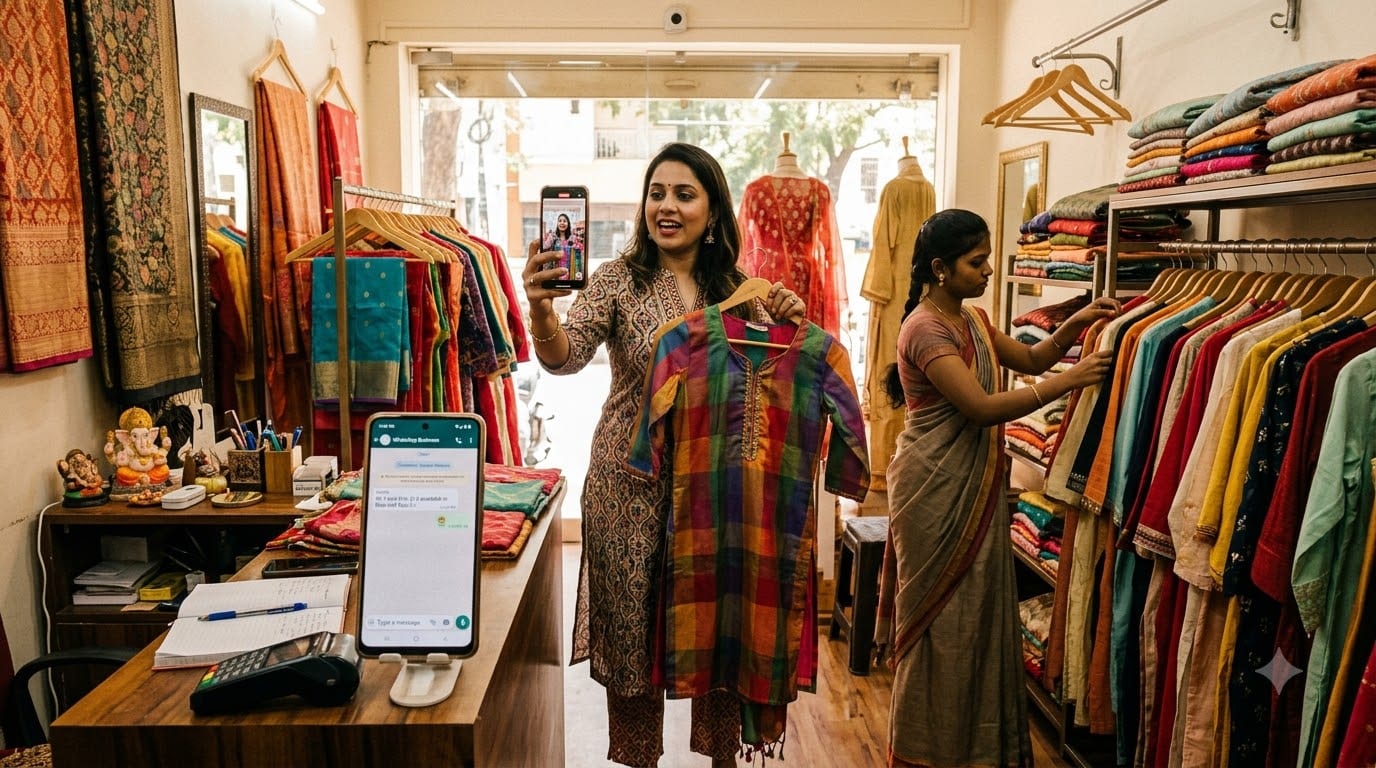
Growing a clothing or apparel boutique in India is not just about adding more designs, opening more racks, or posting more often on Instagram. It is about understanding what is already working in your store, turning first-time buyers into loyal customers, tightening your buying strategy, improving staff performance, and putting systems in place for inventory, cash flow, and payroll so the business can grow without becoming chaotic.
A boutique can become busy very quickly, but the real trouble starts when the owner has no visibility into sales patterns, no structured customer follow-up, no control over margins, and no clean process for salaries, incentives, and compliance. This guide covers the practical side of growth and shows how a boutique can move from “busy” to “well-run” with stronger discipline, clearer processes, and the right system backbone.
Related Guide:
How to Start an Apparel/Boutique Business in India
Use this guide to understand:
- Boutique/store models and product categories
- Local market and customer research
- Location, rental, and showroom planning
- Basic registrations and compliance (GST, shop & establishment)
- Startup investment and working capital
- Store interior, display, and trial-room setup
- Supplier and buying setup
- Billing, POS, and daily operations
Once the boutique is open, the next challenge is growth. Growing an apparel/boutique business is not only about getting more walk-ins. It means improving product turnover, increasing average bill value, building repeat customers, organizing inventory better, using Instagram and WhatsApp intelligently, managing staff performance, and maintaining healthier cash flow.unicommerce+2
This guide focuses on how to move from a basic clothing store to a stronger, more profitable, and more organized boutique business.
Table of Contents
1. Sales and performance baseline
2. Product and buying strategy
3. Repeat customers and loyalty
4. Instagram and WhatsApp as growth engines
5. Staff performance, targets, and incentives
6. In-store experience and SOPs
7. Margins, cash flow, and stock turns
8. Staffing, payroll, and compliance at scale
9. Growth dashboard and monthly review
10. Preparing for scale
11. How Zopkit supports boutique growth
1. Sales and Performance Baseline You Cannot Grow What You Cannot See Clearly
The first step in growing your boutique is knowing exactly where you stand today. A store that feels busy is not always a store that is growing in a healthy way. Many boutique owners confuse movement with progress, but real growth starts with clarity.
Create a simple 3–6 month baseline that includes:
- Sales by category, such as sarees, kurtis, dresses, menswear, kidswear, or fusion wear.
- Sales by price band, such as under ₹1,000, ₹1,000–₹2,500, and above ₹2,500.
- Top 20 products by quantity sold.
- Top 20 products by revenue.
- Top 30–50 customers by total spend and frequency of visit.
- Busiest days of the week and strongest time slots.
This does not require a complex BI setup. Even a simple report from billing records can show patterns. The goal is to identify what is actually driving growth and what is only creating activity.
When your billing and customer records live inside a connected system such as Zopkit Finance and Zopkit CRM, these performance views become easier to generate. Instead of manually checking bills and WhatsApp chats, you can review sales trends, customer segments, and purchase patterns in one place and make decisions faster.
2. Product and Buying Strategy Growth Does Not Come From More Stock. It Comes From Better Stock Decisions.
Many boutiques try to grow by increasing variety too quickly. That often leads to cluttered racks, blocked cash, and too much slow-moving inventory. Growth comes from buying more intentionally.
Refine your product strategy by identifying:
- Best-selling categories and styles that sell without heavy discounting.
- Colours, fits, and size combinations that customers repeatedly choose.
- High-margin products that customers naturally gravitate towards.
- Add-on items that improve average bill value, such as dupattas, jewellery, bags, or stoles.
At the same time, identify what should be reduced:
- Styles that have stayed on racks for more than one season.
- Sizes that rarely sell.
- Designs that move only when heavily discounted.
- Collections that do not match your actual customer profile.
Build a buying rhythm:
- Weekly review of fast-moving and slow-moving products.
- Monthly decision on what to restock and what to clear.
- Seasonal planning around festivals, weddings, school reopenings, and local demand cycles.
A connected finance and operations system makes this much easier. When purchase data, stock-related expenses, and collection planning are tracked properly, you can see which suppliers, categories, and launches are actually profitable. Running festival edits, launch collections, and buying cycles inside Zopkit Project Management helps keep launches structured instead of reactive.

3. Repeat Customers and Loyalty The Fastest Growth Usually Comes From the People Who Already Bought From You
New walk-ins matter, but repeat customers build stable growth. A boutique that remembers customers well will usually outperform one that only waits for fresh footfall.
At checkout, start building a usable customer record:
- Name and mobile number, with consent.
- What the customer bought.
- Approximate price range.
- Occasion, such as office wear, festive wear, wedding shopping, or kidswear.
- Style preference, such as ethnic, western, fusion, simple, or premium.
Then use that information intentionally:
- Tag customers as bridal, office wear, daily wear, kidswear, premium, or plus-size.
- Identify your top repeat buyers and treat them as VIP customers.
- Offer early access to new arrivals, special previews, or loyalty-based offers.
- Send curated updates that match what they actually buy.
For example, when a new office-wear kurti set arrives, the boutique should reach out to women who have already bought office wear. When festive kidswear comes in, parents who bought earlier should be the first to know.
This becomes much more consistent when the boutique stores these details in Zopkit CRM. Instead of depending on memory, the business can maintain purchase history, preferences, customer tags, and follow-up lists in a structured way. That allows the store to behave like a boutique that truly remembers its customers, even as the team grows.
4. Instagram and WhatsApp as Growth Engines Your Boutique Does Not Just Sell From the Rack Anymore. It Sells From the Phone Screen Too.
For boutiques in India, Instagram and WhatsApp are now part of the growth engine, not just marketing extras.
A practical Instagram rhythm should include:
- Reels showing try-ons, styling ideas, and “what’s new today”.
- Stories with live updates, such as new arrivals, limited pieces left, or extended store hours.
- Behind-the-scenes clips from photoshoots, steaming racks, packing orders, or staff styling looks.
- Clear CTAs like “DM for price”, “WhatsApp to order”, or “Visit the store today”.
A practical WhatsApp Business rhythm should include:
- A complete profile and product catalog.
- Quick replies for common questions like price, size, and availability.
- Broadcast lists for segmented groups like VIP customers, bridal shoppers, office wear buyers, and local repeat customers.
- New collection alerts, preorder lists, and festive reminders.
The point is not to post more randomly. The point is to make these channels produce real revenue.
When customer responses, purchase history, and campaign interactions are recorded inside Zopkit CRM, you can see what actually leads to sales. That means the owner can finally know whether a campaign brought orders or just views.
5. Staff Performance, Targets, and Incentives As the Store Gets Busier, Staff Quality Becomes a Revenue Function
In a small boutique, the owner often carries the service quality alone. But once the store gets busier, staff performance directly shapes sales, customer experience, and repeat business.
Clarify store roles properly:
- One person greets and qualifies the customer.
- One supports trials and styling suggestions.
- One handles billing, packaging, and cross-sell.
- One keeps the floor and racks ready.
Then track simple but useful metrics:
- Number of bills per staff member.
- Average bill value per staff member.
- Units per transaction.
- Daily or weekly target achievement.
Incentives should not feel arbitrary. They should be linked to:
- Personal sales contribution.
- Team-level target achievement.
- Service quality and customer feedback.
- Store discipline and reliability.
As soon as the boutique reaches around 8–10 employees, salary conversations get more complicated. Incentives, attendance, leaves, late arrivals, weekly offs, and deductions all start affecting payroll. This is where Zopkit HRMS becomes useful in a very practical way. Instead of using one sheet for attendance, another for salaries, and WhatsApp for shift updates, the boutique can keep employee records, attendance, salary structures, and incentives in one place.
6. In-Store Experience and SOPs Growth Breaks Consistency Unless You Standardize the Experience
A boutique grows when customers trust the experience, not just the clothes. If one staff member is attentive and another is careless, the customer experience becomes uneven.
Create simple SOPs for:
- Greeting customers in the first 10–15 seconds.
- Asking the right questions about budget, occasion, and style.
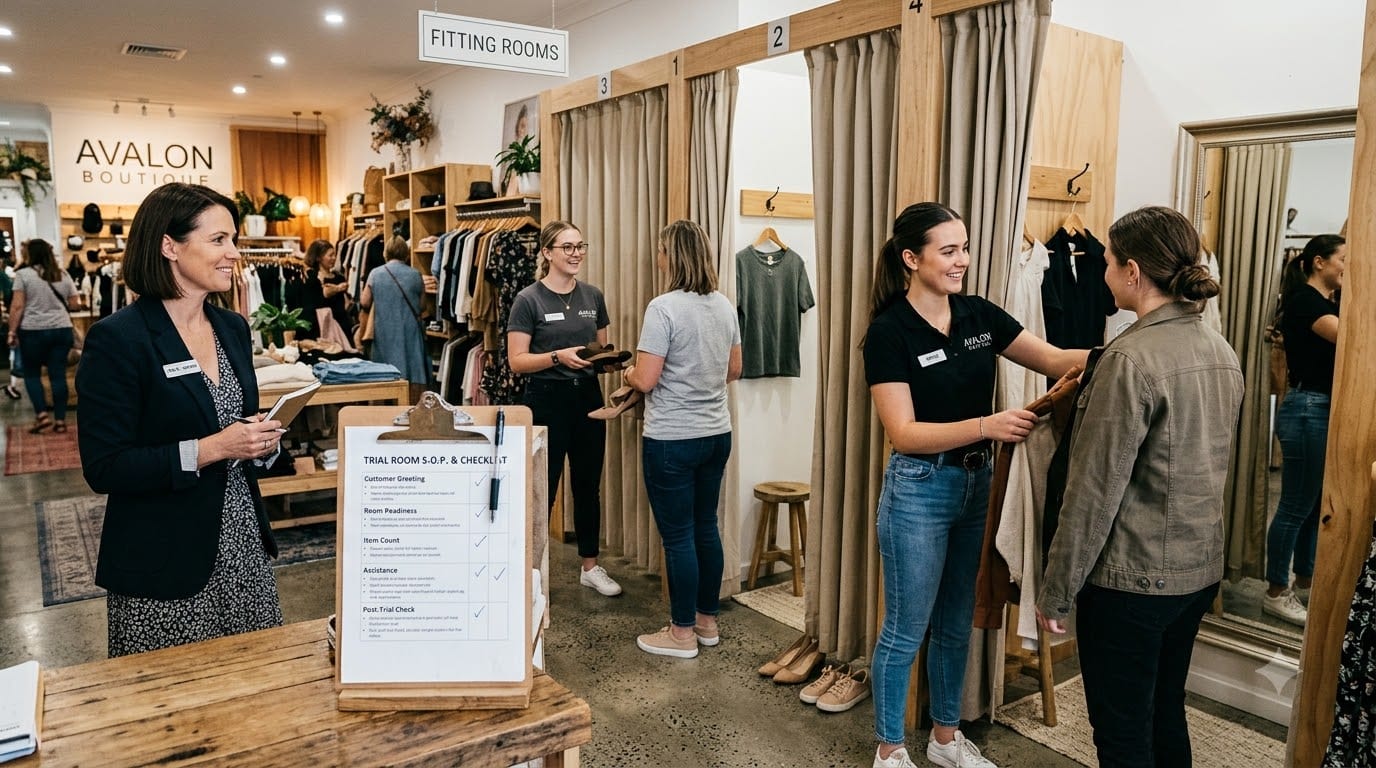
- Managing trial rooms properly.
- Suggesting matching items naturally.
- Handling exchanges, alterations, and small complaints.
- Closing the interaction in a polished way.
Do not leave this to observation alone. Write it down. Train it. Repeat it.
This is where a learning layer becomes useful. Instead of explaining the same customer handling process to every new hire again and again, the boutique can document short training modules inside Zopkit Academy. That way, sales scripts, service standards, product handling, and customer etiquette become repeatable.
7. Margins, Cash Flow, and Stock Turns Growth Without Margin Control Is Just Stress With Better Packaging
A boutique can look successful from the outside and still feel financially tight every month. That usually happens when the owner is watching sales but not margin, stock turns, and cash flow.
Three financial views matter:
Gross Margin
Understand how much is left after cost of goods. A product that sells fast is not always a good product if discounting destroys profitability.
Stock Turns
Watch how quickly inventory moves relative to how much you hold. If money is stuck in stock that does not move, growth gets blocked.
Cash Flow
Check how much cash remains after rent, salaries, buying, utilities, and marketing. A growing store still needs breathing room.
Create a monthly money review that includes:
- Total sales.
- Gross profit.
- Inventory purchases.
- Fixed costs, such as rent and salaries.
- Variable costs, such as packaging, promotions, and small repairs.
- Net cash movement.
When these are handled through Zopkit Finance, the owner can see income, expenses, vendor dues, and cash position more clearly. That makes decisions like “Can we launch a new festive edit now?” much easier to answer.
8. Staffing, Payroll, and Compliance at Scale The Boutique Stops Being Informal Once the Team Starts Growing
Once the team reaches around 8–10 employees, HR and compliance stop being background tasks. They become part of growth management.
At this stage, the boutique should have:
- Appointment letters.
- Basic HR records and ID proofs.
- Attendance and leave policies.
- Defined salary structures.
- Payroll with payslips.
- Awareness of PF, ESI, Professional Tax, and TDS where applicable.
- Basic workplace policies, especially when the team includes women staff across shifts.
Manual handling creates confusion very quickly. One person remembers attendance differently, one person disputes incentives, and one person asks why the deduction changed this month.
A system like Zopkit HRMS helps the boutique move away from payroll confusion. It keeps attendance, leave, salary, incentives, and employee data structured. That gives the owner confidence and gives employees predictability.

9. Growth Dashboard and Monthly Review If You Review Growth Only Emotionally, You Will Manage It Emotionally
Growth needs a review structure.
Every month, look at:
- Total sales.
- Number of bills.
- Average bill value.
- Top categories.
- Top SKUs.
- Inventory bought versus sold.
- Vendor outstanding payments.
- Staff performance summary.
- Revenue generated from major campaigns.
This can be as simple as a one-page internal dashboard. The point is not complexity. The point is consistency.
Because Zopkit CRM, Finance, HRMS, and Project Management work as connected modules, the boutique owner can review customers, money, people, and campaigns in a more integrated way instead of pulling data from disconnected files.
10. Preparing for Scale Good Growth Creates the Foundation for Expansion
Once the boutique has:
- Stable monthly sales,
- A clear repeat customer base,
- Better inventory discipline,
- More structured payroll and staff performance,
- And cleaner financial visibility,
it becomes ready to think about scale.
Scale might mean:
- Opening a second store.
- Expanding into online marketplaces.
- Launching a private label.
- Moving into a larger customer segment.
- Expanding to another city or locality.
The important part is this: the second store should not depend on the owner remembering everything manually. It should be built on repeatable systems. That is where connected operations matter most.
11. How Zopkit Supports Boutique Growth A Growing Boutique Needs One System, Not More Operational Fragmentation
As a boutique grows, it starts operating across five real systems:
- Customers
- Money
- People
- Work
- Learning
Zopkit connects these through:
- Zopkit CRM for customer profiles, segmentation, and campaign tracking.
- Zopkit Finance for billing, collections, expenses, and vendor payments.
- Zopkit HRMS for attendance, payroll, and employee records.
- Zopkit Project Management for launches, campaigns, restocking, and store initiatives.
- Zopkit Academy for repeatable staff training.
This does not make the boutique less personal. It makes the business side stronger, so the personal touch can scale without the backend collapsing.
Conclusion
Growing a clothing/apparel boutique in India is a mix of sharper buying, stronger customer retention, better staff structure, and cleaner financial discipline. If you know your numbers, improve your stock decisions, turn more buyers into regular customers, and build repeatable systems for staff and payroll, your boutique starts moving from hustle to structured growth.
That is where a connected business system makes a real difference. Zopkit gives the boutique a practical backbone across CRM, Finance, HRMS, Project Management, and Academy, so growth does not have to mean confusion.
Visit zopkit.com to see how Zopkit can help your boutique grow with more structure, more visibility, and less operational stress.