How to Start a Clothing/Apparel Boutique Business in India
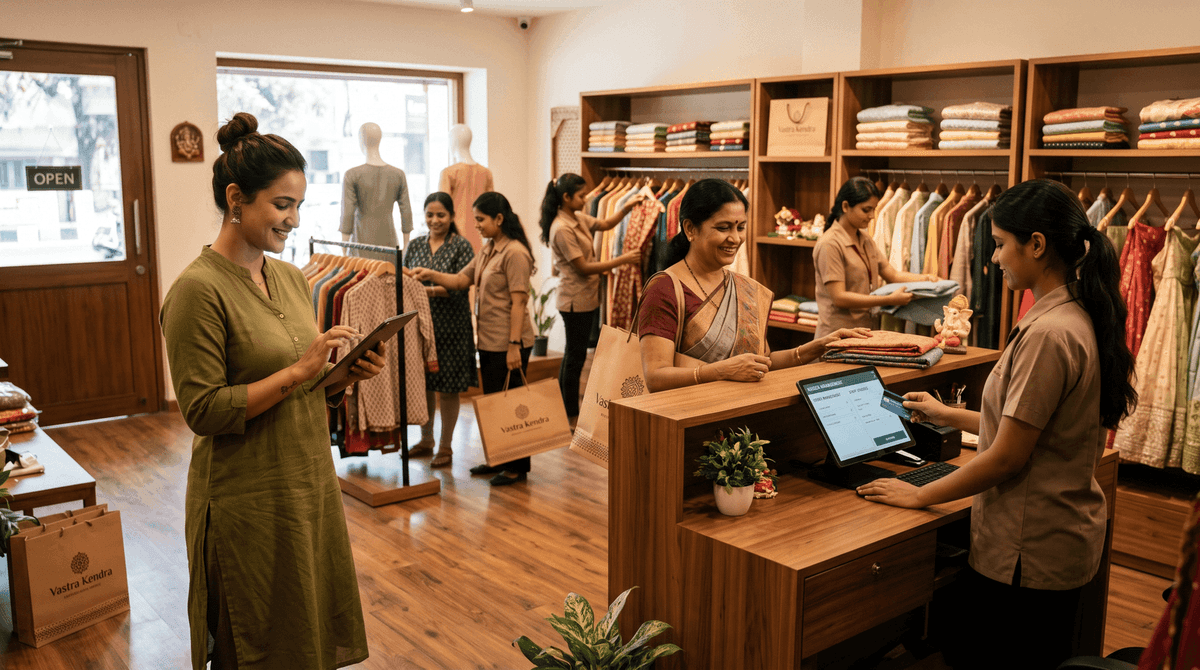
Starting a clothing or apparel boutique in India is not just about choosing a location and buying stock. It’s about setting up the right structure, registrations, staff processes, compliance, inventory flow, and customer systems so the business can actually run smoothly from day one.
A boutique can start small, but the real trouble starts when founders ignore operations and only focus on the showroom look. This guide covers both the legal steps and the real business setup, including where Zopkit fits into HR, finance, customer management, inventory tracking, and internal training.
Table of Contents
- Business model and boutique niche
- Legal structure and registration
- Licenses and permits
- GST, tax, and compliance basics
- Startup cost and funding
- Location, rent, and infrastructure
- Staffing, payroll, and HR
- Vendor and inventory setup
- Marketing and customer acquisition
- Compliance calendar and common mistakes
- How Zopkit supports boutique operations
1) Choose the boutique model
The first decision is what kind of boutique you’re building. A home-based boutique, online-first boutique, small physical store, or premium fashion studio all have different cost structures and compliance needs. Your niche should be narrow enough to market clearly, but broad enough to generate repeat sales.
Good starting niches include:
- Women’s ethnic wear
- Men’s casualwear
- Kids’ clothing
- Occasion wear (weddings, festivals)
- Fusion or Indo-western fashion
- Sustainable, handcrafted, or premium fashion
The clearer your niche, the easier it becomes to source inventory, create content, and sell on Instagram and WhatsApp Business.

2) Pick the legal structure
For a small boutique, the most common business structures are:
- Sole proprietorship
- Partnership firm
- LLP (Limited Liability Partnership)
- Private limited company
- OPC (One Person Company)
Each has trade-offs:
- Sole proprietorship: Easiest to start, lowest compliance, but no separation between personal and business liability.
- Partnership: Good if two or more people are starting together; needs a proper partnership deed and clarity on roles and profit-sharing.
- LLP: Gives limited liability with moderate compliance obligations, suitable if you want a more formal structure from day one.
- Private limited company: Best if you plan to scale aggressively, raise external capital, or build a larger fashion brand; higher compliance burden.
- OPC: Useful for a solo founder who still wants a company structure and limited liability.
For most small boutique owners, a sole proprietorship or LLP is a practical starting point. If you already know you want to scale into multiple stores and ecommerce, you can consider a private limited company.
3) Register the business
Once you choose a structure, you’ll complete the appropriate registrations.
Typical steps:
- Reserve and finalize a business name.
- For companies/LLPs, complete incorporation through MCA/ROC.
- Obtain PAN in the business’s name (or use proprietor’s PAN for a sole prop).
- Obtain TAN if you will deduct TDS.
- Apply for Udyam registration as an MSME if eligible (optional but useful for benefits and credibility).
- Open a dedicated current account in a bank.
Even for a sole proprietorship, treat the boutique as a proper business: keep the bank account separate, use the same trade name consistently, and maintain basic records from day one.
4) Licenses and permits
A clothing boutique typically needs state and local registrations. Exact requirements vary by state and municipality, but you should at least check:
- Shop and Establishment registration for your state (usually mandatory within a fixed time after starting).
- Municipal trade licence or local business licence where applicable.
- GST registration once you cross the turnover threshold, start selling online, or do inter-state sales.
- Trademark filing if you want to protect your brand name and logo.
- Local permits for signboards, hoardings, or specific commercial areas.
- Fire safety or building-related clearances for larger stores or malls where required.
If you are in a specific state (e.g., Maharashtra, Telangana), you’ll use that state’s online labour/shops portal for shop registration and renewals.
5) GST, tax, and compliance basics
For a boutique, GST becomes relevant when:
- Your turnover crosses the current threshold for goods, or
- You sell online via marketplaces/ecommerce, or
- You supply goods interstate.
Even if you’re below the threshold initially, consider voluntary registration if your suppliers or partners expect GST billing.
You should also plan for:
- Regular income tax filings (business or individual, depending on structure).
- TDS obligations if you pay certain vendors, rent, or professional fees over thresholds.
- Proper books of accounts and invoice numbering.
- State professional tax where applicable.
- Labour-related obligations if you employ staff (PF, ESI, etc., once you cross thresholds or opt in).
Putting a simple compliance checklist and calendar in place early avoids penalties later.
6) Startup cost and funding
Startup cost varies depending on your model:
- Home/online-only boutique: Less rent and interior cost, but you still need inventory, photography, packaging, and basic tech.
- Physical boutique: More investment in rent/advance, interiors, fixtures, and initial stock.
Typical cost buckets:
- Security deposit and initial rent.
- Interiors: racks, hangers, trial rooms, lights, mirrors, signage.
- Initial inventory (garments, accessories).
- Billing/POS or at least a laptop plus printer and basic POS software.
- Branding: logo, basic packaging, tags, business cards.
- Photography and social media launch content.
- Registrations, licences, and basic professional fees.
- Working capital for at least 2–3 months of operations (salaries, rent, restocking).
Funding options:
- Self-funding/personal savings.
- Family/friends.
- Small business loans or overdrafts.
- MSME/retail-focused schemes through banks or state programs.
Launching lean is usually smarter than over-investing in interiors and stock on day one.

7) Location, rent, and infrastructure
If you’re opening a physical store, location is critical. Look for:
- Proximity to your target customers (residential, office crowd, high street).
- Visibility from the main road or inside a mall/market.
- Nearby complementary shops (salons, cafes, other fashion stores).
- Parking and access.
Before signing a lease:
- Confirm the property is approved for commercial/retail use.
- Clarify lock-in period, escalation, and renewal terms.
- Document who pays maintenance, utilities, and repairs.
- Check signage rules for the building or market.
- Ensure the agreement is properly stamped and registered.
Basic infrastructure checklist:
- Clothing racks and shelving.
- One or more trial rooms with mirrors.
- Billing counter with cash drawer and card/UPI setup.
- Storage for packed garments and extra stock.
- Comfortable lighting that makes clothes look good.
- Basic CCTV and security if needed.
If you start online-only, your “location” becomes where you keep stock, pack orders, and shoot content, so plan that space equally seriously.
8) Staffing, payroll, and HR
Many boutiques start with the owner and one helper. Very quickly, though, you may end up with 5–10 people: sales staff, biller, stock assistant, tailor, and maybe a content person.
What gets messy around 10 employees
Once you have around 10 employees:
- You’re tracking attendance, weekly offs, late arrivals, and overtime.
- You have to process salaries consistently, on time.
- Deductions like advances, incentives, or penalties must be applied correctly.
- Thresholds for PF, ESI, professional tax, and TDS start becoming relevant.
- You may need appointment letters, policy documents, and POSH awareness.
Doing this on Excel + WhatsApp works for a couple of months, then becomes painful and risky.
How Zopkit helps with HR and staffing
This is where Zopkit HRMS and related tools are useful:
- Store all employee details, documents, and joining information in one place.
- Track attendance and shifts (for example, two shifts in a day, different store timings).
- Compute salaries automatically based on present days, leaves, incentives, and deductions.
- Handle PF, ESI, professional tax, and TDS where applicable and generate the right reports.
- Maintain payslips and salary history so disputes are minimized.
- Use Zopkit Academy to train staff on customer handling, sales scripts, and product knowledge through short structured learning modules.
Instead of chasing multiple sheets and handwritten notes, you get a clear view of who worked when, what they earned, and whether compliance is on track.

9) Vendor and inventory setup
Your boutique’s profitability depends heavily on how you source and manage stock.
Key decisions:
- Will you source from wholesale markets, manufacturers, local designers, or a mix?
- Are you buying ready-made garments or producing your own designs?
- How frequently can you restock?
- What are the minimum order quantities?
Try to formalize vendor relationships:
- Agree on written prices, quantities, and payment terms.
- Clarify defect/return policies.
- Set expectations for delivery timelines.
- Decide how you will handle slow-moving stock or unsold sizes.
Inventory discipline:
- Start with fewer styles and tighter depth, instead of overbuying in every design.
- Track stock in and out — styles, sizes, colours.
- Keep a basic view of bestsellers and non-movers.
How Zopkit can support:
- Use Zopkit Finance to track purchase bills, pending vendor payments, and stock-related expenses.
- Use Zopkit Project Management for restock tasks, launch collections, photoshoots, and seasonal campaigns.
This way, stock and supplier issues don’t live only in WhatsApp chats and memory.
10) Marketing and customer acquisition
In 2026, a boutique that isn’t visible online has a hard time growing, even if it’s a pure offline store. Most customers discover boutiques on Instagram, Google Maps, or via WhatsApp forwards.
Core channels:
- Instagram: Reels, posts, Stories showing outfits, try-ons, before/after styling, and customer photos (with consent).
- WhatsApp Business: Catalog, quick replies, broadcast lists for new arrivals and offers.
- Google Business Profile: Address, hours, photos, reviews, directions.
- Influencer and micro-creator collaborations: Local creators wearing your outfits.
- Referral programs: Discounts or small freebies for bringing a friend.
- Offline: Flyers in nearby apartments, partnerships with salons, cafes, or gyms.
Where Zopkit fits:
- Zopkit CRM can store customer profiles, interests (ethnic, western, kids), budget ranges, and purchase history.
- You can tag loyal customers, “VIP” buyers, or event-based shoppers (e.g., wedding, festival).
- Use those tags to plan targeted WhatsApp or SMS campaigns and to personalize follow-ups.
Instead of treating every sale as a one-off, you build a real customer base.
11) Compliance calendar and common mistakes
A simple compliance calendar from day one will save you a lot of stress later.
Recurring items to track:
- GST returns (monthly/quarterly) once registered.
- Annual income tax returns.
- Shop and Establishment renewals or updates.
- PF and ESI returns if applicable.
- Professional tax payments.
- Any local trade licence renewals.
Common mistakes by boutique owners:
- Delaying shop registration or ignoring local rules.
- Using a personal bank account for business transactions.
- Overbuying inventory before understanding demand.
- Running all operations on paper and WhatsApp.
- Not having clear employment terms or payroll discipline.
- Forgetting that PF/ESI/PT rules exist once staff count grows.
- Ignoring repeat customer tracking and treating every sale as new.
Zopkit doesn’t replace your CA or legal advisor, but it does reduce chaos by keeping HR, finance, and customer data structured and reportable.
12) How Zopkit supports boutique operations
Put simply, a boutique has five main “systems” once it moves beyond a hobby:
- Customers – who they are, what they like, what they bought, how you follow up.
- Money – what you’re billing, collecting, paying vendors, and keeping.
- People – your staff, how they’re scheduled, and how they’re paid.
- Work – launches, campaigns, vendor follow-ups, restocking, shoots, and events.
- Learning – how quickly your team can learn and repeat the way you want things done.
Zopkit maps nicely to these:
- Zopkit CRM → Customers and sales pipeline (online and offline).
- Zopkit Finance → Billing, collections, vendor payments, and financial hygiene.
- Zopkit HRMS → Staff onboarding, attendance, payroll, statutory deductions.
- Zopkit Project Management → Collection launches, marketing campaigns, and store projects.
- Zopkit Academy → Training staff on customer service, sales scripts, and product knowledge.
For a boutique owner, this means you don’t grow into a tangle of separate apps and spreadsheets. You grow into one connected system that can support you when you go from “just opened” to “busy store with multiple staff and a steady online order flow.”
Conclusion
Starting a clothing/apparel boutique in India is a mix of creativity and discipline. If you get the structure, registrations, staffing system, vendor process, and marketing channels right, your chances of building a sustainable boutique increase dramatically.
The earlier you treat the boutique like a real business with clean records, clear roles, and a simple software backbone the easier it is to grow later. Zopkit gives you that backbone across customers, finance, HR, projects, and training, so you can focus on what only you can do: curating great clothes and building a brand your customers love
Visit zopkit.com to see how Zopkit can help your boutique grow with more structure, more visibility, and less operational stress.