How to Scale a Clothing/Apparel Boutique Business in India

Scaling a clothing or apparel boutique in India is not just about opening more outlets or launching a website. It’s about turning a successful store into a repeatable, system-driven business that can work across multiple locations and channels, while keeping inventory, customer experience, staff performance, and cash flow under control.
Many boutiques reach a busy, profitable single-store stage, but get stuck there because the owner is the only “system”: they remember every customer, approve every discount, settle every salary, chase every vendor, and manage every campaign. Scaling from this point needs a shift from owner-led instinct to brand-led systems and data.
Related Guide:
How to Start an Apparel/Boutique Business in India
Use this guide to understand:
- Boutique/store models and product categories
- Local market and customer research
- Location, rental, and showroom planning
- Basic registrations and compliance (GST, shop & establishment)
- Startup investment and working capital
- Store interior, display, and trial-room setup
- Supplier and buying setup
- Billing, POS, and daily operations
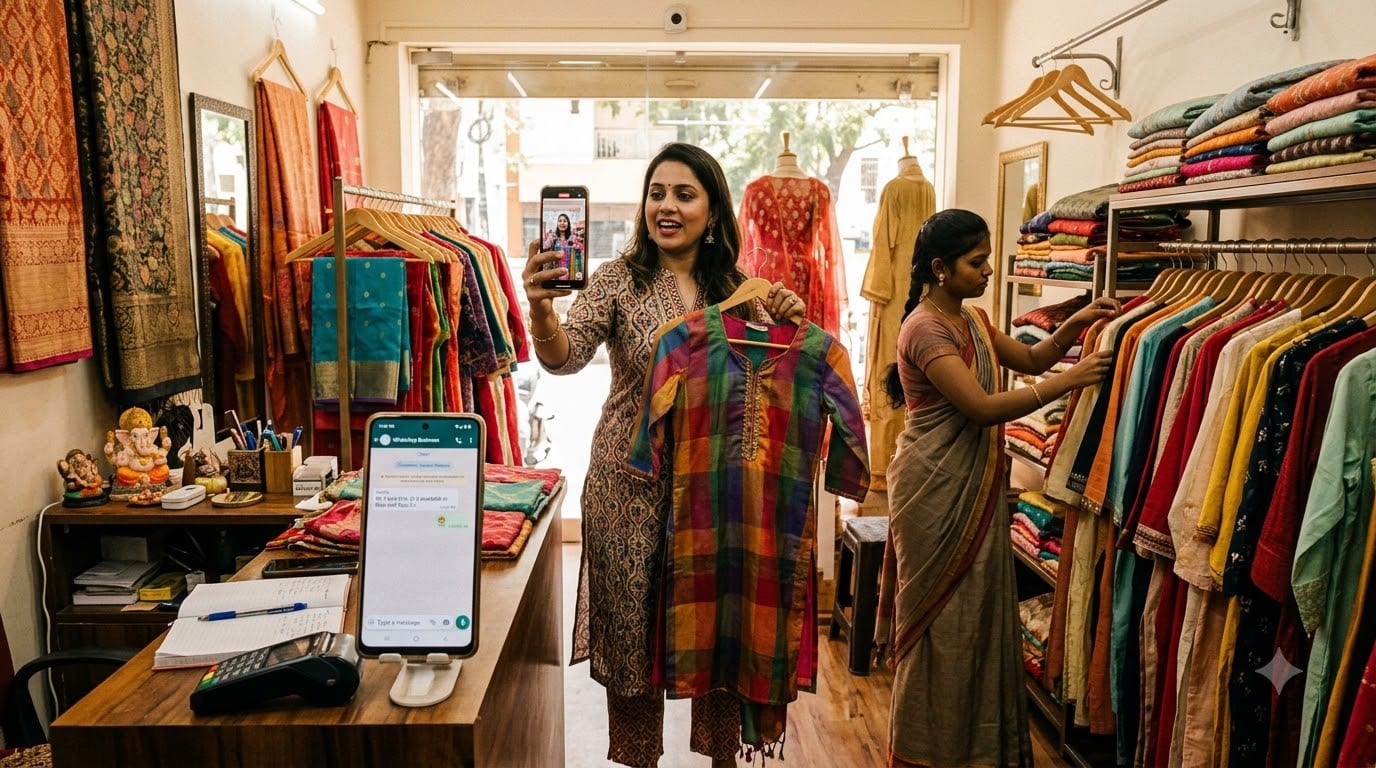
Once the boutique is open, the next challenge is growth. Growing an apparel/boutique business is not only about getting more walk-ins. It means improving product turnover, increasing average bill value, building repeat customers, organizing inventory better, using Instagram and WhatsApp intelligently, managing staff performance, and maintaining healthier cash flow.
This guide focuses on how to move from a basic clothing store to a stronger, more profitable, and more organized boutique business.
Related Guide:
How to Grow an Apparel/Boutique Business in India
- Use that guide to understand
- Current boutique performance and metrics
- Product mix and inventory turnover
- Increasing average bill value
- Building repeat customers and local loyalty
- Using Instagram and WhatsApp for growth
- In-store experience and SOPs
- Buying, suppliers, and stock discipline
- Cash-flow and margin basics
- Staff-led store operations
Once the boutique is growing in a structured way, the next question is how to scale without losing control or the personal touch. Scaling an apparel/boutique business is not simply about opening another outlet or adding more SKUs online. It means building a repeatable retail and operations system that can manage styles, sizes, colours, inventory, promotions, staff, content, and customers across multiple stores and channels. This guide explains how to move from a successful boutique to a multi-location, omni-channel, system-driven fashion business.
Table of Contents
- Decide your scaling model
- Standardize the boutique playbook
- Build team-led operations instead of owner-led
- Centralize inventory and vendor management
- Create a connected omni-channel experience
- Make data multi-store and multi-channel
- Tighten cash flow, controls, and compliance
- Invest in brand-building, not just branch-building
- Phase your scaling roadmap
- Conclusion and CTA
1. Decide Your Scaling Model
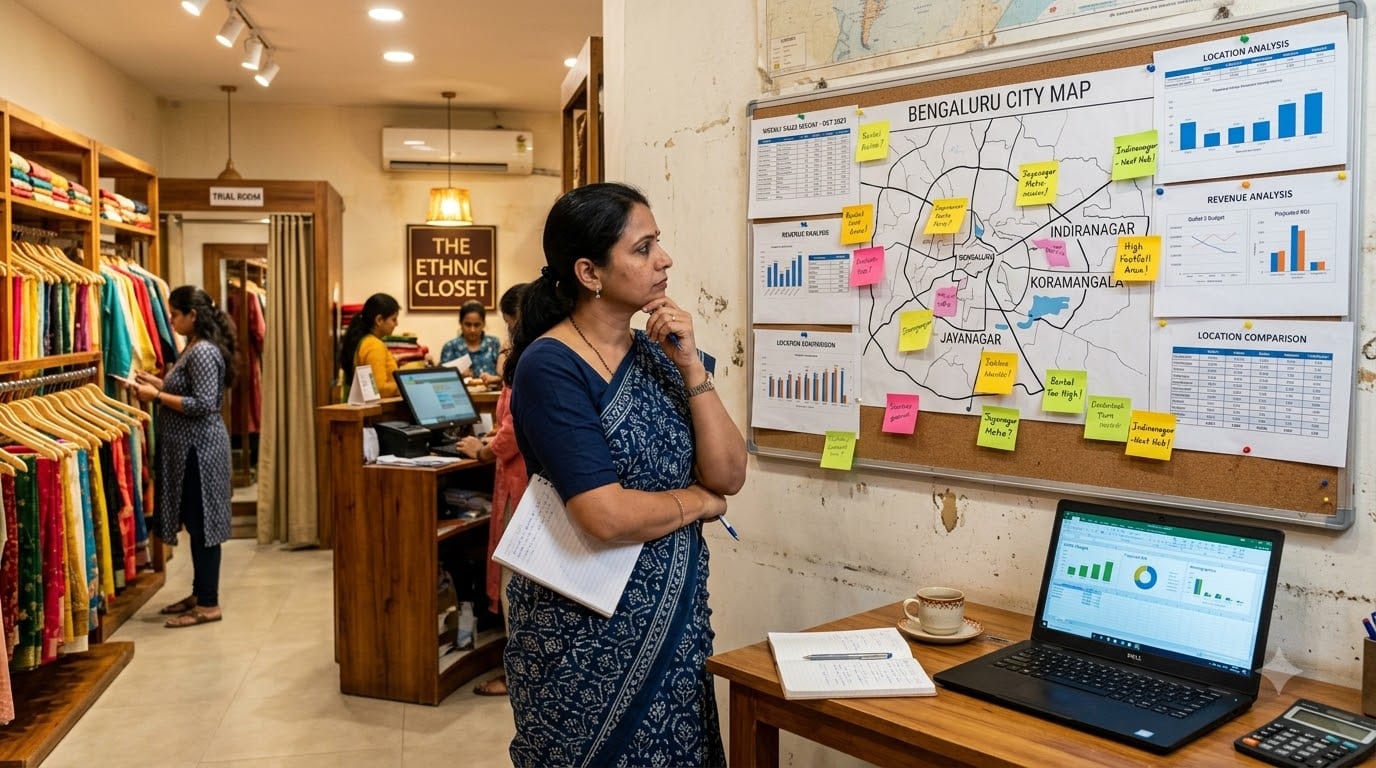
Scaling can mean different things for different boutiques, and clarity here will guide every next move.
Common scaling models:
- Multi-store: One brand, multiple shops in the same city or new cities (high street, mall, residential micro-markets).
- Omni-channel: Offline store plus own website, marketplaces, and social commerce, all running on a shared inventory and customer backbone.
- Category expansion: Adding new segments like menswear, kidswear, accessories, or plus-size, while keeping the same brand base.
- Brand-led model: Developing your own label and scaling through multi-brand outlets, marketplaces, and franchise formats.
You don’t need to do everything at once. A practical path is:
- Step 1: Make one store operationally strong.
- Step 2: Add one new channel (like a website or marketplace) and connect it properly.
- Step 3: Open a second store when your playbooks and systems can support it.
Starting small, testing what works, and then scaling proven formats is also what larger Indian fashion chains do at national scale.
2. Standardize the Boutique Playbook
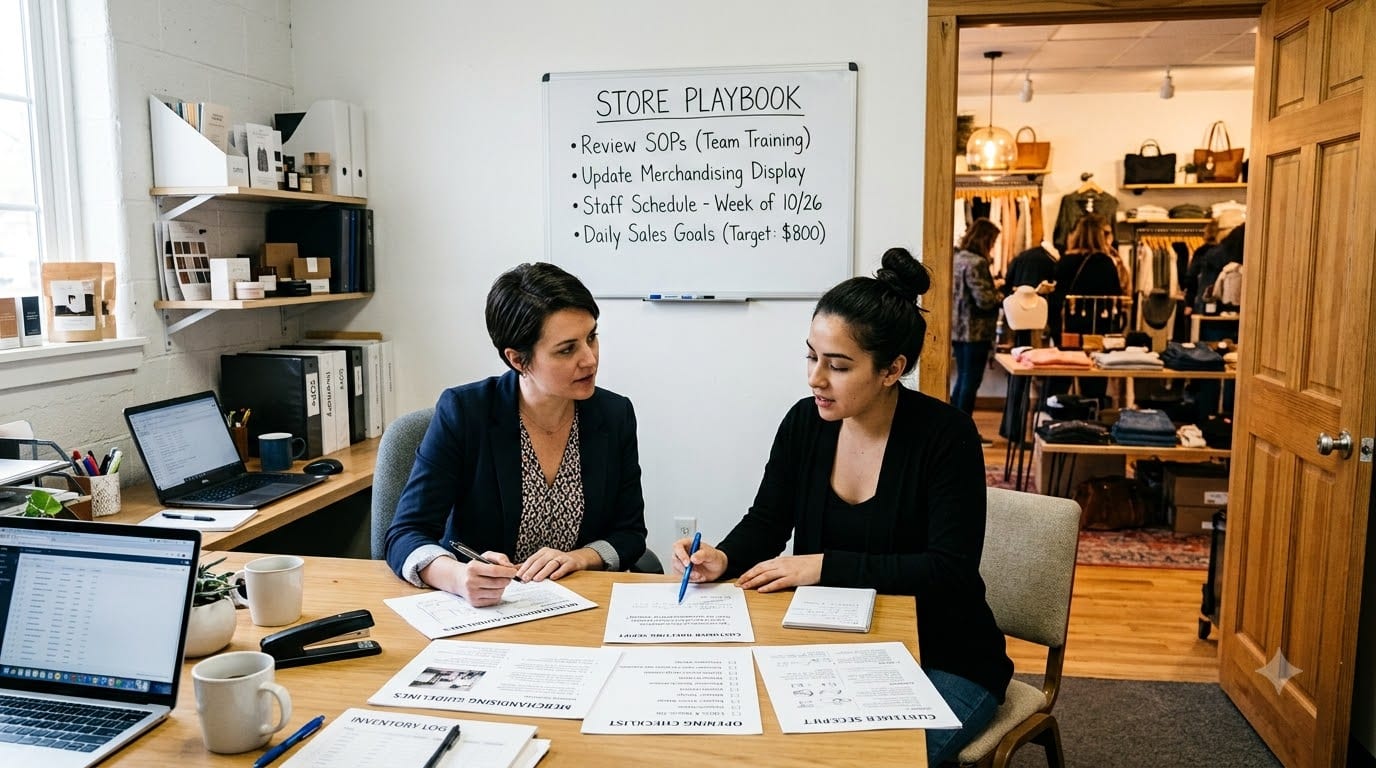
A single store can run on the owner’s memory. A scaled business cannot.
You need a written, repeatable playbook for:
- Store layout: how racks, trial rooms, billing counters, and stock rooms are arranged for each format.
- Customer handling: greeting scripts, discovery questions, trial room etiquette, upsell/cross-sell patterns, complaint management.
- Visual merchandising: how new collections are displayed, how mannequins are styled, how offers and price points are shown.
- Discount and promotion rules: who can approve offers, what margins must be protected, how promotions are communicated.
- Daily routines: opening and closing checklists, cash handling, basic stock checks, cleanliness, and security.
This playbook becomes the template for every new outlet, making “store 2” and “store 3” feel like extensions of the brand, not copies of the owner’s personality. Tools and workflows you set up behind zopkit.com can convert these playbooks into structured SOPs and staff training modules that scale with the business.
3. Build Team-Led Operations Instead of Owner-Led
At scale, you need teams and managers to carry the business daily, as you focus more on direction than daily firefighting.
Key shifts:
- Defined roles: Store managers, floor leads, senior stylists, stock managers, and online order coordinators, with clear job expectations.
- Responsibilities: Who handles hiring, scheduling shifts, weekly performance reviews, customer complaints, visual merchandising, and campaign execution.
- Delegated decisions: Clear limits on what managers can approve locally (returns, exchanges, small discounts) and what needs owner or head office sign-off.
HR and payroll structure become critical:
- Centralized staff records across locations.
- Attendance and leave tracking across stores.
- Consistent salary structures and incentive rules.
- Clear compliance around PF, ESI, and other regulations as staff counts grow.
Systems and workflows powered through zopkit.com can help keep this multi-store HR and payroll layer clean and predictable.
4. Centralize Inventory and Vendor Management
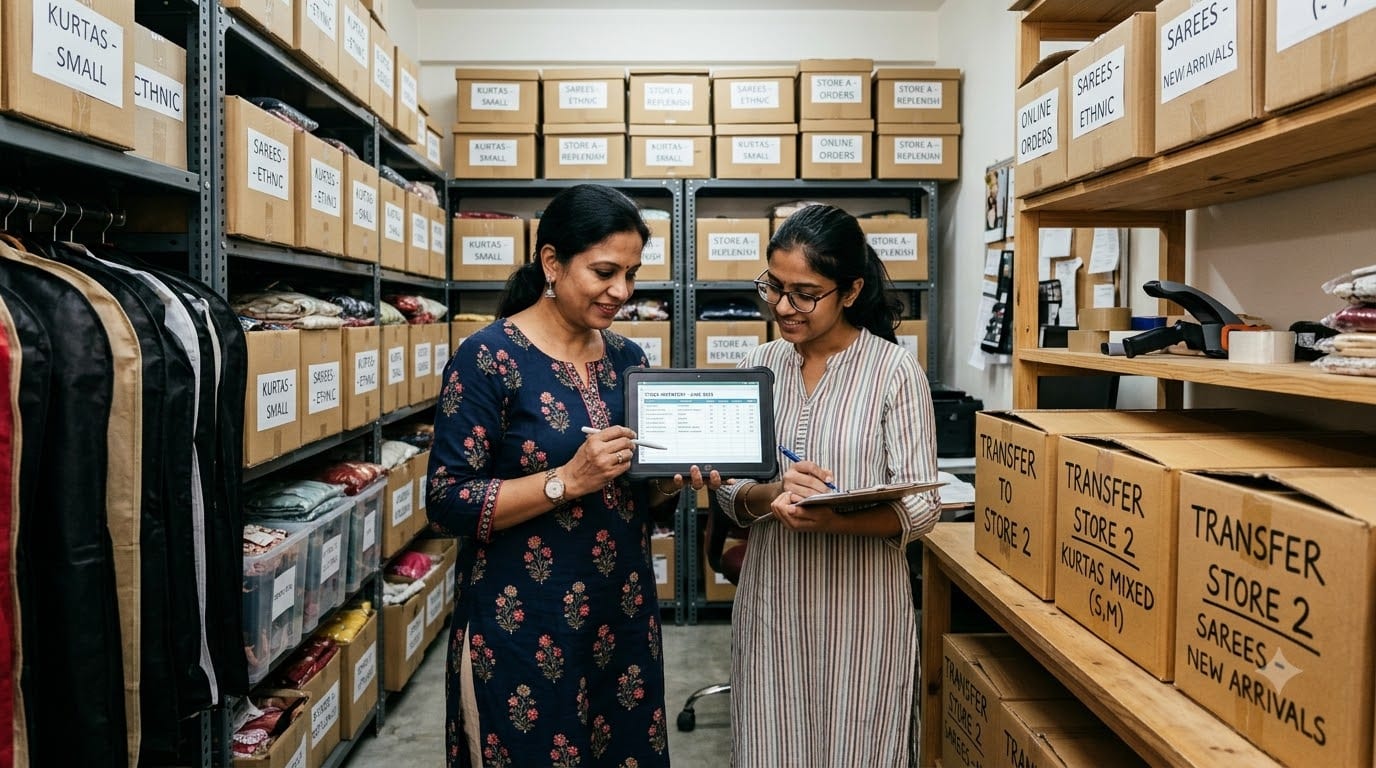
Multi-store and multi-channel boutiques often break on inventory and vendor chaos if nothing is centralized.
You need:
- Real-time inventory visibility: Stock by SKU, size, colour, and location (each store, warehouse, and online stock pool).
- Unified vendor management: Purchase orders, rates, delivery commitments, and dues tracked across locations in one view.
- Data-based reorder rules: Reorder points tied to sales velocity, margins, and seasonality, not just gut feel.
- Inter-store transfers: Rules for moving stock between outlets when one location over-holds and another under-holds.
Central systems for finance and operations like ones you can run via zopkit.com make it possible to treat inventory and vendors as brand-level assets instead of isolated store-level issues.
5. Create a Connected Omni-Channel Experience
Omni-channel is not just “we sell in-store and online”. It’s about creating one continuous brand experience across physical stores, websites, marketplaces, mobile apps, and social channels.
For a scaling boutique, that means:
- Customers can discover products in one channel and complete their purchase in another without friction.
- Catalog, pricing, and promotions are consistent across all touchpoints.
- Loyalty, purchase history, and preferences are tracked centrally, not separately per channel.
- Fulfillment options are flexible: ship-from-store, click-and-collect, and store pickups supported by shared inventory.
You need:
- A central CRM and customer data layer to unify identities and journeys.
- Integrated inventory management that feeds every channel in real time.
- Connected order and fulfillment tracking across online and offline.
The CRM and operations backbone you can build using zopkit.com helps turn multi-channel efforts into a true omni-channel brand experience.
6. Make Data Multi-Store and Multi-Channel
Scaling decisions only become safe and repeatable when they are data-driven across stores and channels, not just based on one outlet’s experience.
You should be able to see:
- Sales, margins, and footfall per store.
- Category performance per city and per channel.
- Repeat purchase behavior by segment (bridal, office wear, kidswear, premium).
- Inventory turns per store and overall brand.
- Campaign performance across offline and online (festive edits, wedding seasons, end-of-season sales).
With this level of visibility, questions like “Where should we open next?”, “Which format works best?”, and “Which categories should we deepen or cut?” become strategic decisions instead of guesses. Central dashboards and reports generated from systems tied into zopkit.com can give boutique owners this multi-store view.
7. Tighten Cash Flow, Controls, and Compliance
As you add stores and channels, the volume and complexity of money and obligations increase.
You need to tighten:
- Cash flow visibility: Brand-level views of cash in, cash out, and store-wise performance not just bank balance snapshots.
- Internal controls: Rules for cash handling, refunds, returns, credit notes, and vendor payments that everyone follows.
- Approval workflows: Clear limits on who can approve major spends, large discounts, or campaigns.
- Compliance tracking: Multi-store shop & establishment, labour, GST, and other obligations on a shared calendar.
Finance and HR systems running in one ecosystem like those you can deploy through zopkit.com help ensure that scaling does not become uncontrolled financial and compliance risk.
8. Invest in Brand-Building, Not Just Branch-Building
Scaling is not only about operations and systems - it’s also about brand.
A boutique scales better when:
- Positioning is clear: price band, style, and target segment are consistent.
- Visual identity is recognizable: logo, colours, signage, and store look feel coherent across locations and channels.
- Content and campaigns feel intentional: seasonal drops, festive edits, collaborations, and storytelling match the brand’s core.
- At scale, brand-building includes:
- Strong in-store branding and visual merchandising.
- Robust digital presence and social/content strategy.
- Carefully planned campaigns that run across all stores and channels.
Using project and campaign management tools around zopkit.com, you can treat launches and brand pushes as structured initiatives rather than ad hoc efforts.
9. Phase Your Scaling Roadmap
Large Indian retailers and fashion brands use phased roadmaps to scale—boutiques can too.
A simple roadmap:
Phase 1: Operational Foundation
Stabilize your first store with strong inventory, staff, customer, and cash flow systems.
Phase 2: Channel Expansion
Add online and marketplace channels, connect them to shared inventory and CRM, and refine your omni-channel basics.
Phase 3: Multi-Store Rollout
Open a second store using your standardized playbook and centralized systems; test formats and micro-markets.
Phase 4: Brand Scaling
Deepen categories, add cities, strengthen campaigns, and sharpen data-driven decisions across the brand.
At every phase, your systems should already be capable of supporting the next step. That is where a connected operating backbone like zopkit.com becomes valuable: you build it once and use it through every stage instead of patching tools as you go.
Conclusion and CTA
Scaling a clothing/apparel boutique in India is about moving from one good store to a repeatable, omni-channel brand system. When you:
- Define how you want to scale,
- Standardize your boutique playbook,
- Build team-led operations instead of owner-only operations,
- Centralize inventory, vendors, and customer data,
- Create a connected omni-channel experience,
- Make decisions from multi-store, multi-channel data,
- Tighten cash flow, controls, and compliance,
- And invest in brand-building alongside branch-building,
you set up your boutique to grow into a sustainable, scalable fashion business rather than a stressed-out chain of disconnected shops.
If your boutique is ready to move from “busy single store” to “scalable brand”, it’s time to think about your backbone how customers, money, staff, operations, and campaigns connect in one place.
Explore how you can build that backbone across CRM, finance, HR, operations, and projects at zopkit.com.