How to Start a Food Truck Business in India
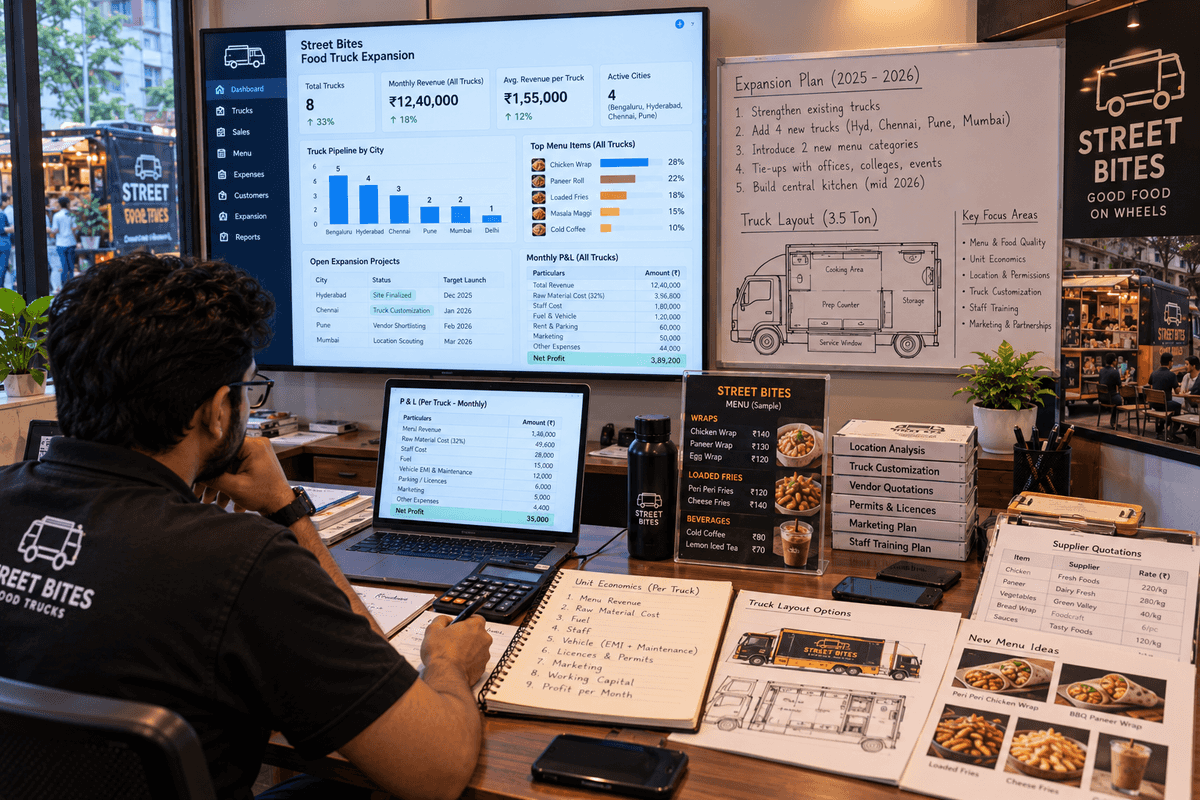
Starting a food truck business in India is not just about buying a vehicle, installing a kitchen, and parking at a busy spot. It requires choosing the right business model and cuisine, understanding your target customers and competition, arranging multiple registrations and licences (FSSAI, municipal trade or hawker licence, fire safety NOC, RTO approval for vehicle modification, GST where applicable), planning investment and vehicle setup, designing the menu and operations, setting up compliance and quality systems, and building a customer experience that makes people return and refer others.
This guide explains how to start a food truck business in India, including the business model, market research, vehicle and kitchen setup, registrations and licences, investment and equipment, operations and compliance, supply and inventory control, customer experience and brand presence, staffing, and how Zopkit can support operations.
Table of Contents
- Choose your food truck business model
- Study your market and target customers
- Select vehicle and design kitchen and operations setup
- Complete registrations and compliance (FSSAI, municipal licence, fire safety, RTO, GST, etc.)
- Plan investment and equipment
- Set up food truck operations, scheduling, and compliance
- Build supply, procurement, and inventory control
- Design customer experience and brand presence
- Hire, train, and structure your team
- Use Zopkit and a food truck backbone to run operations
1. Choose Your Food Truck Business Model
The first step is deciding what kind of food truck business you want to build. A clear model makes it easier to design menu, pricing, and operations.
Common models include:
Specialty cuisine food truck
Focused on a specific cuisine or category such as burgers, tacos, rolls, momos, chaat, desserts, or regional specialties.
Quick service and street food truck
Focused on fast, affordable, high volume items such as sandwiches, wraps, fries, shakes, and local street food.
Premium or gourmet food truck
Focused on higher end offerings such as gourmet burgers, artisanal pizzas, fusion dishes, or chef driven menus at events and corporate parks.
Event and corporate focused truck
Focused on weddings, college fests, corporate parks, marathons, and private events with scheduled appearances and pre-orders.
Multi truck or hub and spoke model
Multiple trucks operating in different zones or cities, sometimes supported by a central kitchen for prep and storage.
Decide:
- Whether you will operate as a specialty truck, quick service truck, premium truck, event focused truck, or multi truck network.
- Your primary format: single truck, multiple trucks, or hub and spoke with central kitchen.
- Customer focus: daily walk-ins, event crowds, corporate employees, or a mix.
- Price positioning: value and volume, mid range, or premium and gourmet.
Clarifying this early helps you choose vehicle, menu, licences, and systems that match your concept.
2. Study Your Market and Target Customers
Food trucks succeed when they solve a clear need for a specific type of customer in a specific area or city.
Research:
- Who your primary customers are (students, working professionals, families, event attendees, corporate employees).
- What they look for (speed, taste, price, variety, hygiene, Instagrammable food).
- Which food trucks, cafes, street vendors, and restaurants are already present and where gaps exist.
- How much they spend on food and what they value most.
Analyze competition:
- Existing food trucks, street vendors, and small eateries in your target area or radius.
- Their menu, pricing, locations, and customer reviews.
- Their strengths and weaknesses in quality, speed, and trust.
Understand:
- Local food preferences and peak times (morning rush, lunch crowds, evening snacks, late night).
- Demand for specific cuisines or categories (North Indian, South Indian, Chinese, Continental, desserts, beverages).
- Local preferences for cash, UPI, cards, and corporate tie-ups.
Use this to shape:
- Your menu and pricing strategy.
- Operating hours and locations (corporate parks, colleges, markets, events).
- Brand positioning and messaging.
A food truck built on real demand patterns is easier to fill and scale than one built on assumptions.
3. Select Vehicle and Design Kitchen and Operations Setup
Vehicle and kitchen setup are two of the biggest drivers of success and compliance for a food truck.
Choose your vehicle:
- Commercial vehicle suitable for your city rules (truck, van, trailer, or converted bus).
- Adequate space for kitchen equipment, storage, service window, and staff movement.
- Compliance with local RTO rules for commercial use and modifications.
- Reasonable purchase or lease cost relative to expected volumes.
Design your kitchen and operations setup:
- Clear separation for prep, cooking, plating, billing, and service window.
- Proper ventilation, exhaust, fire suppression, and gas safety systems.
- Secure storage for raw materials, cooked food, and disposables.
- Comfortable space for staff to work efficiently during peak hours.
Before finalizing, check:
- Local zoning and municipal rules for food truck parking and vending.
- Permissions from landlord, RTO, and local authorities.
- Power backup, water, and waste disposal for operations.
- Competition density and customer profile in the area.
Plan your positioning:
- Neighbourhood quick service truck with affordable meals and fast turnaround.
- Specialty cuisine truck with unique menu and strong branding.
- Premium gourmet truck with high quality ingredients and experience.
- Event and corporate focused truck with scheduled appearances and pre-orders.
4. Complete Registrations and Compliance (FSSAI, Municipal Licence, Fire Safety, RTO, GST, etc.)
Food trucks are regulated. Proper licences and compliance are essential for credibility and risk management.
Choose a business structure:
- Sole proprietorship for small, owner run trucks.
- Partnership firm if multiple partners invest and operate together.
- LLP or private limited company for larger operations, multiple trucks, or investors.
Typical requirements include:
- Business registration for the chosen entity (proprietorship, partnership, LLP, or private limited).
- PAN and a current bank account in the business name.
FSSAI registration or licence (mandatory for all food businesses).
- Basic FSSAI registration for annual turnover up to ₹12 lakh.
- State FSSAI licence for turnover between ₹12 lakh and ₹20 crore.
- Central FSSAI licence for very large operations or multi-state presence.
- From March 2026, FSSAI licences are perpetual with annual fee and compliance instead of renewal cycles.
- Municipal trade licence or hawker licence from the local municipal corporation for vending at specific locations.
- Fire safety NOC from the local fire department (especially for LPG based kitchens).
- RTO approval and NOC for vehicle modification and commercial use.
- Shops and Establishment registration as per state rules (where applicable).
GST registration (mandatory if turnover exceeds threshold; many operators register voluntarily for input tax credit and corporate billing).
- GST threshold for goods (food items) is typically ₹40 lakh per year (₹20 lakh for special category states).
- Eating house licence or police permission where required by local rules.
- Kitchen and vehicle insurance for risk coverage.
Maintain records for:
- FSSAI licence and annual compliance.
- Municipal trade or hawker licence and renewals.
- Fire safety NOC and RTO approvals.
- GST returns and tax compliance.
- Supplier agreements and purchase invoices for raw materials and disposables.
- Staff records, qualifications, and training documents.
- Quality manuals, SOPs, and internal audit records.
Early attention to compliance reduces legal risk and makes it easier to work with customers, event organizers, and corporates.
5. Plan Investment and Equipment
Investment for a food truck depends on your model, city, and ambitions.
Typical initial costs include:
- Vehicle purchase or lease and modification for kitchen setup.
- Kitchen equipment such as burners, fryers, grills, refrigerators, freezers, exhaust systems, and fire suppression.
- Generator or power backup, water tanks, and waste disposal systems.
- Computer or tablet, billing software, and basic technology.
- Initial inventory of raw materials, disposables, and working capital.
- Licences, professional fees, and pre launch marketing.
Monthly costs include:
- Fuel and vehicle maintenance.
- Staff salaries for chef, kitchen assistant, driver, and service staff.
- Ongoing raw material and disposables purchases.
- Software and SaaS costs.
- Marketing, events, and promotions.
- Licence renewals and compliance costs (often annual).
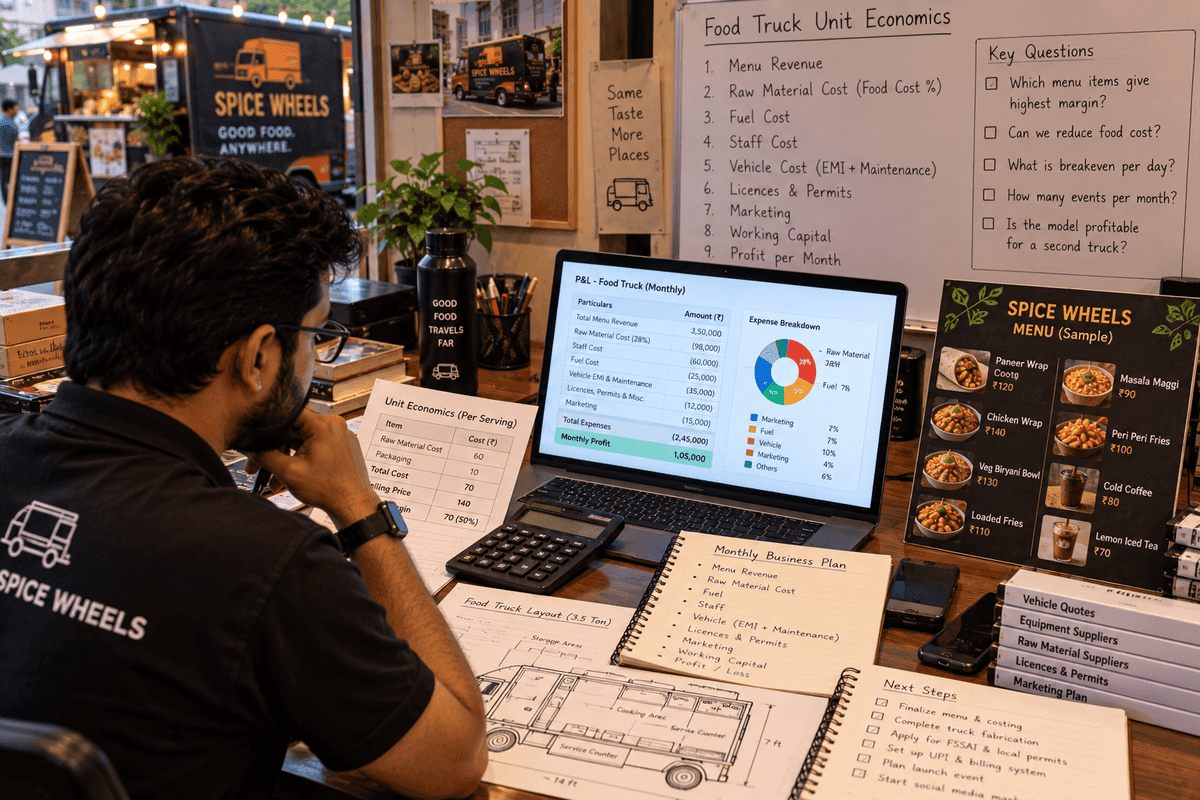
Understand unit economics:
- Average monthly revenue per truck and per shift.
- Raw material and disposables cost as a percentage of revenue.
- Fuel, staff, and overhead cost as a percentage of sales.
- Break even timeline and expected ROI per truck.
Plan your capital so you can:
- Operate and sustain the truck until it reaches steady volumes.
- Handle months when volumes fluctuate due to seasonality or local factors.
- Invest in equipment, raw materials, and marketing as needed.
- Pay suppliers and staff on time.
6. Set Up Food Truck Operations, Scheduling, and Compliance
A food truck cannot run on ad hoc processes and manual registers. Standardization is key.
Design your operations:
- Clear flow from prep to cooking, plating, billing, and service.
- Standard operating procedures for food prep, cooking, storage, and waste disposal.
- Defined processes for emergency response, escalation, and complaint handling.
Set up scheduling and technology:
- Scheduling and location system that supports truck rosters, event bookings, and daily locations.
- Integration with billing and accounting for real time revenue and receivables visibility.
- Digital invoices, order tracking, and customer updates (WhatsApp, app, social media) and basic CRM for customer data.
Implement compliance routines:
- Daily or weekly checks for hygiene, food safety, and equipment calibration.
- Regular reconciliation of sales, raw materials, and disposables used.
- Periodic internal audits for compliance, documentation, and quality.
A standardized operations and scheduling setup make training easier, reduce errors, and improve compliance.
7. Build Supply, Procurement, and Inventory Control
As you handle more trucks and events, a disciplined supply and inventory backbone becomes critical.
Set up:
- Approved distributors and suppliers for raw materials, disposables, and equipment with clear quality and delivery standards.
- Basic procurement routines for regular replenishment and urgent requirements.
- Simple receiving and quality check processes at truck level.
Implement inventory control:
- Define minimum and maximum stock levels for key raw materials and disposables.
- Track fast moving, slow moving, and near expiry items.
- Use batch and expiry tracking to reduce wastage and losses.
Track:
- Supplier performance on price, quality, and timeliness.
- Inventory turnover and days of stock on hand.
- Variance between expected and actual raw material cost per order.
A disciplined supply and inventory system protects margins and brand reputation as the business grows.
8. Design Customer Experience and Brand Presence
Food trucks live or die on taste, speed, and consistent customer experience.
Define service standards:
- Greeting and order taking scripts for service staff.
- Expected response times for orders, especially during peak hours.
- Handling of special requests, customizations, and complaints.
- Clear policies for refunds, replacements, and escalations.
Design experience elements:
- Clean, professional truck with clear branding and menu display.
- Consistent food quality and portion sizes for all orders.
- Proactive communication for location updates, event schedules, and new menu launches.
- Optional add ons such as combo meals, loyalty points, and seasonal specials.
Build brand presence:
- Cohesive visual identity across truck, uniforms, packaging, and social media.
- Active presence on Google Business Profile, Instagram, Facebook, and local listings.
- Participation in events, college fests, corporate parks, and community gatherings.
Train staff to:
- Be polite, professional, and efficient.
- Handle customer queries and issues according to defined rules.
- Escalate serious problems quickly and responsibly.
A predictable, trustworthy experience and strong local presence make customers comfortable returning and referring others.
9. Hire, Train, and Structure Your Team
A food truck business needs a clear people structure, not just a chef and a helper.
Define roles:
- Business head or operations manager.
- Truck managers or lead chefs per truck.
- Chefs, kitchen assistants, drivers, and service staff per truck.
- Central roles for multi truck operations: operations manager, supply manager, trainer, and quality auditor.
Create simple SOPs:
- Daily opening and closing routines.
- Food prep, cooking, and service workflows.
- Inventory receiving, stocking, and expiry checks.
- Emergency response and escalation procedures.
- Complaint handling and feedback loops.
Invest in training:
- Induction programs for new hires on compliance, quality, and systems.
- Role specific training for chefs, assistants, drivers, and service staff.
- Regular refreshers on new menu items, regulations, and customer service.
Zopkit HRMS can help track staff records, attendance, roles, and payroll, while Zopkit Academy can host training modules on food truck operations, food safety, compliance, and customer service.
10. Use Zopkit and a Food Truck Backbone to Run Operations
As your food truck business grows, managing multiple trucks, locations, raw materials, and staff manually becomes difficult and error prone.
A structured system behind the business should connect:
- Menu master data and pricing.
- Truck wise inventory and procurement.
- Purchase orders and supplier payments.
- Sales, billing, and GST data.
- Customer profiles, order history, and preferences.
- Projects such as new truck launches, menu updates, and process improvements.
- Staff records, roles, attendance, and training.
- Financials: P and L, cash flow, and key ratios.
Zopkit can support this backbone through:
- Zopkit CRM for customer data, order history, and campaigns.
- Zopkit Finance for invoices, supplier bills, expenses, cash flow, budgets, and truck level profitability.
- Zopkit Project Management for new truck launches, menu updates, and operational improvements.
- Zopkit HRMS for staff records, attendance, payroll, and roles.
- Zopkit Academy for training on operations, compliance, and customer service.
Instead of adding more scattered registers and spreadsheets as the business grows, you can use Zopkit as the operating spine behind your food truck business.
Conclusion
Starting a food truck business in India requires more than a good vehicle and a few recipes. You need a clear business model, strong understanding of your target customers and locations, proper registrations and licences (FSSAI, municipal trade or hawker licence, fire safety NOC, RTO approval, GST where applicable), realistic investment and equipment planning, standardized food truck operations and scheduling, disciplined supply and inventory control, consistent customer experience and brand presence, and a team and systems that can run operations smoothly.
A food truck business that delivers consistent quality, speed, and trust, while managing cost, compliance, and people in a structured way, has a better chance of becoming a lasting business.
Zopkit supports this wider operating system through CRM, Finance, Project Management, HRMS, and Academy, helping food truck businesses manage customers, suppliers, menu, inventory, payments, staff, and training as they grow.
Explore how Zopkit can support your food truck business at zopkit.com.