How to Start a Bookstore/Stationery Business in India
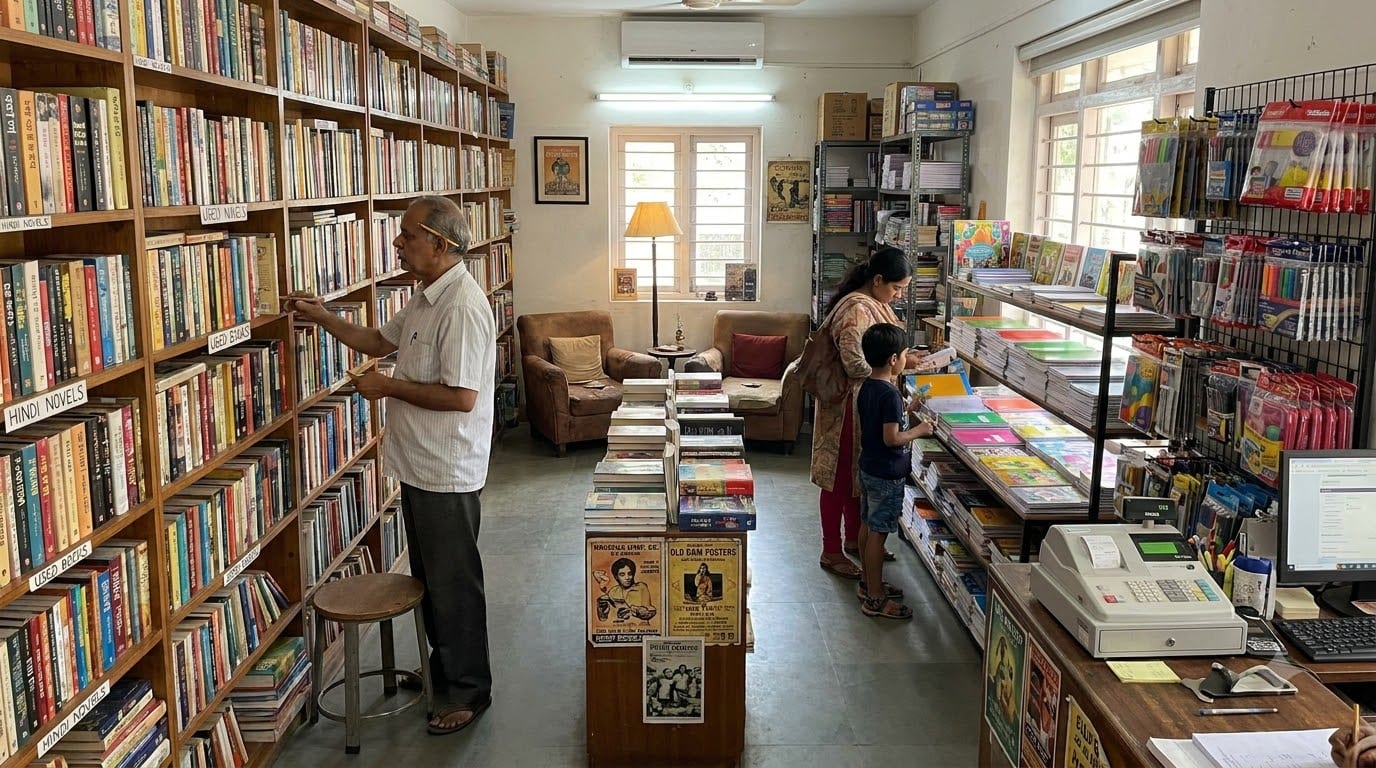
Starting a bookstore and stationery business in India is not just about renting a shop and filling it with books and pens. It requires choosing the right store model, understanding local demand, arranging registrations and GST, planning investment, building relationships with distributors, organizing inventory and pricing, and offering a customer experience that makes people return.
This guide explains how to start a combined bookstore and stationery business in India, including the business model, market research, location, registrations, investment, suppliers, inventory, customer service, and how Zopkit can support operations.
Table of Contents
- Choose your bookstore and stationery business model
- Study your local market and customer demand
- Select the right location and store format
- Complete registrations and compliance
- Plan investment and working capital
- Build publisher, distributor, and supplier relationships
- Manage inventory, pricing, and billing
- Build sales, service, and community trust
- Use a Retail ERP and Zopkit to manage operations
- Prepare for long term growth
1.Choose Your Bookstore and Stationery Business Model
The first step is deciding what kind of bookstore and stationery shop you want to build.
Possible models include:
- Neighborhood book and stationery shop near schools or residential areas
- Academic bookstore focused on textbooks and exam guides
- General trade bookstore with novels, non‑fiction, and children’s books
- Office and stationery supply store serving businesses
- Mixed store with books, stationery, and small gift items
- Store with a reading corner or small café alongside books
Decide whether you will:
- Focus mainly on books with stationery as an add‑on
- Focus mainly on stationery with select books
- Serve students, offices, or general readers first
- Add an online channel later for wider reach
Clarify:
- Your initial product mix (textbooks, guides, storybooks, notebooks, pens, art supplies)
- Price range you want to serve (budget school supplies vs premium gifts)
- How much space you need for books versus stationery
A clear model helps you design the store, choose suppliers, and plan investment properly.

2.Study Your Local Market and Customer Demand
Book and stationery customers compare prices and convenience quickly, so local market research is important.
Visit nearby shops and observe:
- Types of books sold, such as textbooks, guides, novels, and children’s books
- Stationery categories, such as notebooks, pens, pencils, files, art supplies, and office items
- Price ranges for books and stationery at different shops
- Seasonal demand, such as school admissions and exam seasons
- Store layout and display style and how easy it is to find items
- Customer footfall and peak hours
Talk to potential customers, including students, parents, teachers, and office staff, and understand:
- Which books they buy locally and which they buy online
- Their average budget per visit for books and stationery
- Stationery items they need regularly (notebooks, pens, files, printer paper)
- Whether they prefer regional language books or English titles
- What they feel is missing in existing stores (choice, comfort, ordering)
Your advantage may be:
- Reliable availability of textbooks and notebooks when schools reopen
- Better curated children’s and regional language sections
- Clean, organized displays and fast billing
- Bulk supply to schools, colleges, or offices on order
- Extra services such as book ordering and simple local delivery
Build your initial product plan around your area’s needs instead of copying a large chain completely.
3.Select the Right Location and Store Format
A bookstore and stationery shop benefits from visibility, accessibility, and nearby educational or residential hubs.
Look for:
- Areas near schools, colleges, coaching institutes, or offices
- Residential neighborhoods with families and students
- Markets where educational and office supply demand is strong
- Reasonable foot traffic and safe surroundings
- Enough width and depth for shelving and counters
Before signing a rental agreement, check:
- Commercial use permission for the property
- Rent, deposit, lock‑in period, and escalation terms
- Signboard permissions and visibility from the street
- Electricity capacity and lighting needs
- Space for storage and stockroom
- Security considerations such as shutters and CCTV
Plan store layout to make browsing easy:
- Separate sections for textbooks, guides, and general reading
- Clearly marked shelves for children’s books and activity books
- Stationery racks grouped by category, such as notebooks, pens, and files
- A billing counter with enough space for bags and packing
- A small reading or waiting corner if space permits
4.Complete Registrations and Compliance
Even a small book and stationery shop should be registered properly.
Choose a business structure:
- Sole proprietorship for a simple, owner‑run shop
- Partnership firm if multiple people invest together
- LLP or private limited company if you plan larger scale or multiple outlets
Typical requirements include:
- Business registration for your chosen entity with relevant authorities
- PAN for the proprietor or business
- Current account in the business name for transactions
- Shop and Establishment registration under the applicable state act
- Trade licence from the municipality where required
- GST registration once turnover crosses thresholds or if you want to issue tax invoices or sell across states or online
- Udyam registration if you want MSME benefits
Keep records for:
- Purchase invoices for books and stationery
- Vendor agreements with distributors and publishers where applicable
- Sales bills and tax invoices
- Stock registers and basic accounting
- GST returns and compliance if registered
Doing this early makes later expansion and institutional sales easier and improves credibility with banks and suppliers.
5.Plan Investment and Working Capital
Investment for a bookstore and stationery business depends on location, size, and inventory depth.
Initial costs usually include:
- Shop security deposit and initial rent
- Furniture and shelving for books and stationery, including racks, counters, and storage
- Billing system and POS setup if needed
- Initial book inventory, which for a small store may be in the range of one to several lakh rupees
- Initial stationery inventory, which may start from a modest amount and grow as you learn demand
- Licences and registrations such as trade licence, shop and establishment, and GST
- Basic marketing and signage
Monthly costs include:
- Rent and utilities
- Salaries if you employ staff
- Ongoing book and stationery purchases
- Packaging and small supplies
- Software subscriptions if you use digital tools
- Local promotions or small advertising
Books and stationery margins depend on supplier terms. Retailer margin on books is often a percentage of the printed MRP, with textbooks and trade books differing by category. Stationery margins vary widely by product and brand, so you should monitor cost and selling price per item.
Plan your working capital so you can:
- Maintain core textbook and notebook stock throughout school terms
- Experiment with new titles or products in smaller quantities
- Handle seasonal peaks such as school reopenings and exam periods
- Pay distributors and suppliers on time to keep relationships strong

6.Build Publisher, Distributor, and Supplier Relationships
Books and stationery require reliable suppliers for stock availability and fair margins.
For books, work with:
- Distributors who handle multiple publishers and can supply a broad range
- Direct publisher accounts when your volumes justify it
- Wholesalers who supply textbooks and guides for specific schools and exam boards
Evaluate book suppliers on:
- Range of titles they handle and how often catalogues are updated
- Margins they offer on MRP and whether terms vary by category
- Payment terms and credit limits
- Delivery timelines and consistency
- Support for returns or damaged books
For stationery, work with:
- Wholesalers for basic items such as notebooks, pens, and pencils
- Distributors for branded stationery
- Local suppliers for office and art supplies
Track for each supplier:
- Product categories supplied
- Price lists and margin structure
- Minimum order quantities
- Delivery schedule
- Quality and packaging standards
Good relationships with suppliers help you maintain stock, negotiate better margins, and respond quickly to customer needs.
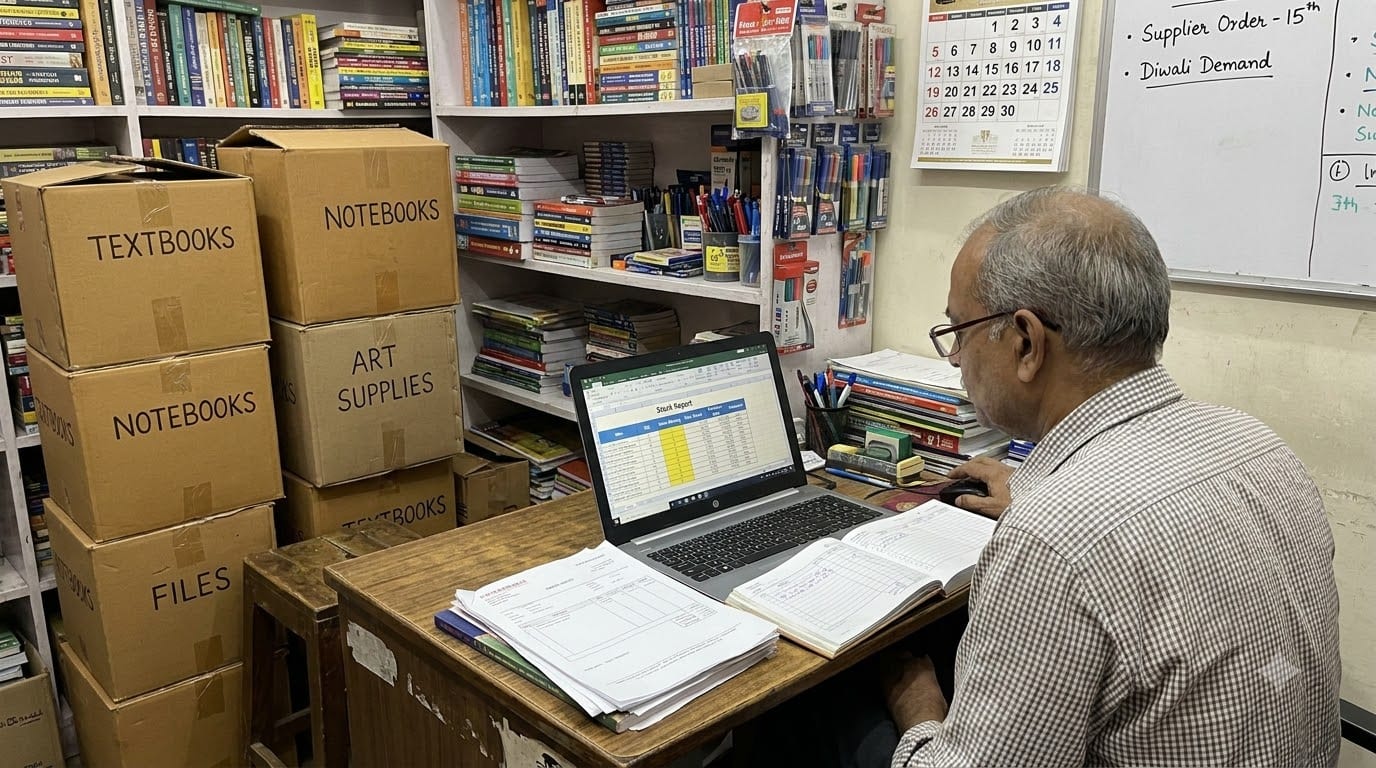
7.Manage Inventory, Pricing, and Billing
Books and stationery inventory needs careful management to avoid overstocking slow‑moving items and running out of essentials.
For books, track:
- Titles by category such as textbooks, guides, fiction, and children’s books
- Quantity per title and edition
- Delivery and purchase dates
- Sales performance and ageing of stock to identify slow movers
For stationery, track:
- Items by category such as notebooks, pens, pencils, files, and art supplies
- Basic stock minimums for frequently used products
- Seasonal demand patterns, such as exam periods and school reopenings
Pricing:
- For books, follow printed MRP while using distributor margin to cover costs and overheads
- For stationery, set competitive prices based on purchase cost, applicable GST rate, and local competition
Billing:
- Use a simple billing system or POS for faster checkout and basic records
- Provide printed receipts and tax invoices if you are registered under GST
- Maintain daily sales summaries and cash tallies
Over time, inventory and billing discipline will help you understand which products truly drive profit and which tie up cash unnecessarily.
8.Build Sales, Service, and Community Trust
Bookstores and stationery shops grow by becoming part of the community rather than just a transactional outlet.
Offer services such as:
- Textbook and guide ordering for specific schools and colleges
- Preparation of school stationery sets according to prescribed lists
- Book recommendations for children, exam preparation, or general reading
- Simple delivery or reservation options for regular customers
Train staff to:
- Ask what the customer is looking for and why
- Suggest relevant books or stationery items without pushing unnecessary products
- Treat children and parents patiently and respectfully
- Handle small issues or complaints calmly
Build trust through:
- Honest handling of book availability and delivery times
- Clear return and exchange policies for genuine issues
- Neat, well‑labeled shelves and counters
- Occasional small community activities such as book displays or reading suggestions
A store that remembers its customers and helps them find what they need can become a regular destination rather than a one‑time stop.
9.Use a Retail ERP and Zopkit to Manage Operations
As your bookstore and stationery business grows, managing inventory, billing, suppliers, and customers with only manual records can become difficult.
A Retail ERP or structured system can help connect:
- Product catalog for books and stationery
- Inventory by category, supplier, and location
- Purchase orders and supplier bills
- Sales and billing data
- Basic customer records and preferences
- Simple reports on sales, margins, and stock ageing
Zopkit can support the wider backbone of your business:
- Zopkit CRM for customer data, school and office contacts, and local campaigns
- Zopkit Finance for invoices, supplier bills, payments, expenses, cash flow, budgets, and profitability
- Zopkit Project Management for store setup, seasonal lists, bulk orders, and improvement projects
- Zopkit HRMS for staff records, attendance, payroll, and roles
- Zopkit Academy for training staff on customer service, billing, and store routines
Instead of adding more scattered notebooks and spreadsheets, you can use Zopkit as the operating spine behind your bookstore and stationery operations.
10.Prepare for Long Term Growth
Once the store has stable sales and reliable operations, you can consider controlled growth.
Possible growth paths include:
- Expanding book categories such as children’s books, regional language titles, and non‑fiction
- Adding more stationery, art supplies, and office products
- Serving schools, colleges, and offices through institutional orders
- Building a simple online presence for book and stationery ordering
- Organizing small events such as book displays or exam prep material guidance
- Opening a second outlet when operations and demand justify it
Before expanding, confirm that:
- Inventory records are reasonably accurate
- Supplier payments are under control
- Staff can handle daily operations without constant supervision
- Cash flow can support additional stock and space
- Customers recognise and trust your store
Expand one category, channel, or location at a time. A trusted bookstore and stationery shop with strong local relationships is often more sustainable than a larger but poorly managed chain.
Conclusion
Starting a bookstore and stationery business in India requires more than filling shelves with items. You need a clear store model, good local market understanding, proper registrations, realistic investment planning, reliable supplier relationships, disciplined inventory and pricing, and a customer experience that makes people return.
The store should help students, parents, teachers, and office staff find the right books and stationery, while managing stock, margins, and documentation in a structured way. As the business grows, a connected retail style backbone becomes increasingly valuable.
Zopkit supports that wider operating system through CRM, Finance, Project Management, HRMS, and Academy, helping bookstore and stationery businesses organize customers, stock, suppliers, payments, staff, and training.
Explore how Zopkit can support your bookstore and stationery business at zopkit.com.