How to Scale a Bookstore/Stationery Business in India

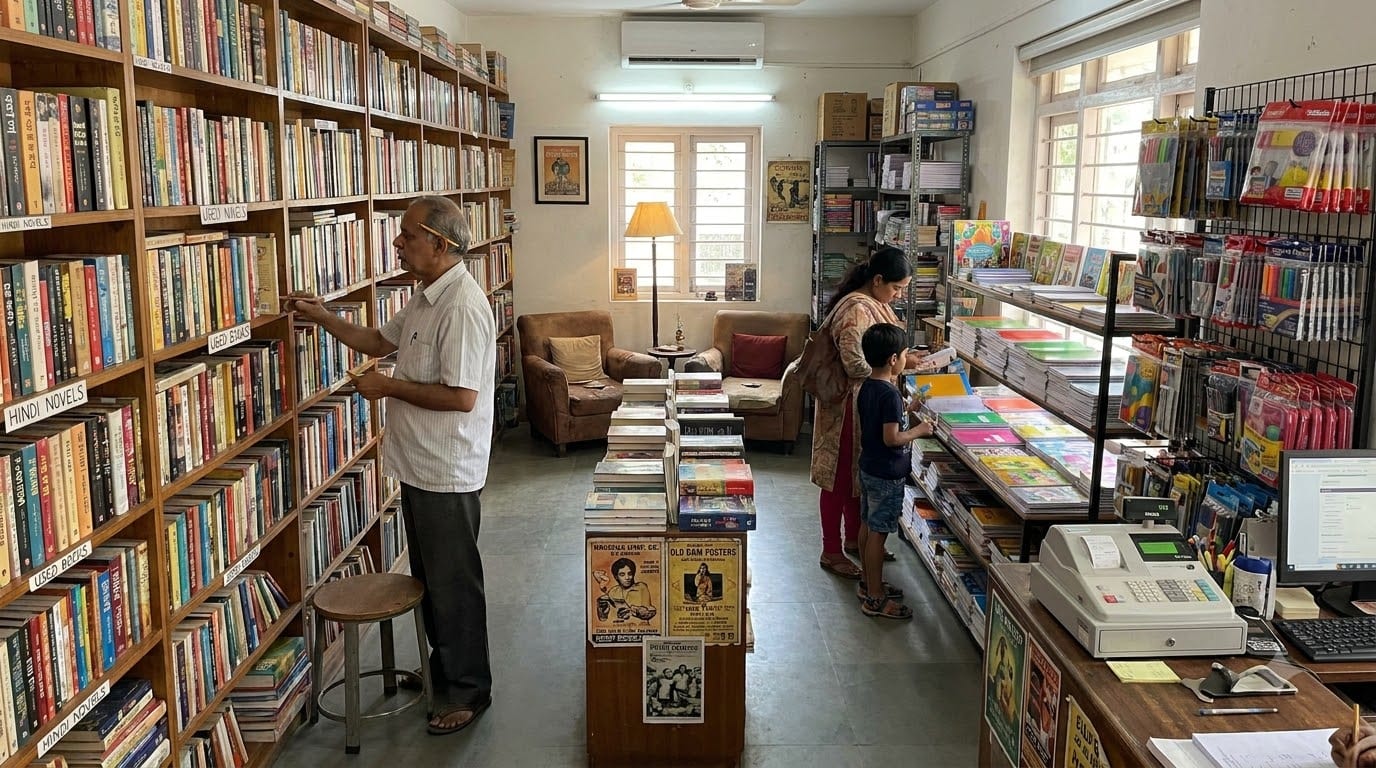
Scaling a bookstore and stationery business in India is not just about opening more shops or listing more products online. It means turning a working store into a repeatable, multi‑location and multi‑channel operation with structured categories, connected inventory, disciplined processes, strong customer relationships, and healthy margins in a growing books and stationery market.
If you are still choosing your store model, researching your local market, arranging registrations and GST, planning investment, and setting up suppliers, start with the “How to Start” guide first. If you are still fixing product mix, customer experience, and basic growth levers, use the “How to Grow” guide before thinking about scale.
Related Guide:
How to Start a Bookstore/Stationery Business in India
Use that guide to understand:
- Store models and product mix
- Local market and customer research
- Location, rental, and store layout
- Business registration, licences, and GST
- Startup investment and working capital
- Supplier and distributor relationships
- Basic inventory, pricing, and billing setup

Related Guide:
How to Grow a Bookstore/Stationery Business in India
Use that guide to understand:
- Store performance and category planning
- Average bill value and bundles
- Customer relationships and loyalty
- Events and community
- Merchandising and in‑store experience
- Online presence and simple omnichannel
- Supplier, inventory, and cash‑flow discipline
- Basic team roles and store routines
After starting and growing the store, the next question is how to scale without losing control.
Scaling a bookstore/stationery business in India is not only about adding locations or going online everywhere. It means building a repeatable system that can manage multiple stores, channels, suppliers, campaigns, inventories, teams, and customer relationships while protecting stock accuracy, service quality, margins, and trust.
This guide explains how to move from a successful single store to a more structured, multi‑channel and multi‑location bookstore and stationery business.
Table of Contents
- Confirm that the core store is ready for scale
- Standardize the customer and brand experience
- Build a scalable category and assortment strategy
- Centralize inventory, pricing, and supplier data
- Create repeatable seasonal, school, and event playbooks
- Build online and omnichannel sales properly
- Strengthen loyalty, institutions, and local partnerships
- Protect margins, cash flow, and risk as you scale
- Use Zopkit and a Retail ERP to manage scale
- Plan a phased expansion roadmap
- Confirm That the Core Store Is Ready for Scale
Before scaling, confirm that your existing bookstore/stationery business is stable, predictable, and profitable.
Check whether you have:
- Consistent monthly sales across core categories (textbooks, guides, storybooks, notebooks, basic stationery)
- Reasonable repeat customers and steady school or office relationships
- Reliable suppliers for books and stationery
- Accurate inventory records for fast movers and seasonal items
- Controlled return and complaint rates
- Basic cash‑flow visibility and on‑time payments to landlords and suppliers
Track:
- Sales and margin by category (books vs stationery, core vs experimental)
- Average bill value and units per bill
- Repeat purchase rate for key customer segments
- Stock ageing and proportion of dead stock
- Performance across key seasons (back‑to‑school, exams, festivals)
If your core store struggles with stock accuracy, frequent complaints, or cash‑flow surprises, it is safer to stabilize these first. Scaling should extend a working model, not multiply unresolved problems.
2. Standardize the Customer and Brand Experience
A scalable bookstore/stationery business needs a consistent customer experience across all locations and channels.
Standardize how you present and serve:
- Clear signage and sectioning in every store (textbooks, guides, storybooks, stationery, art, office)
- Predictable store layout patterns so customers feel familiar across outlets
- Basic service steps for greeting, understanding requirements, and guiding customers to the right section
- Simple, transparent billing, packing, and explanation of any offers
- Clear policies for genuine returns or exchanges
Document simple customer‑facing standards:
- How staff should handle school lists and bulk orders
- How to manage exam guide recommendations and alternative titles
- How to treat children and parents in children’s sections
- How to communicate honestly when items are not available or delayed
Train your team so a customer visiting any branch or interacting online receives similar clarity, helpfulness, and respect.
Zopkit Project Management can help you turn these standards into checklists and recurring tasks, making the brand experience repeatable instead of dependent on one person’s memory.
3. Build a Scalable Category and Assortment Strategy
Scaling is not just replicating one store’s stock everywhere. It is building an assortment and category system that can be planned, tracked, and adjusted across locations.
Organize your assortment into:
- Core school textbooks and guides
- Core exam prep material for major boards and exams
- General reading: fiction, non‑fiction, children’s books, regional language titles
- Core stationery: notebooks, pens, pencils, files, paper
- Office stationery: registers, folders, printer supplies
- Art and craft supplies
- Seasonal and experimental categories (gifts, educational toys, speciality items)
Define for each category:
- Minimum presence in every store (must‑have core items)
- Depth and variety for larger or flagship locations
- Seasonal patterns and timing (school reopenings, exam windows, festivals)
- Margin expectations and role in the overall business (traffic drivers vs profit drivers)
Build a simple assortment framework:
- Category → Subcategory → Brand/Publisher → Store level (must‑have / optional / flagship‑only)
- Standard list of school and exam materials by region or board
- Predefined stationery kits for different classes and office types
This allows you to expand into new locations while keeping category logic consistent and adjustable to local needs.
4. Centralize Inventory, Pricing, and Supplier Data
Scaling across locations and channels requires a central view of stock, pricing, and suppliers.
Centralize:
- A master product catalog with unique codes for books and stationery
- Standard descriptions, categories, and pricing for each item
- Supplier mapping (which distributor or wholesaler provides which products)
- Stock levels per store and warehouse
- Purchase and sales history per item
Use this to:
- Keep pricing consistent across stores for the same items
- See which books and stationery sell best across regions and which lag
- Identify opportunities to negotiate better terms based on total volumes
- Plan replenishment and transfers between locations intelligently
Standardize basic pricing logic:
- Core textbooks and exam guides aligned with printed MRP and margin needs
- Stationery priced fairly in line with local competition and your cost structure
- Clear rules for when and how to mark down slow‑moving or seasonal items
Without centralization, scaling can lead to price confusion, stockouts in one location and overstock in another, and weak purchasing leverage with suppliers.
5. Create Repeatable Seasonal, School, and Event Playbooks
As you scale, major seasons and events become bigger opportunities and also bigger risks if not managed well.
Build repeatable playbooks for:
School reopenings:
- List of schools and classes served at each location
- Pre‑built stationery and book sets for each list
- Stock planning timelines and purchase orders
- Staff training on handling school lists quickly and accurately
- Simple communication templates for parents and institutions
Exam seasons:
- Category focus on guides and practice books
- Clear displays for exam materials by board and exam type
- Bundles combining guides, notebooks, and essential stationery
- Basic content and reminders for students and parents
Festivals and holidays:
- Curated reading lists and gift items
- Seasonal stationery and art supplies displays
- Small promotions that fit your margin and brand positioning
Community events:
- Story hours, reading circles, or small workshops
- Partnerships with schools, colleges, or local groups
- Simple event checklists for setup, communication, and follow‑up
By turning these patterns into playbooks, you can scale more outlets and channels without reinventing your approach every time.

6. Build Online and Omnichannel Sales Properly
Scaling today often involves moving from purely offline to a mix of offline and online, and eventually to true omnichannel.
Layers of expansion:
- Strengthen basic online presence for discovery and communication
- Offer simple ordering or reservation options for regular customers
- Add a structured catalog online for key categories and school lists
- Enable delivery or pick‑up flows that customers can trust
- Connect in‑store and online stock and pricing so information stays consistent
Principles:
- Keep product information accurate and unified across channels
- Maintain consistent core pricing and clear rules for any online‑specific offers
- Synchronize inventory to prevent selling what you do not have
- Offer simple services such as “reserve and collect”, “order by school list”, or “office supply reordering”
Omnichannel does not mean being everywhere at once. It means connecting the places where your customers already interact with you (in‑store, phone, messaging, simple online catalog) so they feel one coherent brand.
Scaling through omnichannel works best when you pilot changes, learn from one or two locations or segments, and then roll out successful patterns more broadly.
7. Strengthen Loyalty, Institutions, and Local Partnerships
Scaling is easier when you have stable demand sources and repeat business.
Loyalty:
- Use basic customer profiles and purchase history to reward regular shoppers
- Offer simple point or stamp‑based structures tied to meaningful benefits (e.g. discounts on yearly school kits or reading lists)
- Recognize high‑value customers with early access to new collections or exam materials
Institutions:
- Build deeper relationships with schools, colleges, coaching centers, and offices
- Offer clear service levels (list handling, delivery times, billing formats)
- Maintain reliability on core items so institutions feel comfortable recommending your store
Local partnerships:
- Collaborate with tutors, small learning centers, and community groups for events or bulk orders
- Support local reading groups or children’s clubs with simple arrangements
- Use local advertising and word‑of‑mouth more than expensive broad campaigns
When loyalty, institutional relationships, and local partnerships are strong, each new store or channel has a base of demand to build on, rather than starting from zero.
Zopkit CRM can help you centralize these relationships, track institution‑specific commitments, and run loyalty structures across multiple outlets.
8. Protect Margins, Cash Flow, and Risk as You Scale
Scaling increases both revenue potential and risk. Margins, cash flow, and risk management must be handled consciously.
Margins:
- Monitor margin by major category: textbooks, guides, general reading, core stationery, office supplies, art and craft
- Avoid excessive discounts that dilute long‑term profitability
- Use promotions selectively for genuine stock clearance or strategic focus areas
Cash flow:
- Track incoming cash from all stores and channels in one view
- Map major outgoing payments (rent, salaries, purchases, utilities, taxes)
- Avoid over‑committing to stock for experimental categories without clear demand
- Plan any major expansion investments (new outlets, major refurbishments, online system upgrades) into your cash‑flow projections
Risk:
- Watch for quality issues with books and stationery across suppliers and locations
- Keep policies clear for damaged items, incorrect lists, or misprints
- Ensure every store follows basic safety and compliance in handling customers and stock
Zopkit Finance can help consolidate invoices, supplier bills, expenses, cash‑flow, budgets, and simple profitability views across outlets, so expansion decisions come from actual numbers, not only optimism.

9. Use Zopkit and a Retail ERP to Manage Scale
Manual notebooks and separate tools may work for one store, but scaling across multiple stores and channels needs a structured backbone.
A Retail ERP or connected system should unify:
- Product catalog and category mapping
- Inventory across stores, warehouses, and online channels
- Purchase orders, supplier data, and payment tracking
- Sales and billing records from all outlets
- Customer profiles, institutions, and loyalty structures
- Project and task management for store operations, seasons, and events
- Staff records, attendance, and payroll
Zopkit can be that backbone through:
- Zopkit CRM for customers, institutions, school and office contacts, segments, and campaigns
- Zopkit Finance for invoices, supplier bills, expenses, cash‑flow, budgets, and margin analysis
- Zopkit Project Management for seasonal list handling, bulk order coordination, store setups, refurbishments, and community events
- Zopkit HRMS for staff, roles, attendance, payroll, and multi‑store management
- Zopkit Academy for training modules on store standards, customer service, product knowledge, and operations
Using Zopkit and a structured system, you can scale the business while keeping one clear spine of information and processes.

10. Plan a Phased Expansion Roadmap
Scaling works best when it follows a disciplined roadmap instead of sudden jumps.
Suggested phases:
Phase 1: Stabilize the core store
- Confirm product mix, service standards, inventory, and cash‑flow
- Document and train basic processes
Phase 2: Deepen categories and relationships
- Strengthen core categories and margins
- Build institutional and local partnerships
- Introduce simple loyalty and event structures
Phase 3: Add basic online and simple omnichannel
- Set up reliable communication and ordering channels
- Pilot small online offerings for key segments (school lists, office supplies)
- Align inventory and pricing across offline and online
Phase 4: Open additional stores in carefully chosen areas
- Start with one or two new outlets using the proven model
- Roll out standardized layouts, category frameworks, and processes
- Train new teams through Zopkit Academy and internal playbooks
Phase 5: Scale events, community, and omnichannel
- Expand events and community activities across locations
- Deepen omnichannel capabilities (reserve‑and‑collect, simple delivery flows)
- Use data from all channels to refine assortment and operations
Phase 6: Consider larger regional or national plays
- Explore more cities or regions once systems, margins, and trust are strong
- Adjust store formats (small neighborhood vs larger flagship) to local realities
Move through phases only when the previous one is well‑established and repeatable. Scaling a bookstore and stationery business in India is a multi‑year journey, not a single marketing campaign.
Conclusion
Scaling a bookstore/stationery business in India is not simply opening more shops or launching a website. It is about building a repeatable system: standardized customer experience, clear category and assortment strategy, centralized inventory and supplier data, repeatable seasonal and event playbooks, thoughtful online and omnichannel expansion, strong loyalty and institutional relationships, and disciplined control of margins and cash‑flow.
When these elements are supported by an organized backbone for customers, finance, projects, people, and training, the business becomes easier to scale and more resilient.
Zopkit supports this wider operating system through CRM, Finance, Project Management, HRMS, and Academy, helping bookstore and stationery businesses manage customers, stock, suppliers, payments, staff, and learning as they scale.
Explore how Zopkit can support your bookstore and stationery business at zopkit.com.