Why Mid-Size Indian Conglomerates Are Moving From Legacy ERP to One Connected Business Ecosystem
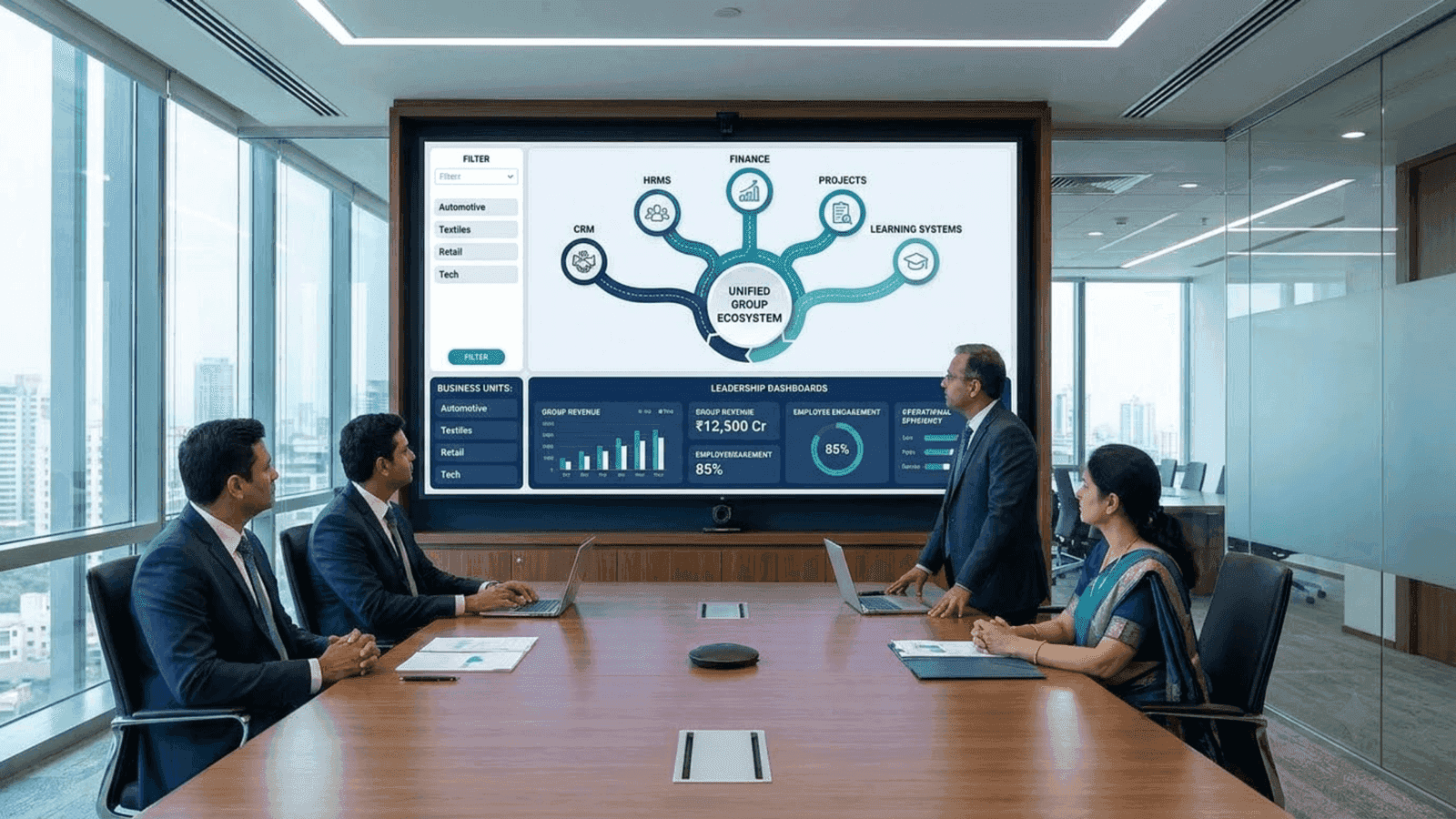
Mid-size Indian conglomerates with 200+ employees are reaching a point where legacy ERP systems no longer feel like strategic infrastructure. Instead of enabling speed, they often create operational drag, fragmented user experiences, and slower decision-making across business units.
That is why many diversified groups are moving toward a connected ecosystem model. Zopkit positions itself as that kind of platform by bringing together CRM, HRMS, Finance, Projects, and a broader operating layer in one ecosystem designed for multi-entity businesses that need unified data and group-wide visibility.
Table of Contents
I. Why legacy ERP is losing relevance for mid-size conglomerates
II. What 200+ employee diversified groups really need now
III. The shift from ERP suite to connected ecosystem
IV. Unified CRM across business units
V. HRMS for one workforce across many entities
VI. Finance and data consolidation across the group
VII. Projects and operational coordination in one system
VIII. Why one ecosystem creates stronger data value
IX. Who this model fits best
X. Conclusion
I. Why legacy ERP is losing relevance for mid-size conglomerates
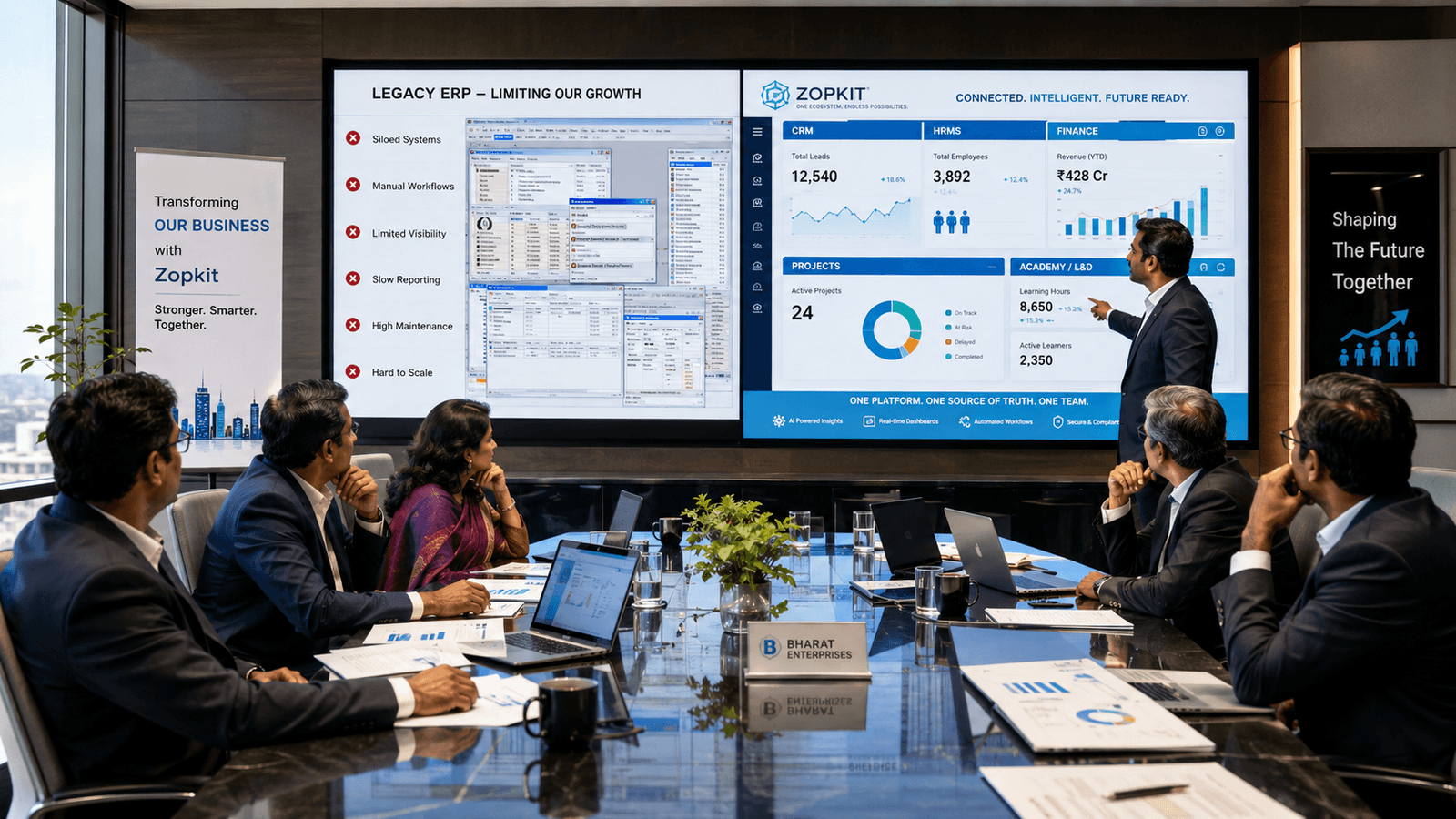
Legacy ERP systems were built for control, but many mid-size conglomerates now need both control and speed. As businesses diversify, add entities, and expand functions across sales, finance, people, and operations, older ERP setups can become difficult to adapt without adding more implementation layers, more consultants, and more internal complexity.
For diversified Indian groups, the issue is often not that the ERP lacks features. The problem is that the platform no longer feels like a connected operating environment for the business as it exists today. Teams end up working around the system instead of through it.
This is why the conversation is changing. Conglomerates are starting to ask whether they need one rigid ERP core or one flexible ecosystem that can unify the business across customer operations, finance, workforce, and execution.
II. What 200+ employee diversified groups really need now
A 200+ employee diversified group does not operate like a simple mid-market business anymore. It has multiple business units, different teams, shared service functions, approval structures, and more reporting pressure from leadership. That means the software stack has to do more than record transactions.
These companies usually need:
- Separate operating visibility for each business unit.
- Group-level consolidation across teams and entities.
- Shared systems for people, permissions, and workflows.
- Better visibility into delivery, execution, and internal coordination.
- A more unified data model across the organization.
This is the real reason many conglomerates outgrow legacy ERP structures. The business has become more interconnected, but the systems often remain fragmented by module, team, or implementation history.
III. The shift from ERP suite to connected ecosystem
A connected ecosystem is different from a traditional ERP suite. The idea is not only to centralize records but to create an environment where business apps work together in a more natural and connected way across the company.
Zopkit reflects that model because its apps are designed as part of a broader platform. CRM connects into finance and HR context, HRMS is built within the same wider identity and tenant structure, and finance supports multi-entity reporting and operational visibility instead of existing as an isolated accounting layer. CRM also connects to project and HR-related context through the wider platform ecosystem.
This shift matters because conglomerates increasingly care about how information moves across the business. They want one operating fabric rather than multiple tools stitched together with workarounds.
IV. Unified CRM across business units
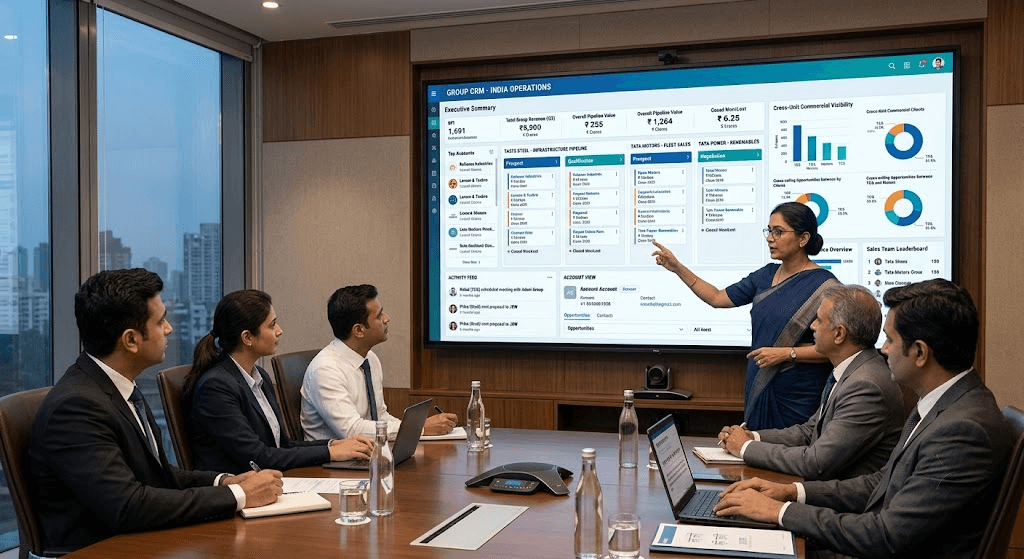
Zopkit CRM gives diversified groups one commercial system for leads, accounts, contacts, opportunities, tasks, meetings, calls, dashboards, and related workflows. For a conglomerate, this means customer-facing operations can be managed in one platform while still preserving separate pipelines and processes for different units.
That matters because business units often sell differently. One unit may run enterprise sales, another may manage channel distribution, and another may depend on recurring relationship-driven business. A rigid shared CRM process can hurt performance, while disconnected CRMs destroy visibility.
A unified CRM ecosystem helps by giving leadership a cleaner commercial view without flattening operational differences across units. It also strengthens activity tracking, reporting, and customer continuity across the broader organization.
CRM value in this model includes:
- Separate pipelines by business unit.
- Centralized account and relationship visibility.
- Connected activity tracking across teams.
- Cleaner reporting for group leadership.
V. HRMS for one workforce across many entities
Zopkit HRMS is designed as a full employee lifecycle platform with recruitment, core HR, attendance, leave, payroll, documents, analytics, and role-based access inside a multi-tenant environment. For a diversified group, this creates a single HR layer across multiple entities or business units.
This is important because workforce operations are rarely as fragmented as legacy systems suggest. Even when business units are different, the group usually wants one people system for employee records, permissions, reporting, payroll governance, and policy administration. Managing separate HR systems across units often increases inconsistency.
A shared HRMS ecosystem helps organizations standardize the workforce layer while still supporting different departments, structures, and access rules across the business. That improves governance and reduces duplication in people operations.
HRMS advantages include:
- One employee system across business units.
- Shared payroll, attendance, and leave administration.
- Better organization-wide workforce reporting.
- Stronger auditability and role-based access.
VI. Finance and data consolidation across the group
Finance is where the connected ecosystem model becomes especially powerful. Zopkit Finance supports general ledger, AP/AR, banking, tax, payroll support, fixed assets, consolidated reporting, project accounting, budgeting, cost accounting, and multi-entity management in one workspace. That makes it highly relevant for conglomerates trying to replace fragmented finance operations.
Its multi-entity design is a core advantage. The platform supports entity management, consolidation, inter-company transactions, currency management, financial statements, and group reporting without forcing teams back into spreadsheet-heavy consolidation cycles. For diversified companies, that is a major operational benefit.
Finance also matters because it becomes the backbone of data consolidation. When accounting, operational reporting, and inter-entity structures are handled in the same environment, leadership gets a clearer picture of business performance. Zopkit’s India-focused tax support around GST and TDS also improves local practicality for Indian groups.
Finance value in this model includes:
- Consolidated reporting across entities.
- Entity-level control with group-level visibility.
- Inter-company transaction support.
- India-compliant tax and reporting workflows.
Image Prompt 5
VII. Projects and operational coordination in one system
Large diversified groups do not just need sales, finance, and HR. They also need a stronger layer for execution. Zopkit Finance includes project accounting with project masters, project costing, project billing, and project profitability workflows, while the wider CRM ecosystem references project management connectivity in the broader platform. This makes the ecosystem more useful for organizations that need visibility into how work is delivered, not just how it is sold or accounted for.
That operational coordination layer is important because many business units run client work, internal projects, or cross-functional execution programs. When project data is disconnected from customer data and financial data, the business loses real insight into margin, delivery quality, and execution speed.
A connected ecosystem improves this by tying project-related information more closely to commercial and financial operations. That gives leadership a stronger operating model for diversified execution.
VIII. Why one ecosystem creates stronger data value
The biggest long-term advantage of one connected ecosystem is not just convenience. It is data value. When CRM, HRMS, Finance, Projects, and related systems operate inside one broader platform structure, the organization can see more clearly across business units, teams, and workflows.
This improves decision-making because leadership no longer depends on stitched reporting from unrelated systems. Customer operations, workforce information, financial performance, and project execution can be viewed in a more coordinated way. The result is better group visibility and less managerial blind space.
That is what makes consolidation valuable beyond accounting. It is not just about closing the books faster. It is about making the business easier to understand and run.
IX. Who this model fits best
This model is best suited for Indian conglomerates and diversified business groups with 200+ employees that are already running on legacy ERP systems or fragmented enterprise tools and want a more connected operating architecture. It is especially relevant for groups that have grown through multiple entities, business lines, or internal system additions over time.
It fits organizations that want to:
- Replace siloed legacy ERP experiences.
- Unify customer, finance, workforce, and execution data.
- Improve group-level visibility across business units.
- Build one connected operating ecosystem instead of managing tool sprawl.
For these companies, the goal is not only modernization. It is organizational clarity at scale.
X. Conclusion
Mid-size Indian conglomerates are moving away from legacy ERP not because structure matters less, but because the business now needs a different kind of structure. Instead of rigid systems with disconnected user experiences, they need a connected ecosystem that reflects how diversified groups actually operate today.
Zopkit fits that shift by bringing together CRM, HRMS, Finance, project-linked operations, and a broader platform architecture in one multi-entity ecosystem. Its value comes from unifying data and workflows across business units so leadership can manage the group with more clarity, speed, and consistency.
In practical terms, the ecosystem model gives diversified companies:
- One commercial layer across the group.
- One workforce system across entities.
- One finance and consolidation environment for group reporting.
- Better coordination between execution, reporting, and leadership visibility.
That is why replacing legacy ERP is increasingly not about swapping one old suite for another. It is about moving to a single connected ecosystem that can support the next phase of group growth.
visit zopkit.com