What Is the DPDP Act & How to Implement It
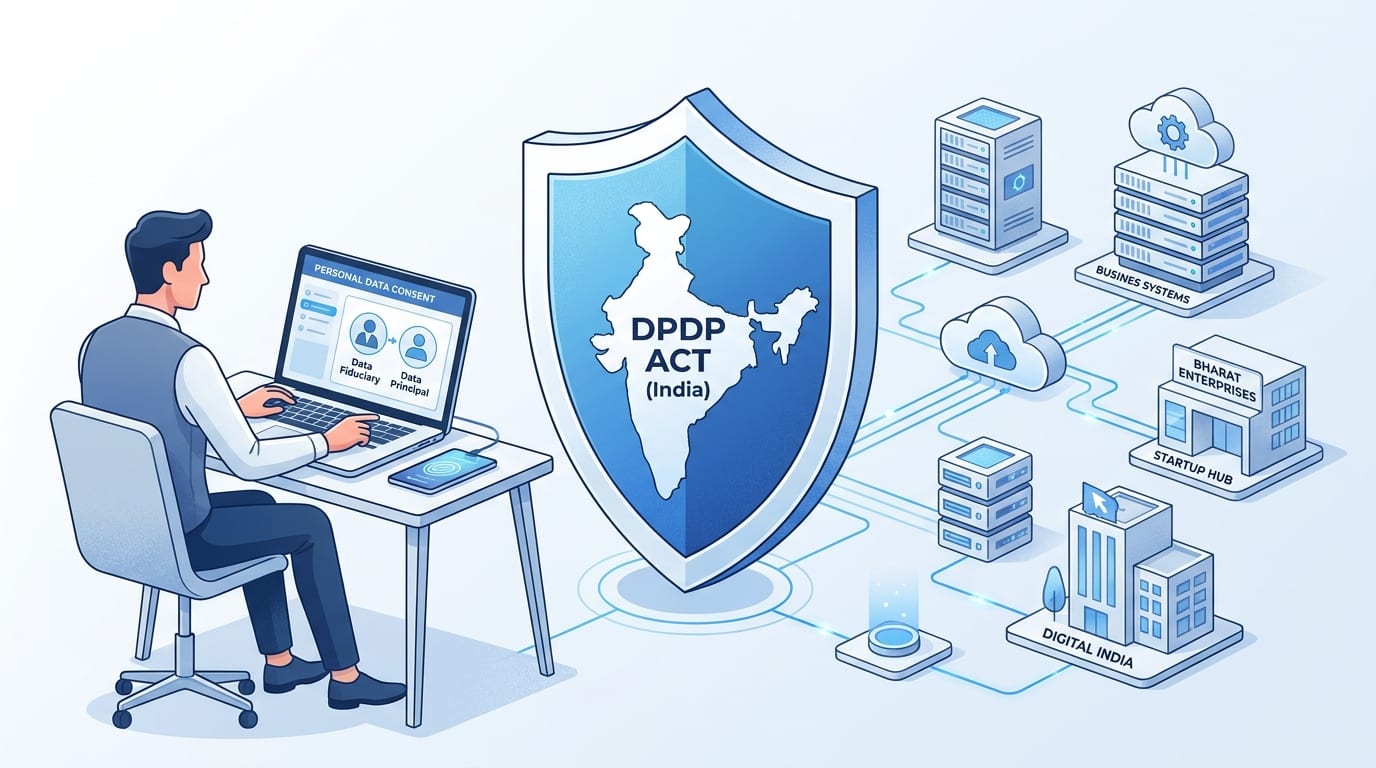
India’s Digital Personal Data Protection framework is now a practical compliance requirement, not just a policy topic. The DPDP Act 2023 and the DPDP Rules 2025 together create a framework for how organizations collect, use, store, share, and delete digital personal data in India.
For businesses, the question is no longer whether the law matters. The real question is how to implement it in a way that is operational, auditable, and sustainable across teams, vendors, and systems.
Table of Contents
I. What is the DPDP Act?
II. Why the DPDP Rules matter
III. Who needs to comply
IV. Core compliance principles
V. How to implement DPDP in practice
VI. Common implementation gaps
VII. Simple implementation roadmap
VIII. Conclusion
I. What is the DPDP Act?
The Digital Personal Data Protection Act, 2023 is India’s law for processing digital personal data in a way that protects individual privacy while still allowing lawful business use. It focuses on personal data that can identify an individual and sets obligations for organizations that process that data.
Under the law, organizations are treated as data fiduciaries and individuals as data principals. That means businesses are responsible for processing data only for declared and lawful purposes, with proper notice, consent, and security controls in place.
The DPDP framework is designed to make data handling more transparent and accountable. In simple terms, it is India’s modern privacy rulebook for digital business operations.

II. Why the DPDP Rules matter
The Act defines the law, but the Rules make it operational. The DPDP Rules 2025 introduce practical guidance on notices, consent management, security safeguards, breach notification, retention, child data protection, and governance expectations.
This matters because many organizations struggle not with the idea of privacy, but with implementation detail. The Rules make compliance much more concrete by translating broad legal duties into actual business processes.
They also signal that compliance is phased and must be operationalized over time. That gives organizations a window to build the right controls, but it also means delay can create execution pressure later.
III. Who needs to comply
The DPDP framework applies to organizations that process digital personal data in India, including companies that collect customer data, employee data, vendor data, or user data through digital systems. If your organization stores identifiable personal information in software, forms, portals, apps, or databases, this is relevant.
The rules are especially important for businesses with large user bases or more sensitive processing obligations. Some organizations may also face additional governance duties if they are designated as Significant Data Fiduciaries.
The practical takeaway is simple: DPDP is not just for tech companies. It matters to HR, finance, CRM, customer support, operations, e-commerce, healthcare, education, and any team that handles digital personal data.
IV. Core compliance principles
At the center of the framework is consent-based processing. Organizations must obtain clear, informed, and specific consent before using personal data, and individuals must be able to withdraw consent where applicable.
The law also emphasizes notice, purpose limitation, security, and accountability. That means a company should not just collect data and hope for the best; it must explain why the data is collected, how it will be used, how long it will be kept, and how it will be protected.
Key operational principles include:
- Clear and understandable privacy notices.
- Consent tied to specific purposes.
- Security safeguards such as access control and logging.
- Data retention and deletion discipline.
- Breach reporting and response readiness.

V. How to implement DPDP in practice
Implementation should begin with data mapping. Organizations need to understand what personal data they collect, where it is stored, who can access it, why it is processed, and where it is shared.
The next step is to rewrite notices and consent flows so they are clear, specific, and easy for users to understand. This is often the first visible compliance change because users should know what data is being collected and for what purpose.
Then the organization should implement internal controls. That includes access controls, retention rules, deletion logic, vendor oversight, breach response processes, and internal accountability ownership. If the organization is large enough or sensitive enough to qualify as a Significant Data Fiduciary, it should also prepare for enhanced governance, including DPO-related responsibilities and periodic assessments.
VI. Common implementation gaps
Many organizations make the mistake of treating DPDP as a legal document exercise instead of an operational transformation. They draft a policy, publish a notice, and assume compliance is done, but the real challenge is whether systems and teams actually follow the rules.
A second gap is weak data retention discipline. If data is kept forever because no one designed deletion logic, the business will struggle to justify compliance later.
A third common issue is poor breach readiness. The framework expects organizations to detect, escalate, and report incidents quickly, which means security and legal teams cannot work in silos.
VII. Simple implementation roadmap
A good DPDP rollout does not need to start with everything at once. It should begin with the highest-risk data flows and the systems that store the most personal data.
A simple roadmap looks like this:
- Map personal data flows across the business.
- Identify all forms, portals, apps, vendors, and internal systems that collect personal data.
- Rewrite privacy notices and consent language.
- Add role-based access, logging, and retention controls.
- Create breach response and escalation procedures.
- Review vendor contracts and processor obligations.
- Establish recurring review cycles instead of one-time compliance checks.
If the organization already runs multiple departments and systems, the best approach is to assign owners for data, security, legal, and operations. DPDP implementation works best when it is treated as a cross-functional program, not a single-team project.

VIII. Conclusion
The DPDP Act gives India a formal privacy framework, and the DPDP Rules make it operational. For businesses, implementation means much more than updating a policy page it requires data mapping, consent redesign, security controls, retention logic, and response processes that actually work in day-to-day operations.
The companies that move early will be better prepared, less exposed to compliance risk, and more credible with customers, employees, and partners. In practical terms, DPDP is not just a legal obligation; it is a governance and trust upgrade for modern digital businesses in India.
visit Zopkit.com