How Large Accounting Firms Manage Multi-Client Operations, Staff Development and Knowledge Management
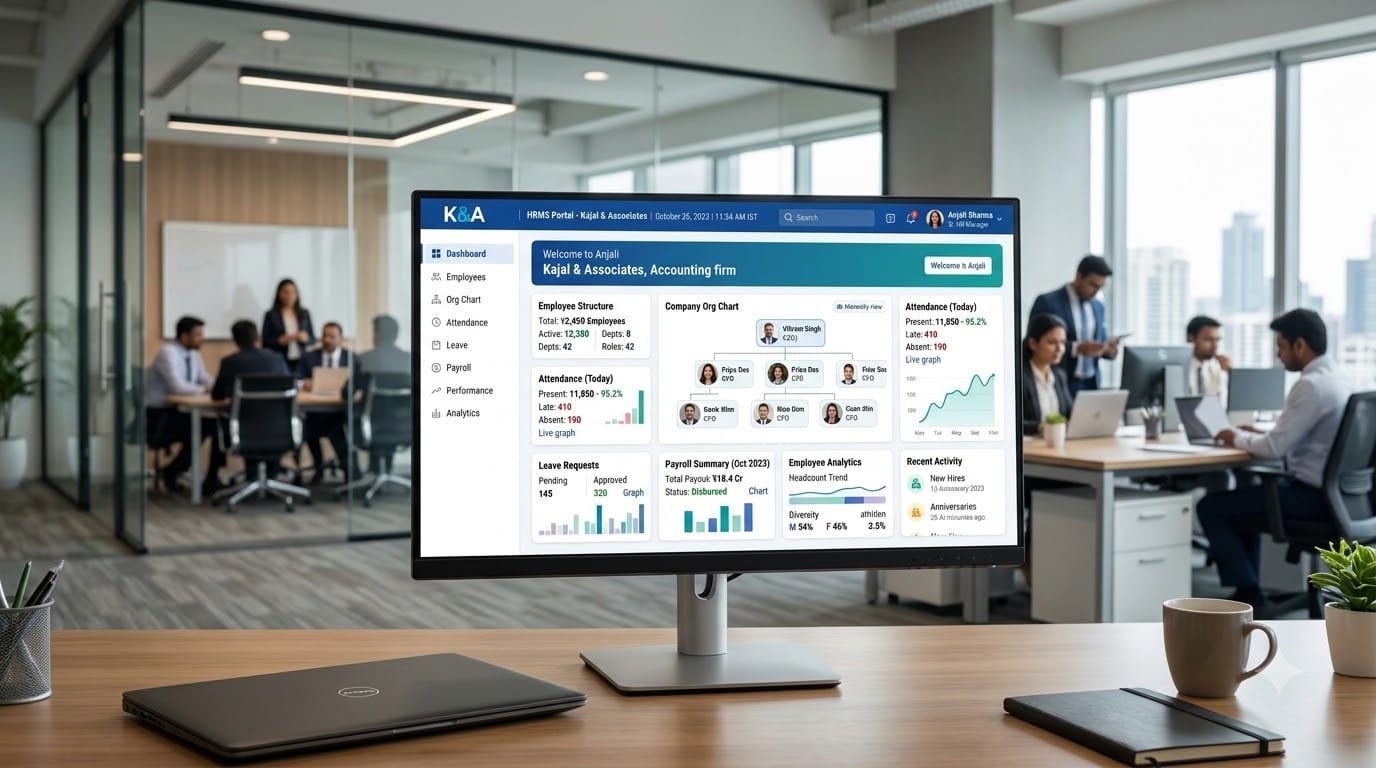
Large accounting and advisory firms do not struggle because they lack software. They struggle because client operations, staff development, technical learning, and financial control often live in separate systems that do not share context well. For firms with 200+ people, the challenge is not just execution but maintaining consistency, visibility, and knowledge flow across a large organisation.
Zopkit is relevant here because it supports large client portfolios through CRM, multi-tier staff operations through HRMS, structured learning through Academy, and firm-level financial control through Finance, all inside the same broader ecosystem. That makes it easier for large firms to manage complexity without relying on fragmented systems.
Table of Contents
I. Why large accounting firms need a connected operating model
II. What complexity looks like in a 200+ person firm
III. CRM for large client portfolios and multi-client operations
IV. HRMS for multi-tier staff structure and workforce control
V. Academy for technical knowledge and standards training
VI. Finance for firm-wide billing and control
VII. Why knowledge management matters in large advisory firms
VIII. What this means for large accounting firms
IX. Who this setup is built for
X. Conclusion
I. Why large accounting firms need a connected operating model
Once an accounting or advisory firm crosses 200 people, complexity increases in a very different way. The issue is no longer whether the firm has systems for client work, people operations, learning, and finance. The issue is whether those systems work together well enough to support scale.
Large firms usually manage multiple service lines, large client portfolios, layered team structures, and ongoing standards updates. If each function operates in a separate software environment, the firm spends too much time reconstructing the operational picture instead of acting on it. That affects speed, quality, and management visibility.
A connected operating model matters because the same firm-wide questions usually span departments:
- Which clients need strategic attention right now?
- Which teams are responsible for delivery and escalation?
- Which staff groups need new policy or standards training?
- Which parts of the portfolio are progressing well versus creating billing or service pressure?
- How can leadership see all this without relying only on meetings and manual reporting?
That is why large firms move beyond tool-by-tool thinking. They need an operating model that connects client, people, learning, and finance workflows in a more disciplined way.

II. What complexity looks like in a 200+ person firm
A 200+ person accounting firm is not just handling more work. It is handling more layers of work. Client portfolio management, delivery oversight, staff development, compliance discipline, internal mobility, and knowledge consistency all become enterprise-level concerns.
At this scale, firms often need to manage:
- Hundreds or thousands of active client relationships.
- Multiple partners, managers, and teams interacting with the same accounts.
- Large employee structures with departments, levels, locations, and reporting lines.
- Ongoing learning on technical standards, internal methodologies, and policy updates.
- Billing, receivables, and finance control across a large service portfolio.
The biggest challenge is that these are not separate realities. They constantly influence one another. A client delivery problem may be caused by a staffing gap, a training gap, poor account visibility, or weak billing discipline. Large firms need systems that help expose those connections.
That is why scale demands more than basic software functionality. It demands operational visibility that can handle multiple tiers of decision-making across the firm.
III. CRM for large client portfolios and multi-client operations
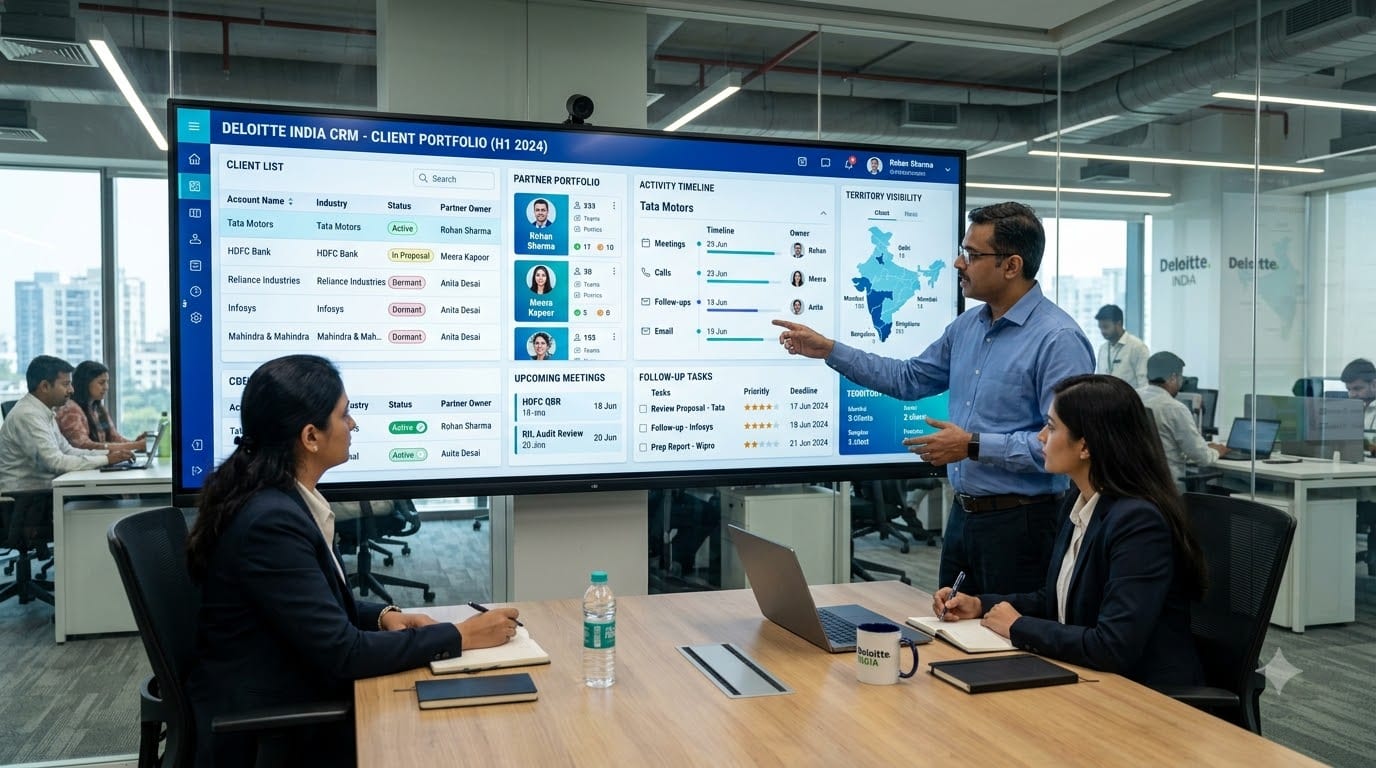
CRM is the client portfolio command layer. Zopkit CRM supports accounts, contacts, leads, opportunities, meetings, calls, notes, tasks, activity timelines, dashboards, territory structures, and role-based access, which makes it useful for large firms managing many clients across many teams. In a large accounting firm, CRM is not just about sales. It is about maintaining shared client context at scale.
Large portfolio management requires more than a client list. Firms need to track relationship history, account ownership, activities, follow-ups, and account-level visibility across service lines and internal stakeholders. CRM helps preserve that structure.
This is especially valuable for firms that manage multiple teams against the same account base. CRM supports:
- Central account visibility across users and teams.
- Activity history through calls, meetings, notes, and tasks.
- Account continuity when staff or managers change.
- Better follow-up discipline across large portfolios.
- Role-aware access and territory-style control for distributed teams.
Without a strong CRM layer, large firms often end up with fragmented relationship ownership. Important client knowledge sits with individuals instead of the institution. CRM helps convert that personal knowledge into organisational knowledge.
That matters because large accounting firms cannot depend on informal memory. They need repeatable visibility into account history and current relationship status.
IV. HRMS for multi-tier staff structure and workforce control
HRMS is the workforce management layer of the firm. Zopkit HRMS supports employee lifecycle management, roles, departments, positions, attendance, leave, payroll, documents, reports, analytics, and audit trails, making it useful for firms with large and multi-tier staff structures. For a 200+ person firm, this is not optional infrastructure. It is central operating infrastructure.
Large accounting firms typically have multiple levels of staff, from trainees and associates to managers, senior leaders, and support teams. Managing that structure manually creates too much risk and too little visibility. HRMS helps formalise the people side of the firm.
This becomes important in several areas:
- Employee directories and profile records.
- Department, position, and organisation structure control.
- Attendance, leave, and payroll workflows.
- Documents, audit trails, and compliance-sensitive HR records.
- Analytics and workforce reporting for leadership.
Zopkit HRMS also includes executive dashboards, analytics, reports, and organisation-level structure tools, which are especially useful when leadership wants a clearer view of workforce patterns instead of isolated HR transactions. That supports better planning and better governance.
For large firms, HRMS is also a bridge between staffing and institutional consistency. A firm cannot develop people well if employee records, learning, approvals, and role structures remain fragmented. That is why workforce systems matter far beyond HR administration.
V. Academy for technical knowledge and standards training
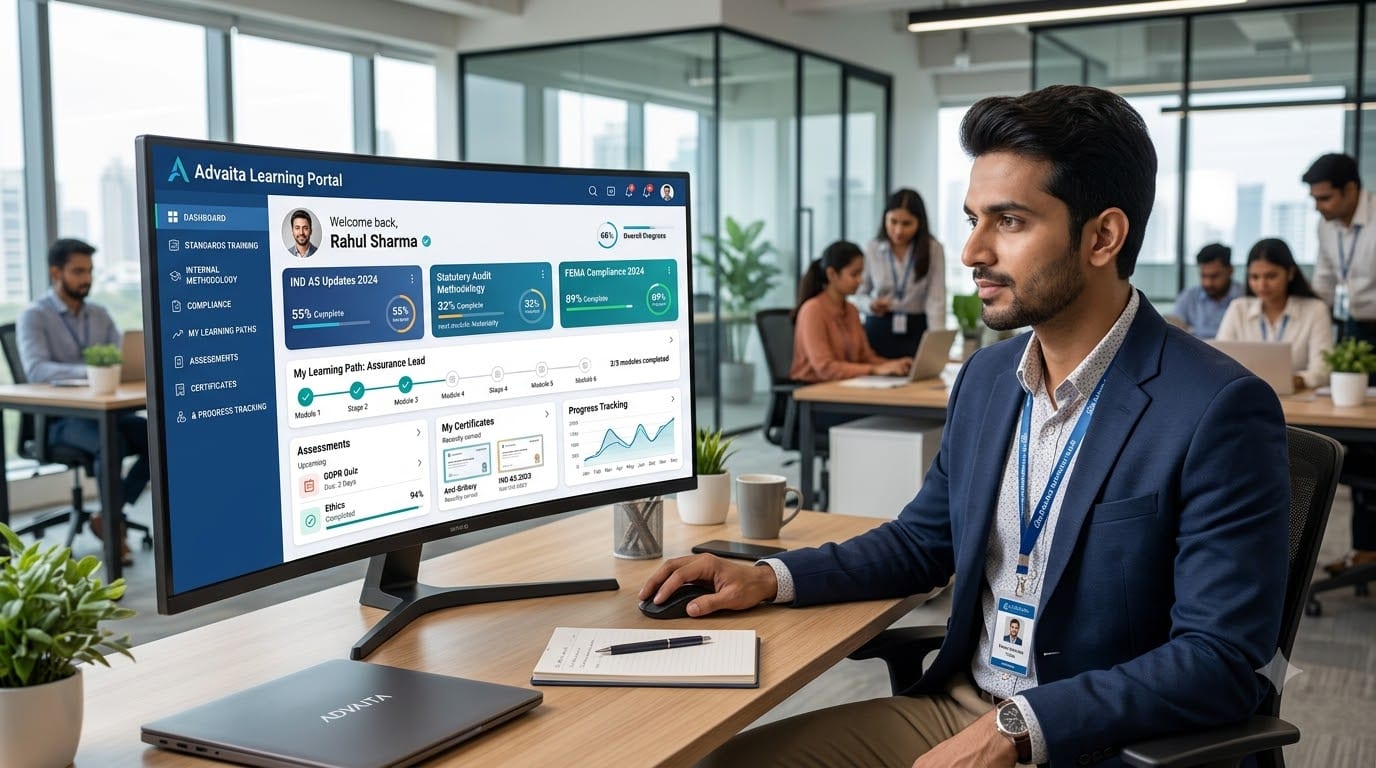
Academy is the formal learning and standards delivery layer. Zopkit Academy is a multi-tenant learning platform with courses, assessments, learning paths, certificates, dashboards, user management, progress tracking, and administrative controls, which makes it useful for firms that need structured learning at scale. In large accounting firms, this matters because knowledge must move through the organisation systematically.
Technical knowledge in accounting and advisory firms does not stay fixed. Standards evolve, internal methodologies are updated, policies change, and teams need regular refreshers to maintain consistency. Without a structured platform, firms often rely on emails, shared drives, and one-time sessions that are difficult to track.
Academy helps turn knowledge into a repeatable system through:
- Structured course delivery.
- Learning paths for role-based development.
- Assessments and completion tracking.
- Certificates and verifiable learning records.
- Dashboards and user management for training oversight.
This matters because large firms need more than communication. They need evidence of learning flow across the organisation. A learning system provides a clearer method for distributing technical updates and monitoring adoption.
In practice, Academy supports both capability development and standards management. That makes it useful not only for onboarding but also for ongoing technical knowledge management across the firm.
VI. Finance for firm-wide billing and control
Finance is the internal control and commercial discipline layer. Zopkit Finance is a full accounting platform with invoicing, AR, AP, banking, dashboards, reporting, GST/TDS workflows, and broader accounting controls, making it useful for large firms that need tighter visibility across billing and finance operations. For a large accounting firm, this helps convert operational scale into financial clarity.
Large firms need finance systems that can support:
- Customer invoice management.
- Payment tracking and receivables control.
- Aging visibility across large billing portfolios.
- Dashboards for revenue, liquidity, and financial ratios.
- Tax-linked workflows including GST and TDS orientation.
- Audit trails and role-based financial governance.
This matters because firm growth often creates billing complexity. When many teams serve many clients, invoices, collections, and revenue visibility can become harder to control if the finance layer is weak or disconnected. Finance helps stabilise that side of the operation.
It also supports better leadership visibility. Large firms need more than accounting records; they need financial dashboards and control mechanisms that reflect the health of the practice in a timely way. That is a major advantage of a broader financial platform.

VII. Why knowledge management matters in large advisory firms
Knowledge management becomes a strategic capability as firms grow. In a large accounting or advisory firm, technical knowledge, client learnings, internal methods, and policy updates must move through the organisation in a controlled way. Without that, scale weakens consistency.
This is where large firms often face silent risk. They may have excellent experts, but if knowledge transfer depends too heavily on informal mentoring or scattered documents, the organisation becomes uneven. Some teams stay current while others lag behind.
A stronger knowledge management model helps the firm:
- Standardise technical learning across teams.
- Reduce dependence on ad hoc information sharing.
- Keep institutional knowledge visible beyond individual experts.
- Align workforce development with operational quality.
- Create more consistent client delivery across the firm.
CRM, HRMS, and Academy together create a stronger base for this. CRM preserves client-side knowledge, HRMS preserves workforce and role structure, and Academy formalises technical learning and standards distribution. That is what turns knowledge management into a system rather than a slogan.
VIII. What this means for large accounting firms
For large accounting firms, a connected model changes the way the organisation is managed. Instead of running client operations, staff development, learning, and finance as separate functions, leadership can treat them as connected parts of the same operating system. That leads to better visibility and more consistent execution.
In practical terms, this means:
- Client portfolio knowledge becomes easier to preserve institutionally.
- Staff structures and people operations become more manageable at scale.
- Learning and standards updates become more trackable and repeatable.
- Billing and financial control gain stronger operational context.
- Leadership can make decisions with a broader and clearer view of the firm.
This matters because large firms cannot rely on heroic effort alone. They need systems that make consistency easier and fragmentation harder. That is what a connected platform model supports.
IX. Who this setup is built for
This setup is built for large accounting and advisory firms with 200+ professionals managing large client portfolios, layered staff structures, firm-wide learning needs, and complex internal finance operations. It is especially useful for firms trying to scale institutional quality, not just headcount.
It fits firms that want to solve issues such as:
- Client knowledge being trapped in teams or individuals.
- Staff structure becoming difficult to manage across departments and levels.
- Technical updates and standards training being inconsistent across the firm.
- Billing and control becoming harder as portfolios grow.
- Leadership needing clearer visibility across client, people, learning, and financial operations.
It is also a strong fit for firms that want a more disciplined knowledge-led operating model. If the goal is to manage multi-client operations, staff development, and knowledge management in a more connected way, this setup is practical.
X. Conclusion
Large accounting firms manage multi-client operations, staff development, and knowledge management best when those systems are connected rather than isolated. Zopkit supports that through CRM for large client portfolios, HRMS for multi-tier workforce management, Academy for technical learning and standards distribution, and Finance for billing and firm-wide control.
For 200+ person firms, the advantage is not just software coverage. It is operational coherence. A connected ecosystem helps preserve client knowledge, strengthen staff development, improve knowledge flow, and support leadership with better firm-wide visibility.
If your firm is looking for a stronger way to manage large-scale client operations and institutional knowledge, book a free demo at zopkit.com and explore how the model works in practice.