DPDP Compliance Check: How to Spot Gaps in Your Existing Systems and Resolve Them
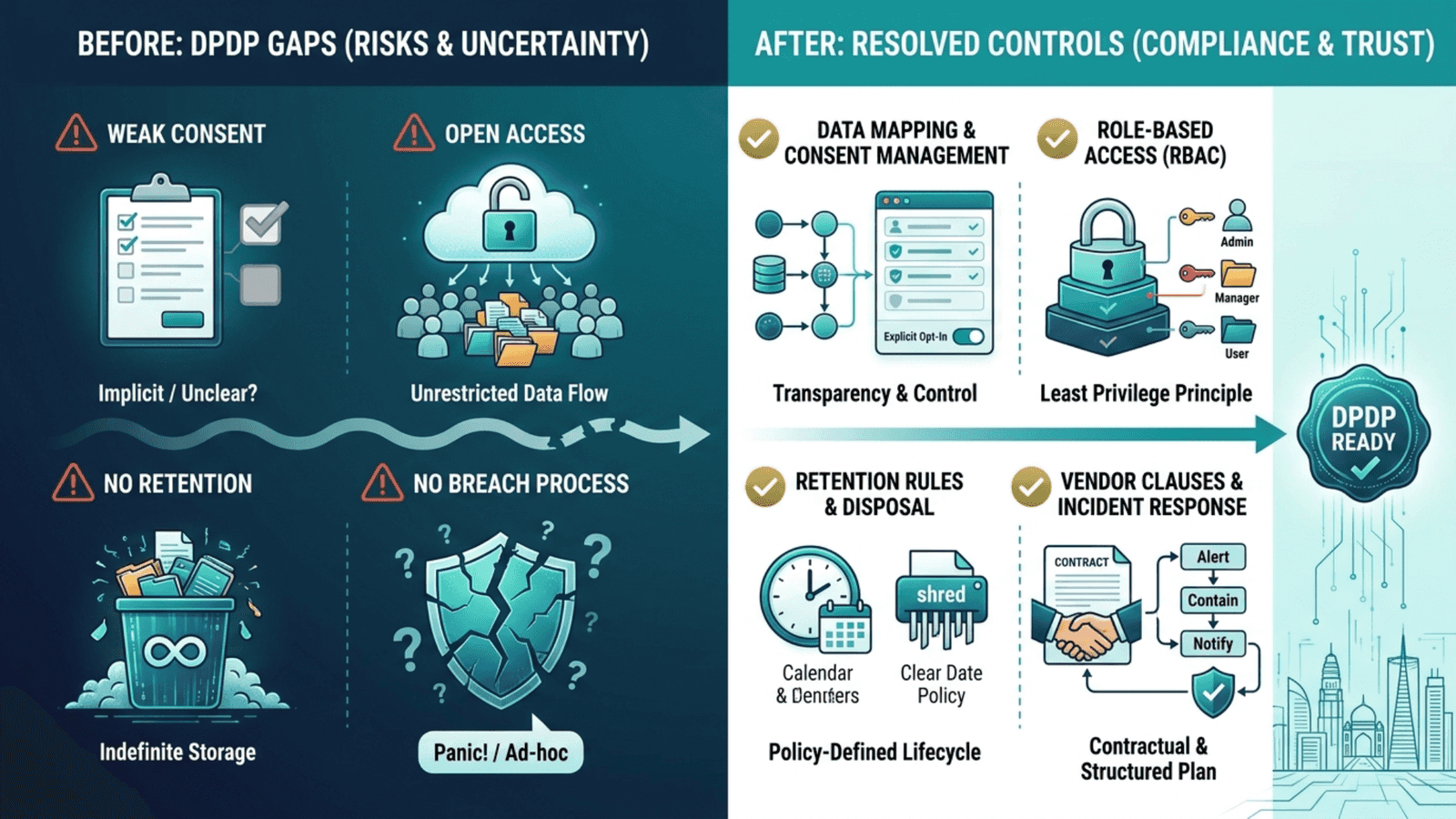
India’s DPDP framework is no longer something businesses can treat as a policy checkbox. The real question is whether the systems you already use - CRM, HRMS, finance, support, websites, forms, and vendor platforms are actually aligned with the law in practice.
Most organizations do not fail because they ignore privacy completely. They fail because their existing systems were never designed for consent control, retention discipline, access governance, or breach response at the level DPDP now expects.
Table of Contents
I. Why existing systems may not be compliant
II. What “DPDP compliant” actually means
III. How to identify system gaps
IV. Common gap areas in business systems
V. How to resolve the gaps
VI. A practical remediation roadmap
VII. Conclusion
I. Why existing systems may not be compliant
Many businesses assume that if they have a privacy policy, they are DPDP ready. In reality, compliance depends on how data is collected, stored, shared, retained, and deleted across systems, not just what the policy says.
Legacy systems often create hidden risk. They may collect too much data, keep it too long, allow broad access, or lack audit trails for consent and deletion events. That becomes a problem when privacy obligations need to be demonstrated, not just claimed.
This is why system-level review is essential. If CRM, HR, finance, and support tools were built before DPDP expectations existed, they may need both process changes and technical changes to become compliant.

II. What “DPDP compliant” actually means
A DPDP-compliant system is one that supports lawful collection, informed notice, valid consent, security safeguards, retention control, and user rights handling. It should be able to show what data is held, why it is being processed, who can access it, and when it will be deleted.
Compliance also includes operational readiness. If a user withdraws consent, asks for correction, or needs data erased, the system and the supporting process should be able to handle that request without manual chaos.
In practice, this means compliance must be embedded into the system lifecycle. Forms, workflows, permissions, integrations, logs, and retention rules all need to work together.
III. How to identify system gaps
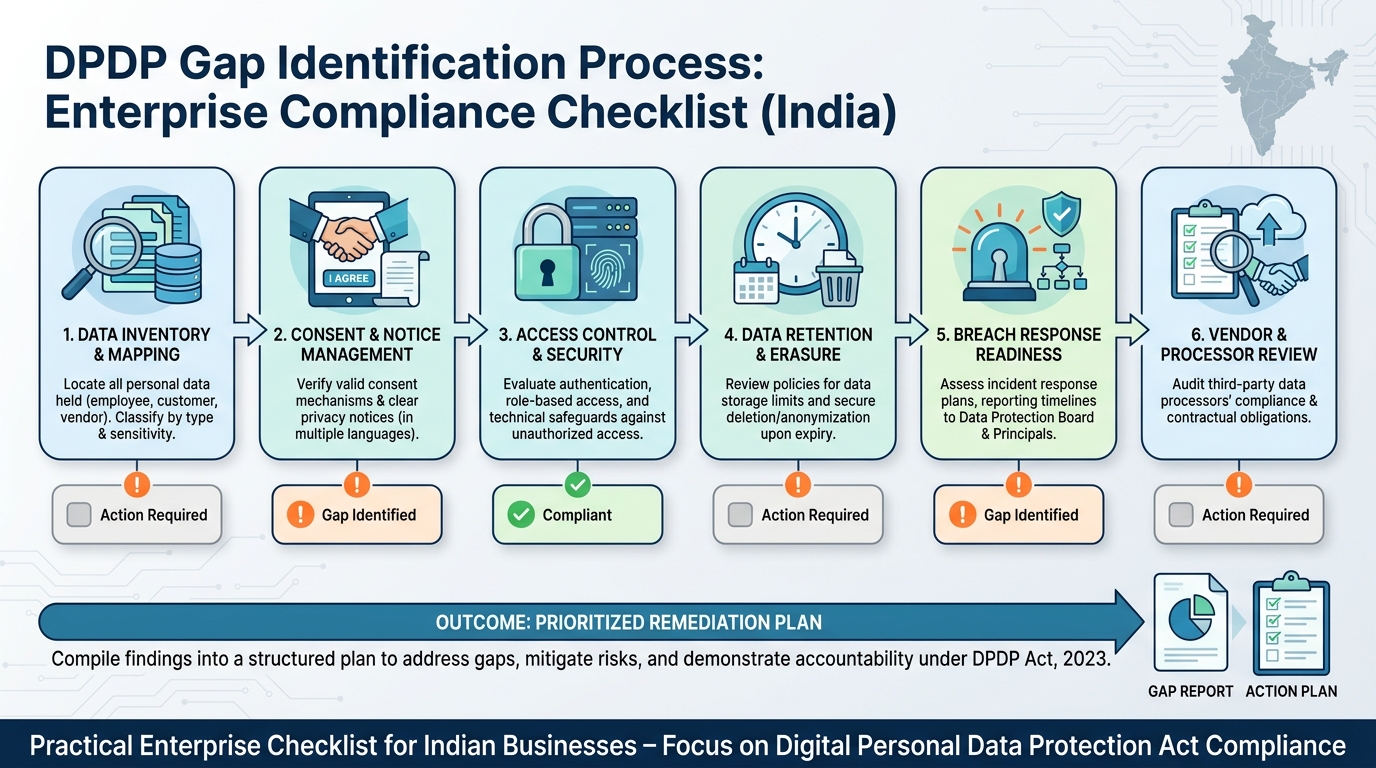
The best way to identify DPDP gaps is to start with a data inventory. You need to know where personal data lives, how it moves, and which teams or vendors can access it.
A strong gap assessment typically checks the following:
- What personal data is collected and why.
- Whether notice and consent are clear and specific.
- Whether access controls are role-based and limited.
- Whether retention and deletion are defined and executable.
- Whether breach response and escalation are in place.
- Whether vendors, processors, and sub-processors are contractually covered.
This is not just a legal review. It is a systems review, a process review, and a vendor review combined into one assessment.
IV. Common gap areas in business systems
One of the most common gaps is poor data discovery. Organizations often do not know exactly where personal data is stored across cloud tools, local drives, shared folders, and backups. Without that visibility, it is difficult to enforce policy or deletion properly.
Another frequent gap is weak consent handling. Systems may collect data but not capture clear, informed, and purpose-specific consent in a way that can be tracked and withdrawn later. That creates problems when a user wants control over their data.
A third gap is over-broad access. If too many people can see or export personal data, the system may expose the company to unnecessary risk. Audit logs, RBAC, MFA, and access reviews are often missing or inconsistent.
Other common gaps include:
- No formal retention schedule.
- No deletion workflow tied to purpose completion.
- Weak vendor contracts and processor clauses.
- No tested breach response process.
- No regular internal audit cycle.
V. How to resolve the gaps
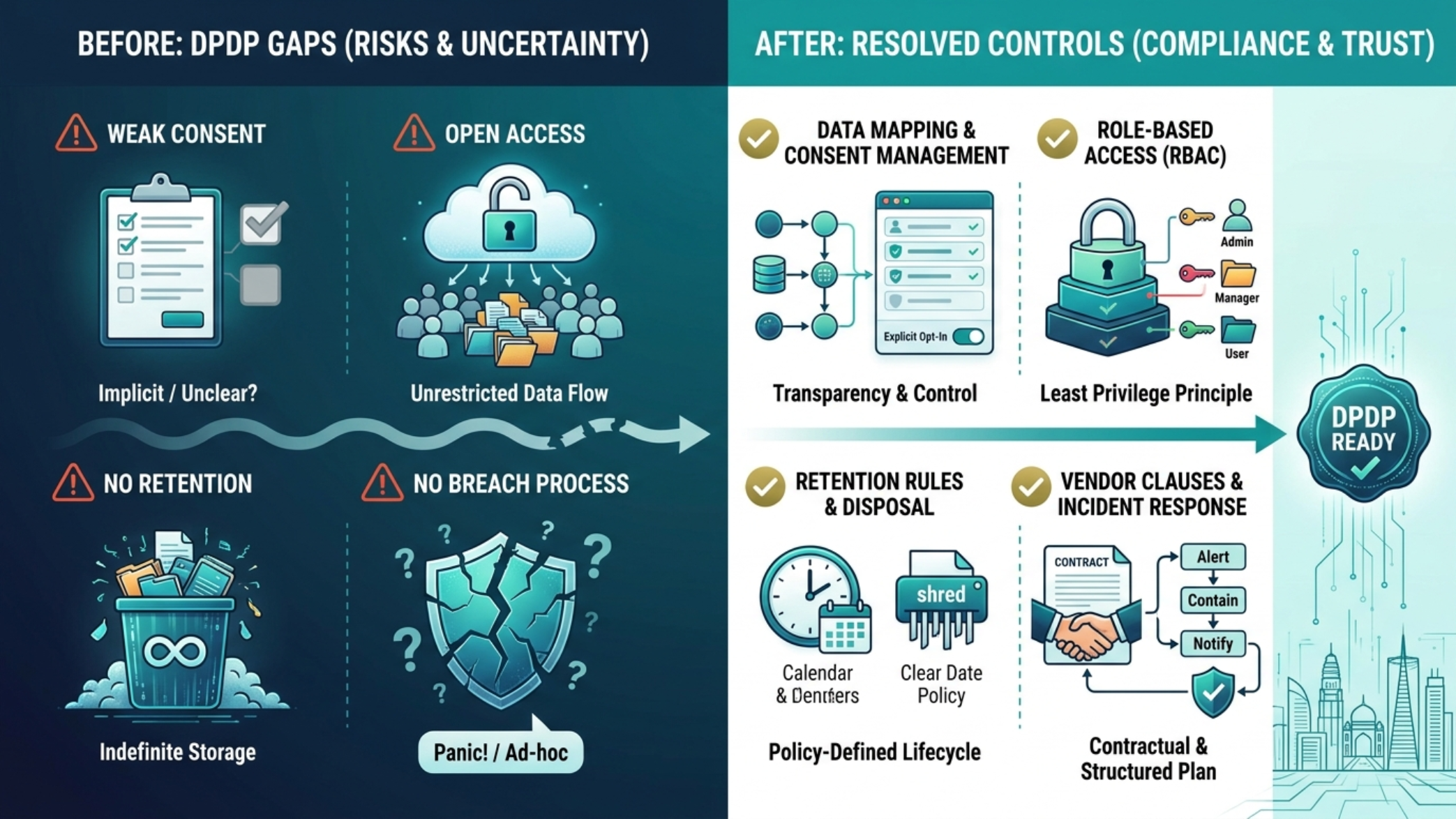
The first fix is data mapping. Build a centralized inventory that shows what personal data exists, where it is stored, who accesses it, and what business purpose it serves. That becomes the foundation for every other remediation step.
Next, update your consent and notice flows. Consent requests should be clear, easy to understand, and linked to specific purposes, while privacy notices should be readable and visible wherever data is collected. If the system cannot support that today, the forms or customer journeys need redesign.
Then fix the control layer. Add RBAC, logging, authentication hardening, retention policies, and deletion workflows so compliance is enforced in the product or internal system itself. Also update your vendor contracts so external processors are bound to the same expectations.
Finally, prepare the operational side. Train staff, test breach response, and build recurring review cycles instead of one-time compliance exercises. Compliance only works when the process is maintained continuously.
VI. A practical remediation roadmap
A practical roadmap should begin with the highest-risk systems first. For most businesses, that means customer-facing portals, HR systems, finance tools, and vendor platforms that process large amounts of personal data.
A simple sequence looks like this:
- Discover and classify personal data across systems.
- Compare each system against DPDP requirements.
- List all gaps by risk and impact.
- Fix consent, notice, access, retention, and deletion flows.
- Update vendor contracts and internal policies.
- Run staff training and breach simulations.
- Schedule periodic audits and reviews.
The key is to treat remediation as a program, not a one-time checklist. Systems change, teams change, and vendors change, so compliance has to be monitored continuously.
VII. Conclusion
If your existing systems were not built with DPDP in mind, there will almost certainly be gaps. The good news is that those gaps can be identified and fixed systematically through data mapping, consent redesign, access control, retention rules, vendor governance, and breach readiness.
The businesses that do this well will not only reduce compliance risk. They will also build stronger trust with customers, employees, and partners because privacy becomes part of how the company operates every day.
visit zopkit.com