Digital Transformation of a D2C Skincare / Cosmetics Business in India Using AI: The Complete Guide

Everyone is talking about “digital transformation” and “AI for beauty”, but most D2C skincare and cosmetics founders in India just see more confusion: new apps, fancy dashboards, and buzzwords that don’t match their daily reality of formulations, batches, influencers, and COD returns.
For a D2C skincare or cosmetics brand, digital transformation is not about becoming a tech company. It is about using simple, affordable tools to get found by the right customers online, run the brand with fewer manual errors, understand who buys and why, market smarter without burning time or money, automate repetitive tasks so you can focus on product and growth, make better decisions using data instead of guesswork, and keep customer data and payments safe and trustworthy.
This guide shows what digital transformation actually looks like for a D2C skincare or cosmetics business in India, step by step, with practical examples and how Zopkit can tie it all together.
Table of Contents
- What Digital Transformation Really Means for a D2C Skincare / Cosmetics Business
- Where D2C Skincare Founders Are Losing Time and Money Today
- Getting Found Online Presence & Discoverability
- Digitizing Records, Payments & Operations
- Understanding Your Customers (Data & CRM)
- Marketing That Works SMM & AI-Assisted Content
- Automating the Repetitive Stuff
- Using AI to Make Better Decisions
- Keeping Data Safe & Building Trust
- How Zopkit Brings All of This Together
- Before vs After: A Day in the Life
- Getting Started Where to Begin First
- Conclusion
1. What Digital Transformation Really Means for a D2C Skincare / Cosmetics Business
For a D2C skincare or cosmetics brand, digital transformation means moving from scattered spreadsheets, WhatsApp-only coordination, and memory-based decisions to a connected system where product, inventory, orders, customers, and marketing talk to each other.
It does not mean shutting down your offline partners and going “online only”, or buying expensive enterprise software that your small team will never fully use. It means having a simple digital record of what you formulate, what you sell, which batches move, and who buys. It means using online channels like your website, marketplaces, Instagram, and quick commerce to get more orders and repeat purchases. It means using basic AI tools to create content, analyze sales, and automate reminders. Most importantly, it means making decisions based on data about which SKUs, price points, and bundles work instead of gut feel alone.
In practice, a digitally transformed D2C skincare brand runs on a small stack of tools: an ecommerce platform or website with order management, a basic inventory and batch tracking system, a CRM or customer database, simple marketing tools like social media, WhatsApp Business, and email, a finance and billing system that integrates with GST and payment gateways, and a central dashboard like Zopkit that connects these pieces so you can actually see the business as one system.
2. Where D2C Skincare Founders Are Losing Time and Money Today
Most D2C skincare and cosmetics founders lose time and money in the same places. Inventory and batch management is often messy, with no clear view of what is in stock, what is expiring, and what is selling fast. Founders overproduce hero SKUs that slow down, miss out on fast movers, and end up with dead stock that blocks cash.
Sales and billing are often handled through a mix of Shopify or WooCommerce dashboards, marketplace reports, and manual sheets. There is no unified view of daily sales, returns, discounts, and COD failures. GST and tax work gets done at the last minute with messy data from multiple channels.
Customer management is scattered across Instagram DMs, WhatsApp chats, email inboxes, and courier NDR lists. Founders have no clear idea who their top customers are, what they buy, or how often they return. There is no systematic follow-up for refills, new launches, or festivals.
Marketing is often random posting on Instagram, occasional influencer collabs, and ads without clear tracking. Founders spend on ads but cannot tell which creatives, audiences, or SKUs actually bring profitable orders. Operations teams spend too much time on manual order updates, NDR calls, and reconciliation instead of planning new launches or improving retention.
Digital transformation targets these exact pain points with focused tools and processes.
3. Getting Found Online Presence & Discoverability
A D2C skincare brand that is hard to find online is invisible to a large part of its potential customers. The foundation is a clean, fast website that clearly communicates your brand story, key products, ingredients, and benefits. Your product pages should have clear photos, ingredient lists, usage instructions, and honest claims that match your positioning.
A well-optimized Google Business Profile helps for local searches and trust, especially if you have an office or experience center. Your social media presence, especially Instagram, should act as your visual catalog with consistent branding, clear highlights for bestsellers, new launches, routines, and testimonials.
AI-assisted discoverability can help you generate product descriptions and captions in your brand voice, suggest hashtags and posting times based on your audience, and create basic SEO-friendly text for your website and blogs. The outcome is that customers can find you via Google, Instagram, and simple search, your online presence works like a 24/7 store window, and you attract both direct orders and marketplace traffic without heavy ad spend.
4. Digitizing Records, Payments & Operations
This is the backbone: moving from paper, memory, and scattered sheets to structured digital records. Your order management should capture every order from your website, marketplaces, and offline channels in one place, with clear status from “placed” to “delivered” and “returned”.
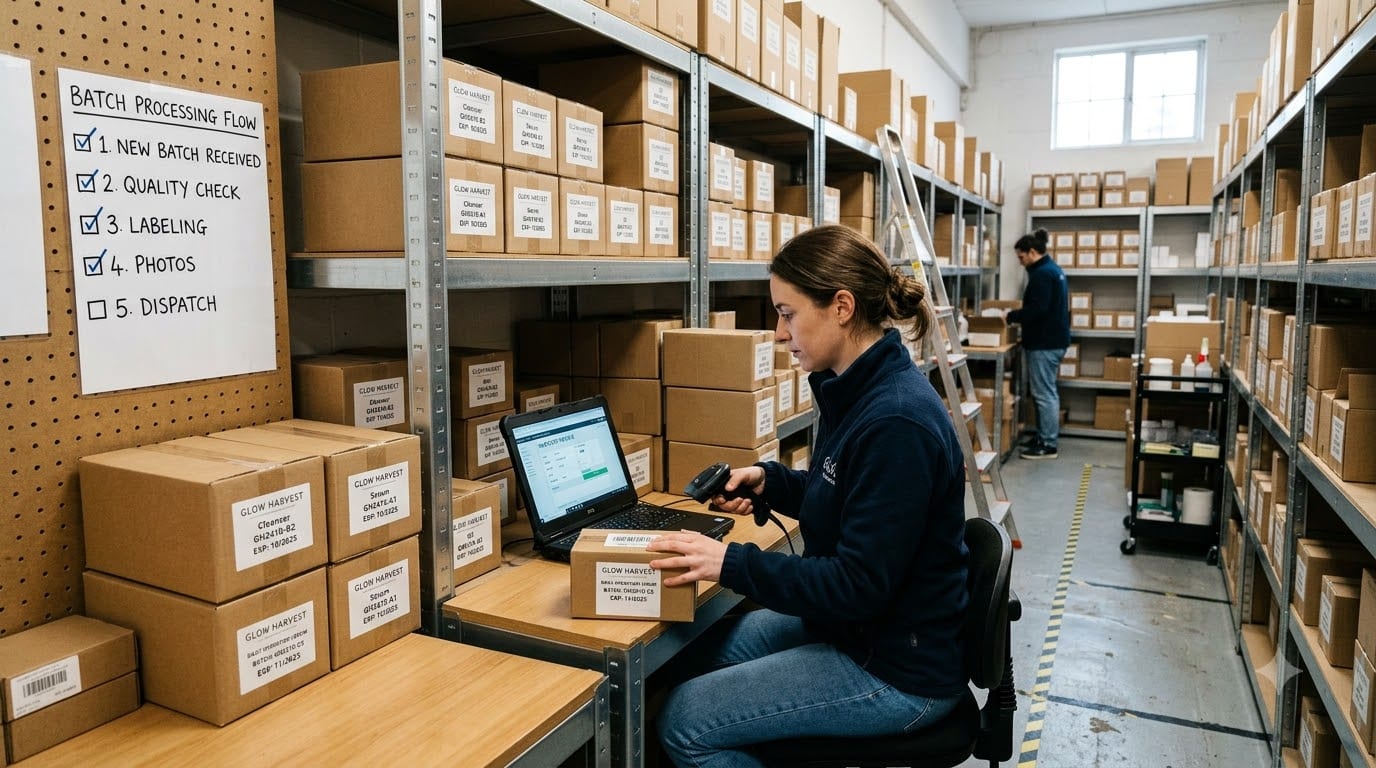
Inventory and batch management should track stock by SKU, batch, and expiry, showing what is in your warehouse, what is in transit, and what is on each marketplace. Alerts should tell you when popular SKUs are running low or when batches are nearing expiry.
Payments and finance should be digital and integrated. Payment gateways, UPI, and cards should reconcile automatically with your bank account. Basic accounting should track sales, purchases, ad spend, marketplace fees, and GST in one place so you can generate monthly P&L and cash flow reports without last-minute chaos.
Operations should run on digital checklists for order processing, quality checks, packaging, dispatch, returns, and NDR handling. The outcome is fewer errors in billing and stock, a clear view of daily sales, margins, and top SKUs, and less time on manual entries and more on product and growth.
5. Understanding Your Customers (Data & CRM)
Your customers are your biggest asset. Digital transformation helps you actually know them instead of guessing. A basic CRM for a D2C skincare brand should capture name, phone, email, preferred contact method, first purchase date, total orders, total spend, last order date, and key SKUs bought.
Segment customers into groups like first-time buyers, repeat buyers, high spenders, at-risk customers who have not ordered in a while, and COD-heavy vs prepaid customers. Use this data to identify who your top 20% customers are, what routines or product categories they prefer, and how often they return.
Use this understanding to personalize recommendations like “We got a new moisturizer that fits your dry skin routine”, plan bundles and refills that match their behavior, and design loyalty programs that actually matter to them. AI-assisted insights can summarize purchase patterns, suggest segments like “acne routine regulars” or “anti-aging explorers”, and draft personalized messages for different segments. The outcome is that you stop treating all customers the same, marketing and recommendations feel personal, and repeat purchases and referrals increase.

6. Marketing That Works SMM & AI-Assisted Content
Marketing for a D2C skincare brand should be consistent, measurable, and not exhausting. Focus on one or two main platforms, usually Instagram and maybe YouTube or Facebook, with a clear content mix of education, routines, testimonials, behind-the-scenes, and offers.
Use a simple content calendar with three to five posts per week, regular stories, and reels for routines, launches, and ingredient explainers. AI-assisted content can generate caption ideas and variations, repurpose one shoot into multiple posts like carousels, reels, and stories, draft WhatsApp and email campaigns for new arrivals or refills, and suggest basic ad copy for Meta or Google ads.
Measurement is critical. Track which posts get saves, shares, and DMs, which campaigns bring actual orders and not just likes, and the cost per order for paid ads. The outcome is that marketing becomes a system, not a last-minute scramble, you spend less time thinking “what to post” and more on product and storytelling, and you can see which content actually drives sales.
7. Automating the Repetitive Stuff
Automation is about removing boring, repetitive tasks so your team can focus on customers and growth. Reminders and follow-ups can be automated with WhatsApp or SMS for new launches matching customer preferences, refill reminders based on average usage time, birthday or anniversary offers, and festive collection previews.
Inventory alerts can auto-notify you when popular SKUs are low, slow-moving stock crosses a threshold, or new batches are received and need labeling. Billing and invoices can auto-generate GST invoices, payment links for advance or COD conversion, and monthly statements for credit partners.
Reports can be auto-generated daily or weekly on sales by SKU and channel, top customers and top items, margins and discounts, and COD failure rates. Use your ecommerce, CRM, and finance system’s built-in automation, connect WhatsApp Business API or simple messaging tools, and use Zopkit workflows to trigger actions based on sales or inventory events. The outcome is fewer manual messages and reminders, faster response to customers and stock changes, and owner and staff freed up for high-value work.
8. Using AI to Make Better Decisions
AI is not a magic oracle, but it can help you interpret your own data better. For buying and assortment planning, analyze past sales to suggest which categories and price points to produce more of, which pack sizes and formats to focus on, and which SKUs to limit or discontinue.
For pricing and discounts, identify items that can bear a small price increase, slow movers that need targeted discounts, and bundles that increase average order value. For staff planning, use sales patterns to schedule more support on peak days like paydays and festivals, plan training around slow periods, and align incentives with actual performance.
For scenario thinking, ask AI to summarize “what if” scenarios like “What if we increase AOV by 10%?” or “What if COD share drops by 5%?” and highlight key risks and opportunities based on your data. Export simple reports like sales by SKU, top customers, and repeat rates, and feed them into an AI tool with clear questions like “Which 5 SKUs should I prioritize for production?” or “Which bundles can I create to increase order value?” The outcome is that decisions are more data-driven and less guesswork, you produce smarter, price smarter, and schedule smarter, and less money is stuck in dead stock and more in winning SKUs.
9. Keeping Data Safe & Building Trust
Digital transformation only works if customers trust you with their data and payments. Use reputable tools for your ecommerce platform, CRM, website, and payments, and ensure cloud storage for bills, invoices, and records is secure.
Limit who can see full customer data and financials, use strong passwords and two-factor authentication, and ensure your key systems auto-backup data. Keep a simple disaster recovery plan for what happens if a laptop or phone fails.
Be clear with customers why you collect their data, that you do not sell their data to third parties, and how they can opt out of messages if they want. Follow basic compliance like GST and tax rules for billing and records, and basic data protection norms by not oversharing or misusing data. The outcome is that customers feel safe sharing their details and buying online, you reduce risk of data loss, fraud, and compliance issues, and your brand is seen as professional and trustworthy.
10. How Zopkit Brings All of This Together
A D2C skincare brand does not need ten different apps that do not talk to each other. It needs one operating spine. Zopkit can act as that spine by connecting CRM for customer profiles, purchase history, preferences, and segments, finance for invoices, expenses, GST, P&L, and cash flow, project management for new launches, campaigns, and marketplace expansions, HRMS for staff roles, attendance, incentives, and training, and academy for training modules on sales, customer service, and systems.
Instead of one tool for orders, another for inventory, another for marketing, and another for staff, you get a single place to see customers, sales, costs, and projects, workflows that connect an order to a customer record to a follow-up task, and dashboards that show what’s selling, who’s buying, and where money is going. Zopkit does not replace your Shopify or Instagram, but it ties them into a coherent system so you can actually run the brand like a business, not a collection of scattered efforts.
11. Before vs After: A Day in the Life
Before digital transformation, mornings start with the founder checking multiple dashboards and WhatsApp groups to understand yesterday’s orders, returns, and ad spend. Inventory is a guess, with frequent “Is this SKU still available?” conversations. Afternoons are filled with manual order updates, NDR calls, and reconciling marketplace reports with bank statements. Evenings are spent reacting to issues instead of planning new launches or retention campaigns.
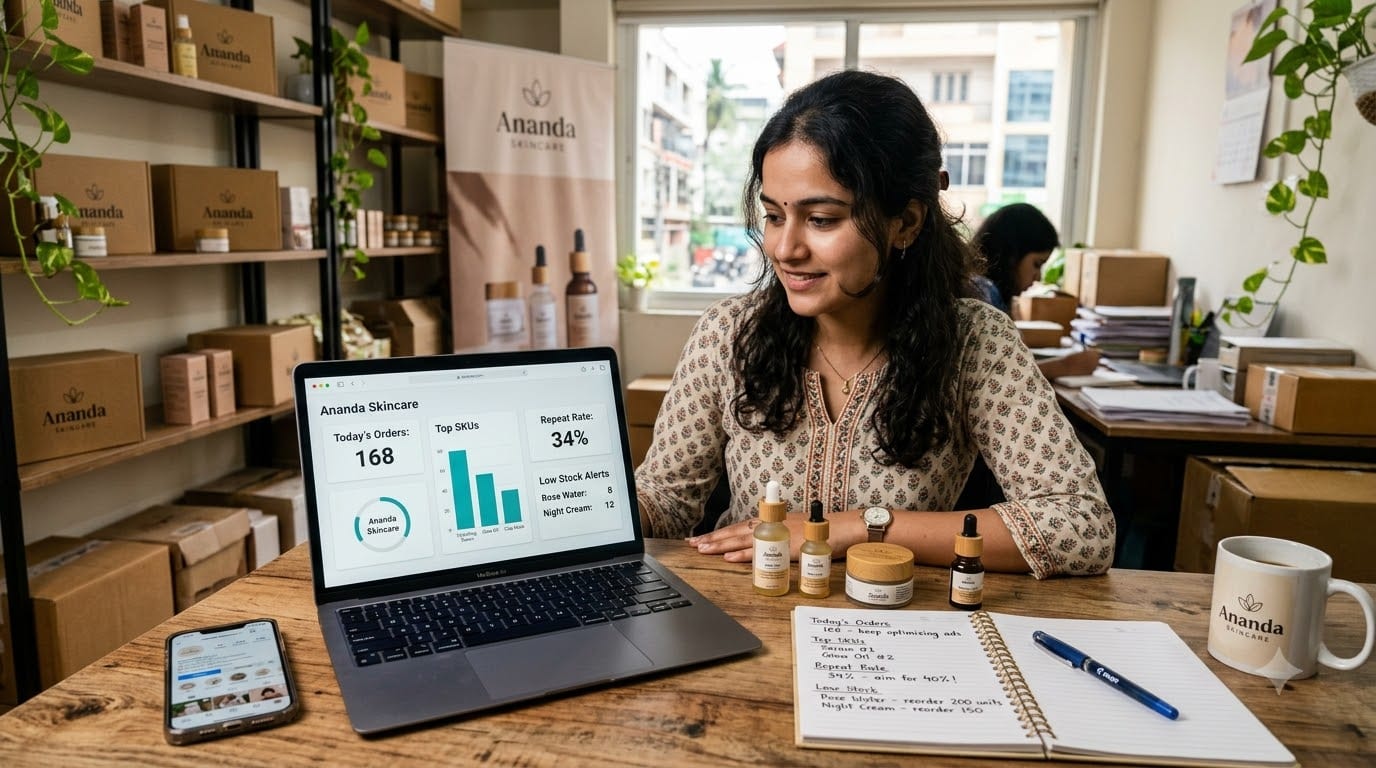
After digital transformation, mornings begin with a single dashboard showing yesterday’s orders by channel, top SKUs, repeat rate, and low-stock alerts. Inventory and batch status are clear, with automatic alerts for reorders and expiries. Afternoons focus on content, influencers, and product improvements, while automation handles routine updates and reminders. Evenings are used to review simple reports on margins, COD rates, and campaign performance, and to plan the next launch or retention push. The brand feels calmer, more organized, and more profitable.
12. Getting Started Where to Begin First
You do not need to do everything at once. Start with the highest-impact, lowest-complexity steps. In the first four to six weeks, set up a proper ecommerce and order management system with clear inventory and batch tracking, clean up your website and Instagram presence, start capturing basic customer data at checkout and in support, and move your daily sales and expense tracking into a simple finance tool.
In the next two to three months, implement a basic CRM with purchase history, create a simple content calendar and start posting consistently, introduce automated reminders for refills and key customers, and begin monthly sales and margin reviews using your digital data. Over three to six months and beyond, use AI tools to generate content ideas and captions, analyze sales patterns and suggest reorders and bundles, and connect your tools through a central system like Zopkit so data flows between CRM, finance, and operations. Start small, but start with systems that will scale as you grow.

13. Conclusion
Digital transformation for a D2C skincare or cosmetics business in India is not about becoming a tech startup. It is about using simple, affordable tools to get found by the right customers, run your brand with fewer errors and less stress, understand your customers and sell more to them, market smarter with less wasted effort, automate repetitive tasks, make better data-driven decisions, and keep data and payments safe and trustworthy.
If you are still relying on memory, scattered sheets, and random posts, you are leaving money and time on the table every single day. Zopkit can be the operating spine that connects your customers, orders, finance, projects, and team into one coherent system, so your D2C brand runs like a modern business, not a collection of scattered efforts.
Ready to start your D2C skincare brand’s digital transformation? Explore how Zopkit can organize your customers, inventory, orders, finance, projects, and team at zopkit.com.