Best Unified Business Platform for Diversified SMEs in India
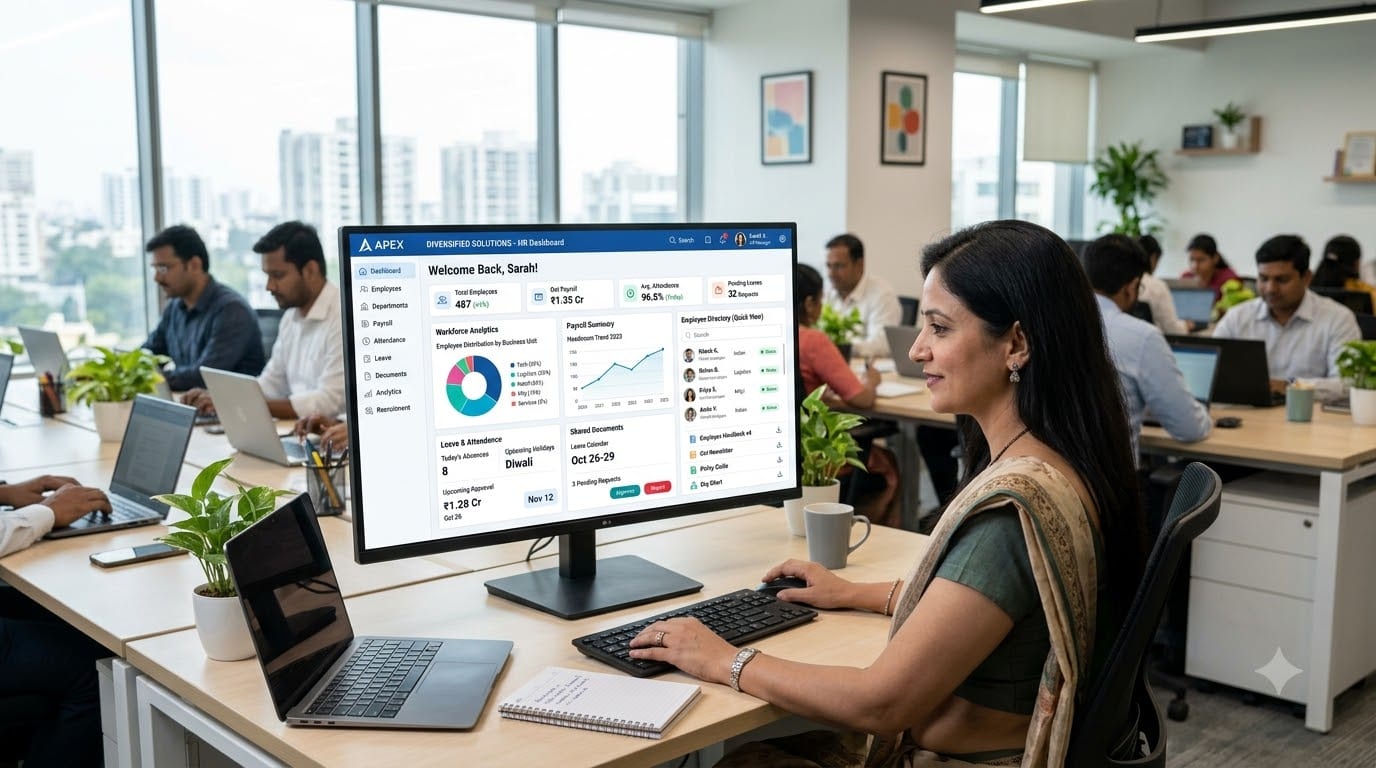
Diversified SMEs usually reach a stage where separate tools for each business line stop feeling flexible and start feeling inefficient. Once the group has 50 to 100 people across multiple units, CRM, finance, and HR need to work as a connected operating system rather than as isolated software stacks. Zopkit fits that requirement because it supports multi-entity operations, consolidated financial reporting, and one HRMS layer for the workforce across units.
The real advantage is not just consolidation. It is clarity. Each business line can keep its own operational structure while leadership gains a cleaner group-wide view without having to fund a custom ERP build or maintain multiple disconnected subscriptions.
Table of Contents
I. Why diversified SMEs outgrow separate tools
II. What a 50 to 100 person multi-business SME actually needs
III. Multi-entity CRM across business lines
IV. Consolidated finance without broken reporting
V. One HRMS for workforce across units
VI. Why connected systems beat software sprawl
VII. What this means for diversified SME leadership
VIII. Who this setup is built for
IX. Conclusion
I. Why diversified SMEs outgrow separate tools
Many diversified SMEs begin in a practical way. Each business unit adopts the tools it needs, and leadership tolerates the fragmentation because the companies are still relatively small. Over time, though, this structure creates duplication, reporting issues, and weak visibility across the group.
The problem becomes obvious when leadership wants answers that span multiple units. Which business line is converting best, which one is collecting cash fastest, and where is staff capacity getting stretched ? If each answer sits in a different system, management slows down.
That is why diversified SMEs outgrow separate tools. They do not necessarily need a heavyweight ERP first. They need one platform that can preserve separation between business units while still creating group-level visibility. Zopkit’s multi-entity model is relevant because it supports exactly that type of structure.
Common signs the old setup is breaking:
- Different business units use different CRM processes and no one has a clean commercial overview.
- Finance teams spend too much time combining reports from separate systems.
- HR records and people workflows are managed in fragments across the group.
- Leadership relies on spreadsheet consolidation instead of live operational visibility.
II. What a 50 to 100 person multi-business SME actually needs
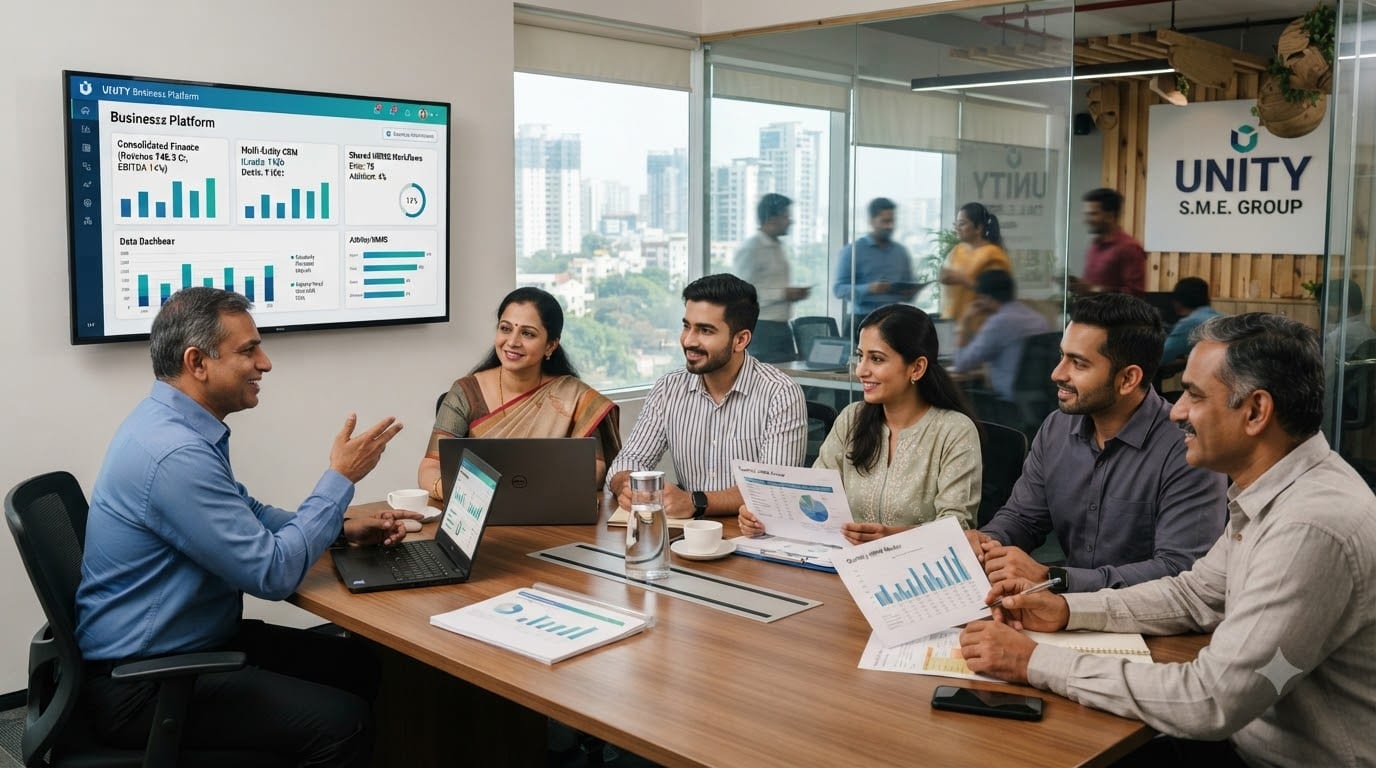
A diversified SME at this size usually has a more complex structure than a single-line company, but it still needs to move quickly like a mid-sized business. That means the group needs enough operational structure to stay organised without entering a long ERP implementation cycle.
In practical terms, the business usually needs:
- Separate client pipelines and account records for different business lines.
- Entity-level finance control with group-level financial visibility.
- A shared employee system across offices, units, or legal entities.
- Role-based access so different teams see the right information.
- Fewer duplicate subscriptions and less admin overhead.
This combination matters because the group is balancing two goals at once. It wants autonomy at the business-line level and visibility at the leadership level. Software that only solves one side of that problem usually creates new friction somewhere else.
That is why the operating platform matters more than individual tools. The business does not just need modules. It needs a usable structure for how data and teams work across the group.
III. Multi-entity CRM across business lines
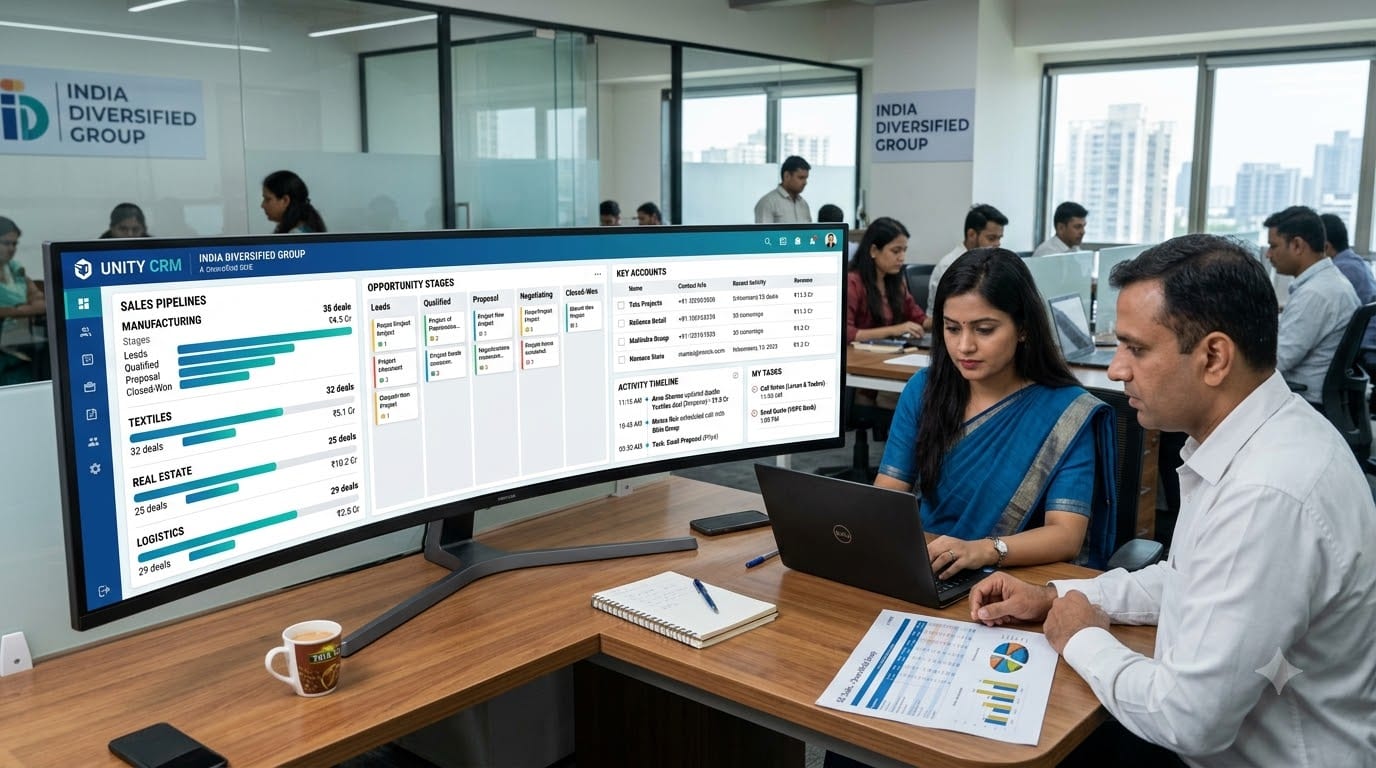
CRM is where business-line separation becomes operationally visible. Zopkit CRM supports leads, accounts, contacts, opportunities, tasks, meetings, calls, notes, dashboards, and activity timelines, making it a strong fit for businesses that want each unit to maintain its own commercial pipeline inside one platform. That is important because diversified SMEs often serve different markets through different teams.
One business line may run longer B2B cycles while another may rely on faster transactional sales. If both are forced into one generic process, the CRM becomes less useful. Separate CRM pipelines protect clarity.
CRM helps diversified SMEs manage:
- Different lead and opportunity flows by business line.
- Separate account histories and contact relationships.
- Team-specific follow-up, meetings, and notes.
- Better management visibility into each unit’s sales motion.
- Cleaner reporting without mixing unrelated customer records.
This also improves leadership control. The group can preserve each unit’s selling style while still using one CRM architecture rather than multiple separate products. That reduces duplication without reducing flexibility.
IV. Consolidated finance without broken reporting
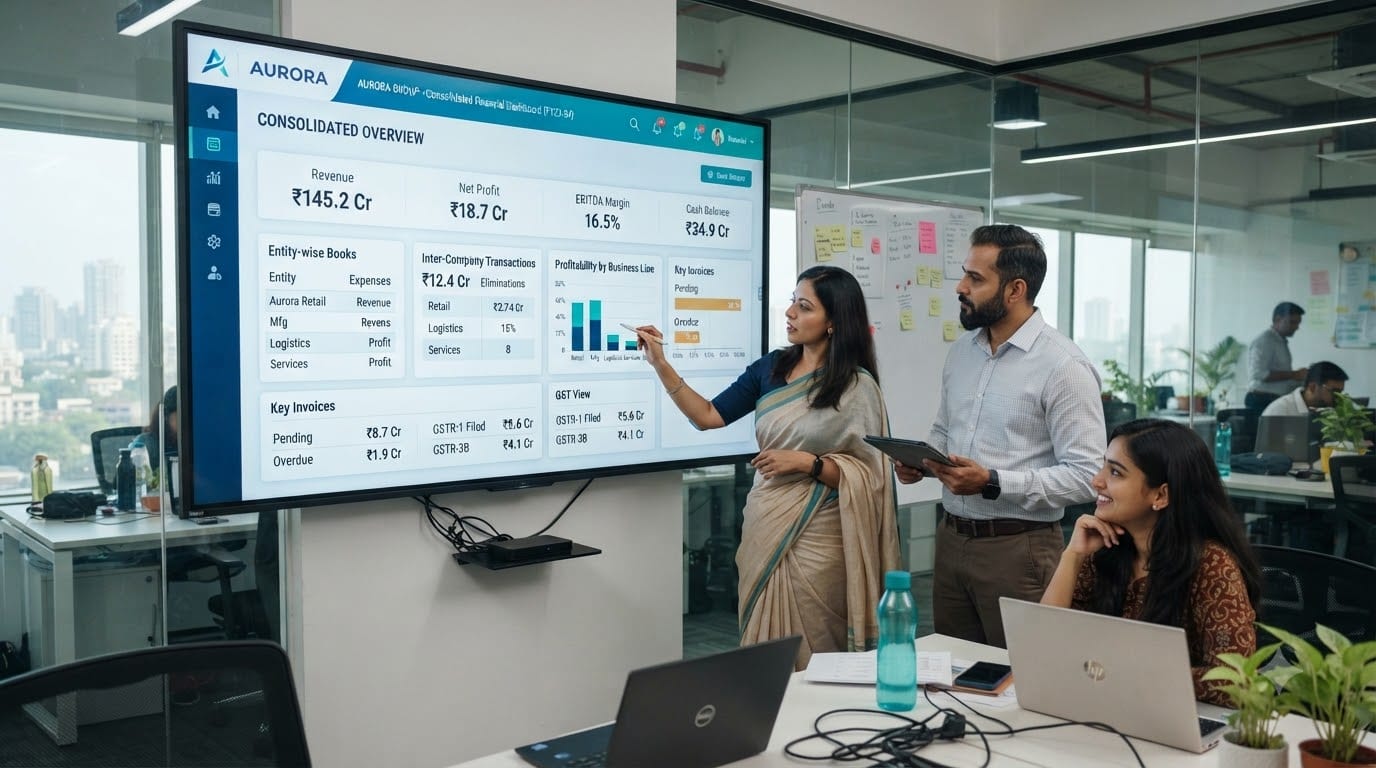
Finance is where diversified SMEs often feel the pain of separate systems most sharply. Zopkit Finance is built as a multi-tenant, entity-scoped accounting platform that supports entity management, consolidation, inter-company transactions, financial statements, dashboards, and tax workflows, which makes it highly relevant for groups running multiple units. This allows each business line to retain clean books while management still gets a group view.
That is a major advantage because group finance is not just about bookkeeping. It is about understanding how the overall portfolio is performing without losing entity-level control. Separate tools make this harder than it should be.
Finance helps diversified SMEs by supporting:
- Separate invoices, receivables, and payments by entity.
- Consolidated financial reporting across the group.
- Inter-company transaction handling.
- Dashboard views for profitability, liquidity, and contribution by entity.
- India-oriented tax workflows such as GST and TDS support.
The biggest benefit is reporting clarity. Leadership can see both the health of each business line and the performance of the group as a whole without waiting for manual consolidation. That is often the missing layer in fragmented finance setups.
V. One HRMS for workforce across units
HR becomes harder to manage when a diversified SME grows across business lines, locations, or legal entities. Zopkit HRMS supports employee records, departments, positions, payroll, attendance, leave, documents, analytics, and role-based access, which makes it useful as a shared HRMS layer across the group. Instead of each unit managing people differently, the business can standardise the core workforce system.
This matters because even when business lines are distinct, the workforce often overlaps operationally. Leadership may want one org structure view, one employee record model, one payroll framework, and one place to manage documents and approvals. That is difficult to achieve with isolated HR tools.
A shared HRMS helps with:
- Centralised employee records across units.
- Department and position visibility across the group.
- Attendance, leave, and payroll administration.
- Employee documents and audit-sensitive actions.
- Better workforce reporting for management.
For a 50 to 100 person diversified SME, one HRMS is usually a better design than separate HR systems per unit. It provides standardisation where the group needs consistency and still allows structured access based on role and organisation design.
VI. Why connected systems beat software sprawl
The biggest issue with software sprawl is not just subscription cost. It is operational fragmentation. Every separate tool creates another break in the flow of information across the business. That makes even basic management questions harder to answer.
When CRM, finance, and HR live in different stacks for different units, the business often faces:
- Repeated data entry across systems.
- Inconsistent naming, reporting, and process definitions.
- Slow group-level reporting.
- Weak visibility into how business units compare operationally.
- More admin work every time a new unit or user is added.
Connected systems solve this by preserving one operating model. Zopkit is valuable here because CRM, Finance, and HRMS are designed within the same broader ecosystem rather than as random integrations between unrelated tools. That usually produces better long-term control.
VII. What this means for diversified SME leadership
For diversified SMEs, the real objective is not just centralisation. It is manageable growth. Leadership wants each business line to stay focused while the group becomes easier to oversee. That is exactly where a unified platform becomes useful.
In practical terms, this means:
- Business units can run separate CRM workflows.
- Finance can stay entity-specific and group-aware at the same time.
- Workforce management can be standardised across the organisation.
- Leadership can make decisions from cleaner group-level data.
- The business can scale without turning operations into a software reconciliation exercise.
That is a better model than maintaining different systems per business line. It reduces internal friction and gives management a more stable operating base.
VIII. Who this setup is built for
This setup is built for diversified SMEs in India with roughly 50 to 100 employees spread across multiple business lines or entities. It is especially relevant for groups moving away from separate tools per business unit and looking for a cleaner operating platform.
It fits businesses that want to:
- Keep sales processes separate across business lines.
- Improve consolidated financial reporting.
- Use one HRMS for workforce management across the group.
- Reduce software duplication and manual reporting overhead.
- Gain group-wide visibility without a complex ERP project.
It is also a strong fit for leadership teams that want better control without sacrificing flexibility at the business-line level.
IX. Conclusion
The best unified business platform for diversified SMEs in India is one that can preserve separation across business lines while still creating group-wide visibility. Zopkit fits that requirement because it supports multi-entity CRM, consolidated financial reporting, and one HRMS layer for workforce management across units.
For 50 to 100 person diversified SMEs, the value is straightforward:
- Separate CRM pipelines for each business line.
- Consolidated finance without manual reporting chaos.
- One shared HRMS across the workforce.
- Less software sprawl and stronger operational clarity.
That is what makes a unified business platform more useful than a collection of disconnected tools.