Best Operating Platform for Small Conglomerates and Multi-Business Founders in India
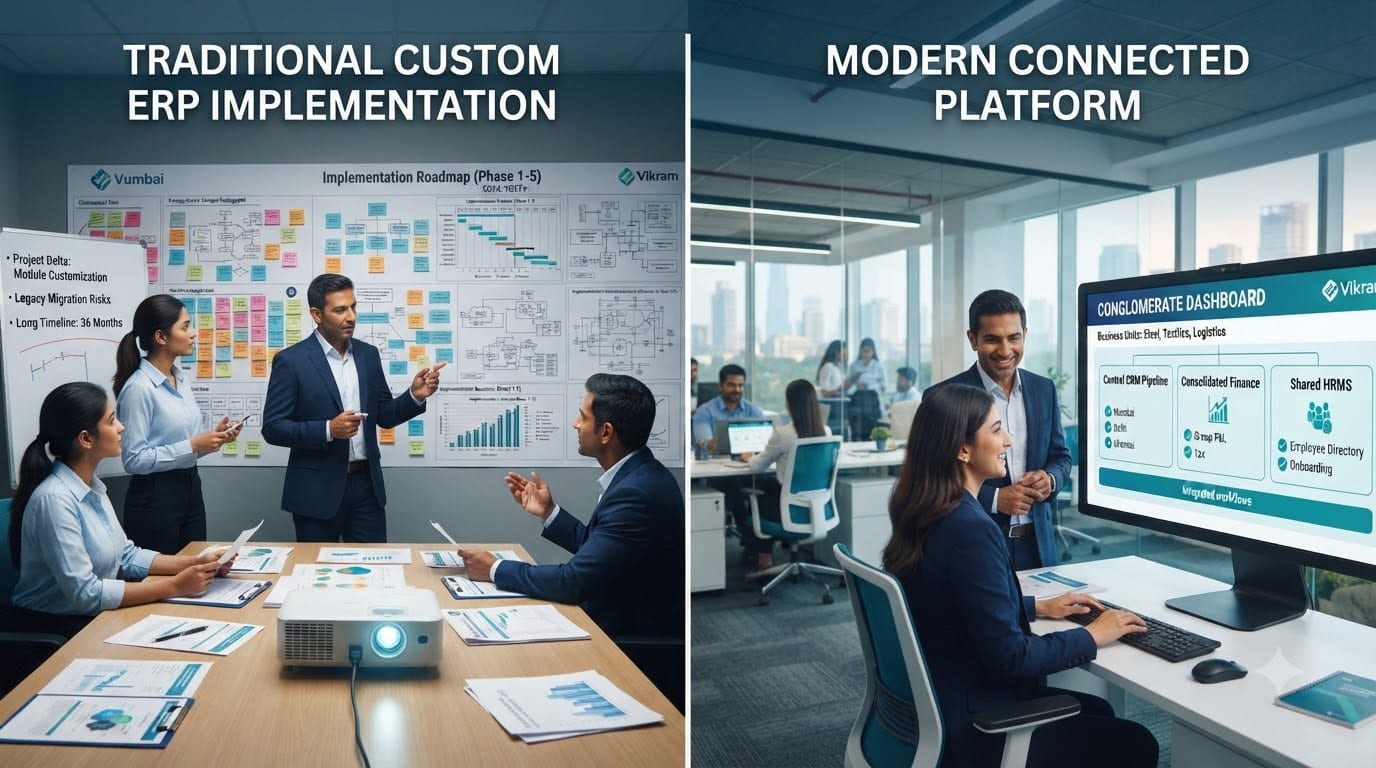
Small conglomerates and multi-business founders do not need a custom ERP project to get control over operations. What they need is a platform that can keep each business unit separate while still giving leadership one place to manage CRM, finance, and HR across the group. Zopkit fits that model because it supports multiple business units with separate CRM pipelines, consolidated finance, and shared HRMS inside one connected system.
For 10 to 50 person diversified businesses, the real problem is not lack of software. It is the cost and delay of stitching together point tools into something that behaves like an ERP. A connected operating platform is usually the smarter path.
Table of Contents
I. Why small conglomerates outgrow point tools
II. What a 10 to 50 person multi-business structure actually needs
III. Separate CRM pipelines for each business unit
IV. Consolidated finance across entities
V. Shared HRMS for group-wide people operations
VI. Why a custom ERP project is the wrong first move
VII. What this means for multi-business founders
VIII. Who this setup is built for
IX. Conclusion
I. Why small conglomerates outgrow point tools
A founder running multiple businesses usually starts with separate tools for each company. One CRM for one unit, another finance tool for another, and a separate HR process for the group. That works when the structure is tiny, but it quickly becomes awkward as the group adds another brand or business line.
The issue is not only cost. It is also consistency. Every additional tool creates another place where data can drift, reporting can become inconsistent, and leadership loses a clean view of the group. At that point, the business starts needing ERP-like control, but not necessarily a full ERP build.
This is where a connected operating platform is useful. Zopkit gives diversified founders a way to manage multiple business units in one environment while keeping the operational data separated where it needs to be. That is usually enough for small conglomerates that want discipline without a custom software project.
What point-tool sprawl usually creates:
- Duplicate logins and subscriptions across entities.
- Separate data models that do not talk to each other well.
- Manual reporting work for group-level leadership.
- Higher coordination cost as each business grows independently.

II. What a 10 to 50 person multi-business structure actually needs
A small conglomerate is not a large enterprise yet, but it is already too complex for simple small-business software. The owner or group leadership needs visibility across different units while preserving separation in operations and reporting. That means the platform has to support both independence and consolidation.
In practical terms, a multi-business founder usually needs:
- Separate client pipelines for each business unit.
- Entity-specific billing, payments, and accounting records.
- Shared employee administration across the group where appropriate.
- Unified oversight for leadership and finance decisions.
- Enough structure to avoid building a custom ERP from scratch.
The important thing is that these needs are related. A group may want each business to operate independently in CRM, but still consolidate finance or share HR processes centrally. That is exactly the kind of operating model a connected platform can support.
For a founder, this also means less context switching. Instead of jumping between different systems to understand the state of the group, the owner can see the right information within one platform architecture. That improves speed and reduces the chance of blind spots.
III. Separate CRM pipelines for each business unit
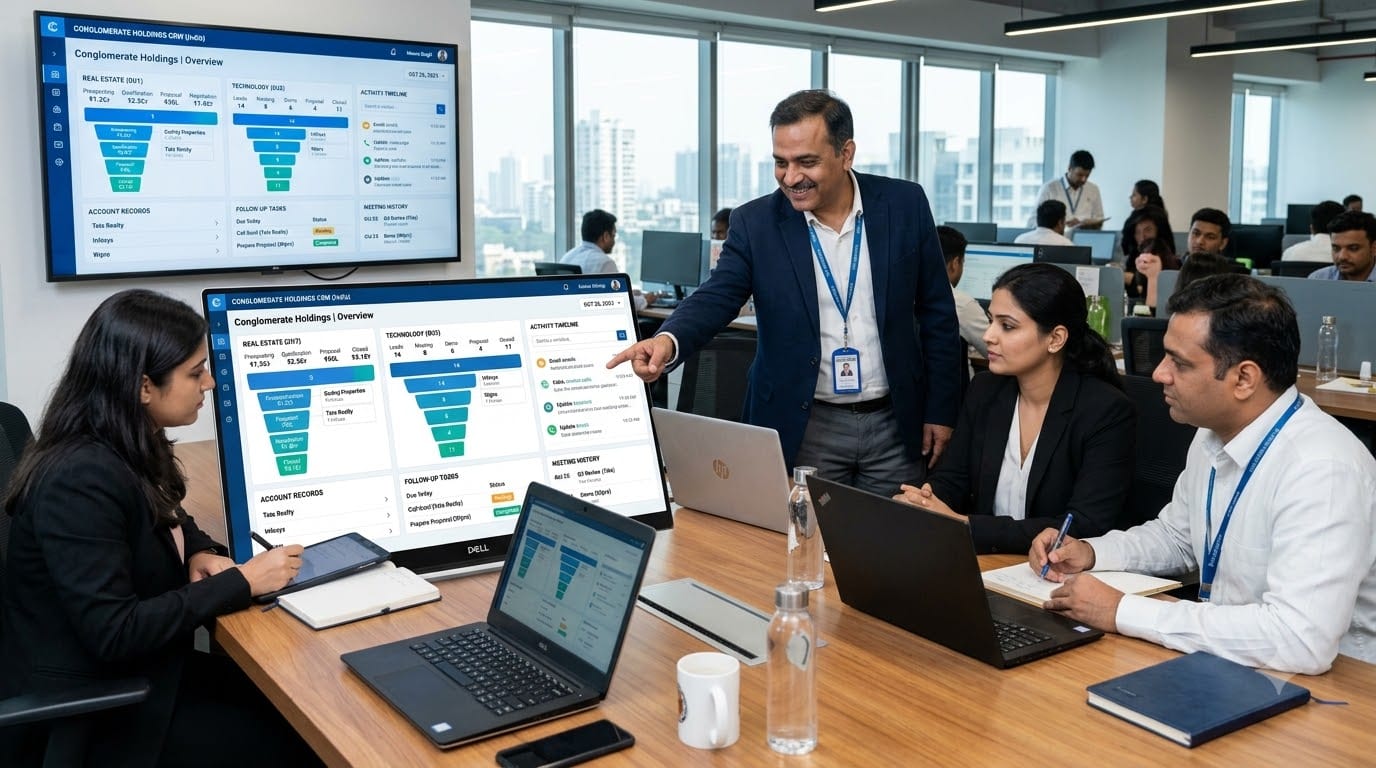
CRM is the front end of operational separation. Zopkit CRM supports leads, accounts, contacts, opportunities, tasks, meetings, calls, notes, and activity timelines, which makes it well suited for keeping different business units organised inside the same platform. Each unit can maintain its own pipeline without mixing records.
That matters because diversified founders often run businesses that serve different markets or have different sales motions. One unit may sell services, another may sell products, and another may sell recurring contracts. Separate CRM pipelines help each business stay operationally clear.
CRM supports this by making it possible to manage:
- Distinct lead flows for different business units.
- Separate account and contact histories.
- Different sales stages and opportunities.
- Team-specific tasks, meetings, and follow-ups.
- Relationship continuity even as the group grows.
For the owner, the benefit is not just cleaner sales data. It is better control over the commercial side of each business unit. If one unit is growing faster than another, the founder can see that without forcing both into a single generic pipeline.
This also helps with accountability. Different business units can have different owners, managers, or operating leads while still using the same system architecture. That gives the group better control without making the software stack more complicated.
IV. Consolidated finance across entities
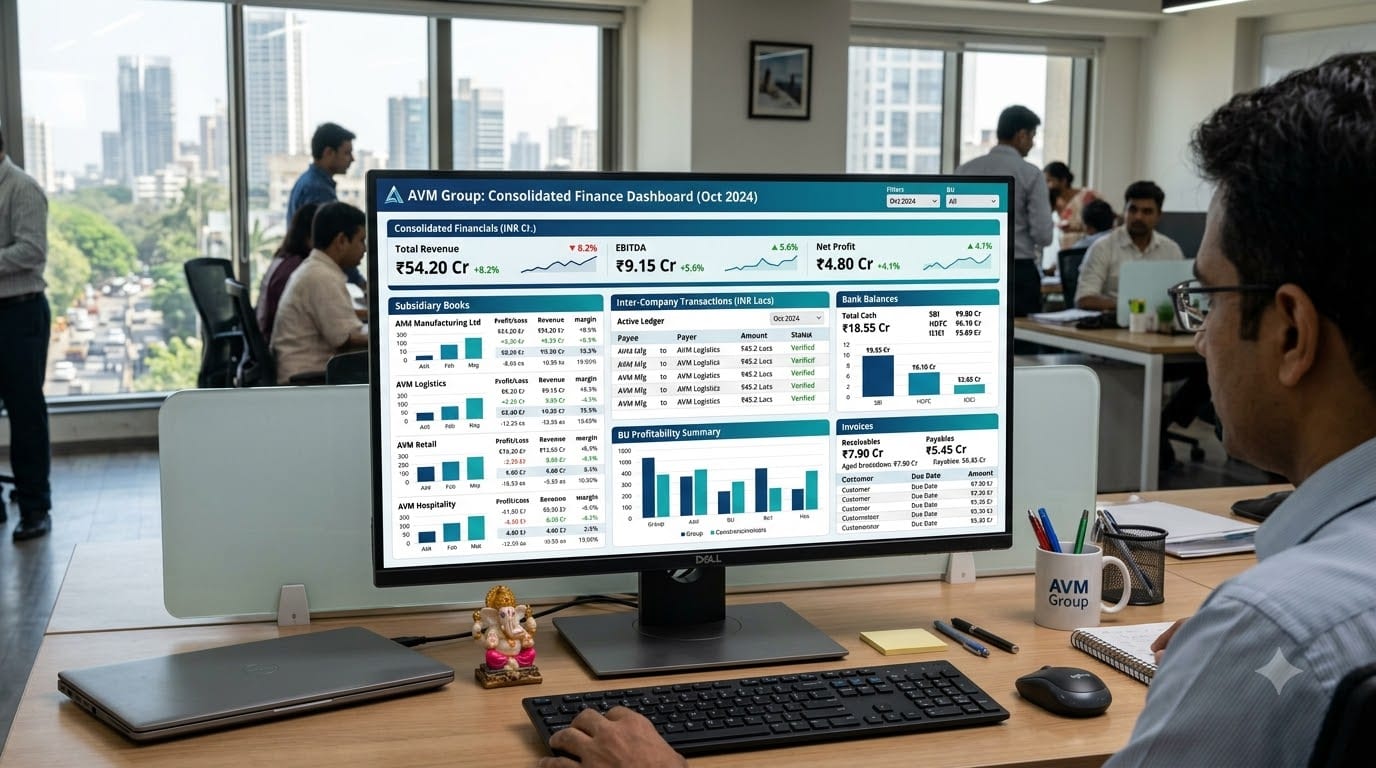
Finance is where multi-business operations often become messy if the software is fragmented. Zopkit Finance is multi-tenant and entity-scoped, with support for separate operational data by entity, consolidated reporting, inter-company flows, and broader accounting controls. That makes it useful for founders who want each company’s books to stay distinct while still seeing a group-level view.
This is especially valuable for small conglomerates because they often need both separate books and a consolidated view. One business may be doing well while another needs capital or attention. Finance should make that visible without making the owner manually combine spreadsheets.
Finance supports:
- Separate invoices and customer records by entity.
- Entity-specific AR, AP, and banking workflows.
- Consolidation across multiple entities.
- Inter-company transaction handling.
- Cash, balance, and profitability visibility across the group.
The advantage of this model is that the founder does not need a custom ERP project just to see group finance properly. Zopkit already provides entity-level accounting plus group visibility, which is often the core requirement for a small conglomerate. That means more control with less implementation risk.
It also reduces accounting duplication. Instead of maintaining separate finance systems that need to be manually reconciled at group level, the founder can run the businesses in one platform architecture with entity separation built in. That is much easier to manage as the group evolves.
V. Shared HRMS for group-wide people operations
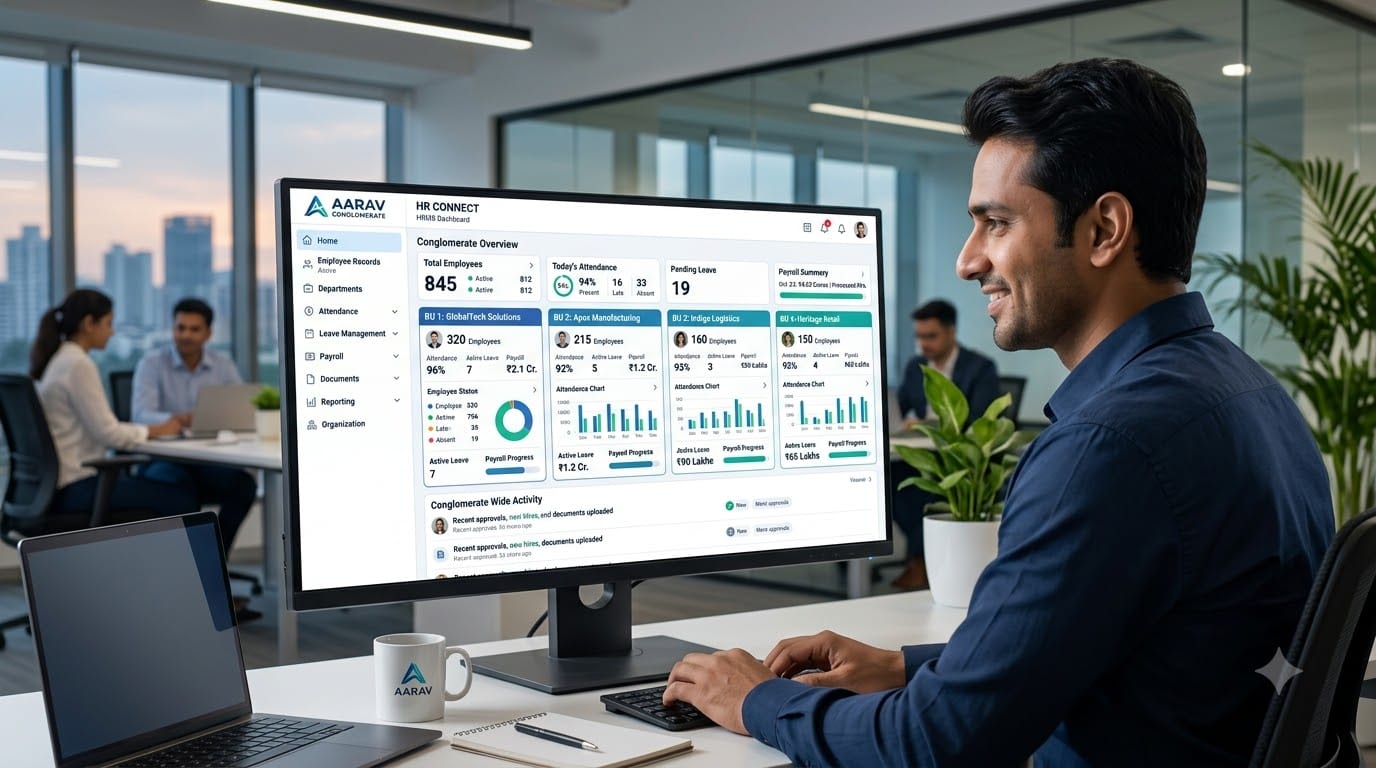
HRMS becomes important even for small conglomerates because employees may move across business units, or the group may share administrative HR functions centrally. Zopkit HRMS supports employee records, departments, positions, attendance, leave, payroll, documents, analytics, and role-based access, which makes it suitable for shared HR operations across the group. That keeps people operations structured without needing a separate HR tool for every entity.
A shared HRMS helps the founder or HR lead manage:
- Employee data across the group.
- Departments, locations, and positions.
- Attendance, leave, and payroll administration.
- Documents and audit trails for HR actions.
- Reporting on workforce structure and activity.
For small conglomerates, the benefit is often consistency. One platform can provide a standard people process while still allowing different business units to retain their own structure where needed. That is much cleaner than running separate HR tools for each unit.
It also helps if the group is lean. A 10 to 50 person diversified business does not need a heavy HR transformation project. It needs practical HR control with enough structure to manage the basics well. Shared HRMS is a better fit for that.
VI. Why a custom ERP project is the wrong first move
Many multi-business founders assume the answer to fragmentation is a custom ERP. In practice, that is often more expensive and slower than they expect. Custom ERP projects usually require long scoping cycles, implementation overhead, and ongoing maintenance that a small conglomerate does not always need.
The real risk is overengineering. If the business only needs separate CRM pipelines, consolidated finance, and shared HRMS, building a full ERP from scratch is usually too much. That adds cost without necessarily improving day-to-day management.
A connected platform is often the better first move because it gives the founder:
- Faster implementation than a custom ERP project.
- Lower maintenance overhead.
- A cleaner data model across business units.
- Enough separation for each entity without losing group visibility.
- A stronger base if the group grows later.
That is the strategic advantage of Zopkit for this segment. It gives small conglomerates the operating discipline they need without asking them to become software implementers. For many founders, that is the better tradeoff.
VII. What this means for multi-business founders
For small conglomerates, the goal is not to build the most complex system. It is to create enough structure that the group can run clearly and scale without constant rework. A connected platform does that better than a patchwork of separate tools.
In practical terms, this means:
- CRM can remain separate by business unit.
- Finance can be consolidated while still preserving entity-level control.
- HRMS can be shared across the group for cleaner people operations.
- Leadership can view the business as a group, not just a set of unrelated companies.
- The founder avoids the burden of a custom ERP build.
That is a strong fit for businesses that want speed and clarity. If the group is still relatively small, the best system is usually the one that solves the current problem well without creating a long implementation project. Zopkit is positioned for exactly that kind of use case.
VIII. Who this setup is built for
This setup is built for Indian founders managing diversified businesses with roughly 10 to 50 people across multiple units. It is especially useful for owners who want each company to stay distinct but still need group-level oversight.
It fits businesses that need to:
- Run separate CRM pipelines for each business unit.
- Consolidate finance across entities.
- Share HRMS across the group.
- Avoid the cost and risk of a custom ERP project.
- Keep management simple while the business structure stays diversified.
It is also a strong fit for founders who expect their businesses to grow but do not want to spend early-stage time and money building infrastructure from scratch. A connected platform gives them a more practical operating base.
IX. Conclusion
The best operating platform for small conglomerates and multi-business founders in India is one that can manage multiple business units without turning the company into an ERP implementation project. Zopkit fits that need because it supports separate CRM pipelines, consolidated finance, and shared HRMS in one connected environment.
For 10 to 50 person diversified businesses, the value is straightforward:
- Separate business-unit CRM without record mixing.
- Consolidated financial control across entities.
- Shared HRMS for consistent people operations.
- Less software sprawl and less custom development.
That is what makes a connected operating platform valuable for multi-business founders.
If you want to manage multiple business units from one platform, book a free demo at zopkit.com and see how the model works in practice.