Best All-in-One Business Software for Diversified Solo Business Owners in India
Best All-in-One Business Software for Diversified Solo Business Owners in India
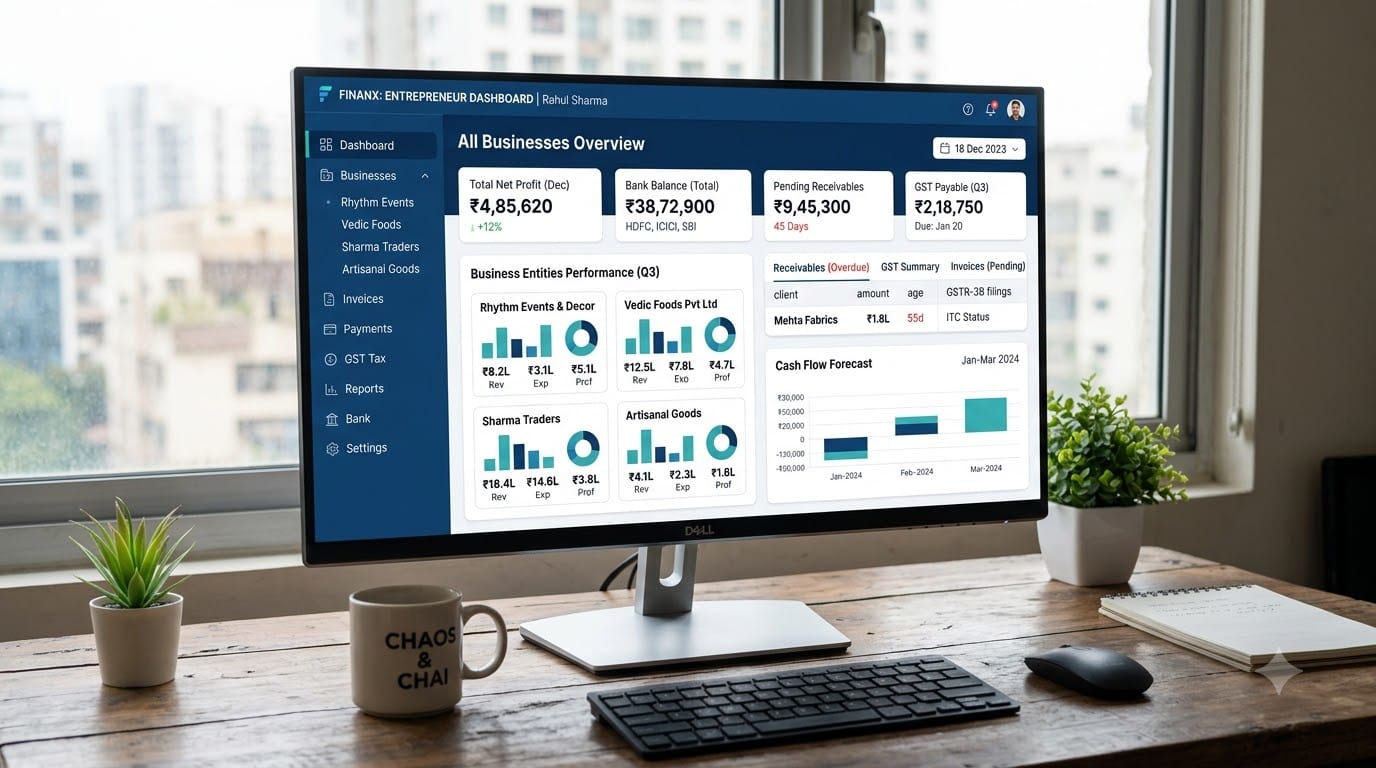
Solo founders running 2 to 3 small businesses need a different kind of software stack. They do not need separate subscriptions and separate logins for every entity when the real requirement is simple: keep each business distinct, but manage all of them from one place. Zopkit fits that use case because its multi-entity model lets one owner manage separate CRM, Finance, and basic HRMS workflows without duplicating tool subscriptions for every business.
The key advantage is operational separation without software sprawl. Each business can have its own records, finances, and people data, while the owner gets one connected system to run everything more efficiently.
Table of Contents
I. Why diversified solo owners need one platform
II. What running 2 to 3 businesses actually looks like
III. Multi-entity CRM for separate client pipelines
IV. Multi-entity Finance for separate books and control
V. Basic HRMS for small teams across businesses
VI. Why duplicate subscriptions become a hidden cost
VII. What this means for diversified solo founders
VIII. Who this setup is built for
IX. Conclusion
I. Why diversified solo owners need one platform
Running multiple small businesses is not the same as running one larger business. A solo founder with two or three entities has to keep each brand, customer base, invoice stream, and operational structure separate while still managing everything personally. That creates a different kind of complexity.
Most founders in this situation eventually end up with tool duplication. One CRM subscription for one business, another finance tool for another, and maybe a separate HR or employee system for staff management. That feels manageable at first, but it becomes expensive and difficult to oversee.
A multi-entity platform is better because it keeps the operational boundaries clear while reducing the number of tools the founder has to maintain. Zopkit’s structure supports entity-scoped data, meaning different businesses can remain separated inside the same platform. That gives the owner a cleaner way to scale without creating more software clutter.
The main problems this solves are simple:
- Separate businesses need separate records, not one mixed-up database.
- The owner needs one login and one operating view instead of juggling multiple systems.
- Shared admin work should be reduced, not repeated for every entity.
- Small teams should be managed without paying for duplicate enterprise seats.

II. What running 2 to 3 businesses actually looks like
Solo founders with multiple businesses usually do not run identical operations. One business may be client-service based, another may be product-led, and a third may be a small team-led service or trading operation. Even if the businesses are small, the operational needs are still distinct.
The owner usually has to manage:
- Different clients, leads, and sales pipelines for each entity.
- Separate invoicing, revenue tracking, and accounting records.
- Different employees or contractors across businesses.
- Distinct bank or finance workflows.
- Basic internal coordination such as leave, responsibilities, and documents.
That means the founder is not just managing volume. They are managing separation and control at the same time. If the tools do not support entity boundaries properly, it becomes easy to mix up customers, payments, or employee records.
A solo owner also tends to wear every role personally. Sales, operations, finance review, and HR administration often sit with the same person. A connected system reduces the number of places that person has to check every day.
III. Multi-entity CRM for separate client pipelines
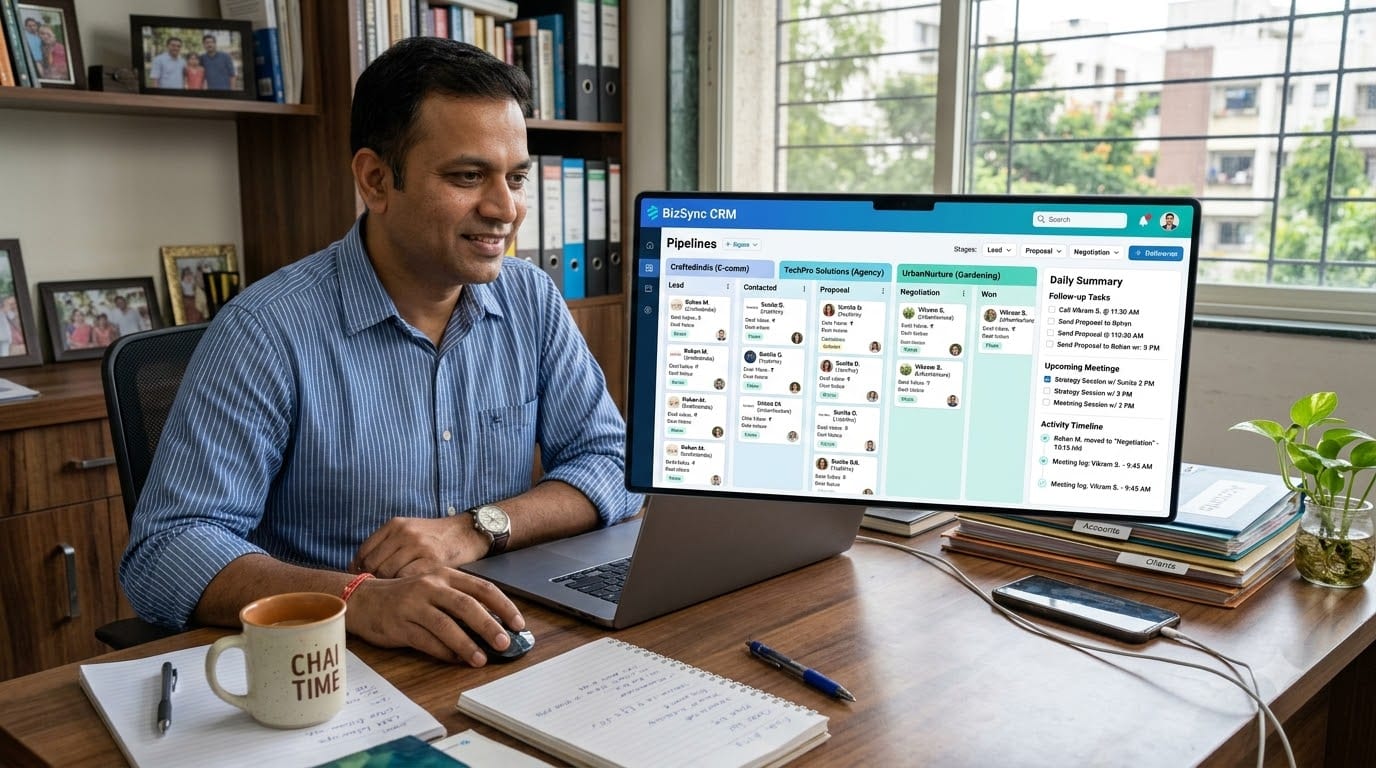
CRM is useful for solo owners because each business often has its own customer pipeline. Zopkit CRM supports leads, accounts, contacts, opportunities, tasks, meetings, calls, notes, and activity timelines, which makes it suitable for keeping each business’s client relationships separate while still visible in one platform. That is especially helpful when the founder is managing multiple brands or service lines.
For a diversified owner, CRM helps with:
- Separate lead and account visibility for each entity.
- Maintaining distinct client histories per business.
- Tracking meetings, calls, and follow-ups in one place.
- Keeping the owner aware of relationship activity across all businesses.
- Avoiding confusion between similar customers or services in different entities.
This is important because sales context does not stay simple when an entrepreneur runs multiple businesses. Different companies may share vendors, buyers, or even similar service offerings, and the owner needs the system to preserve clarity. CRM makes that possible without forcing separate software subscriptions for each business.
A multi-entity CRM also helps the solo founder think more strategically. Instead of manually switching between different CRMs, the owner can compare performance across entities while still maintaining separation where needed. That improves both control and visibility.
IV. Multi-entity Finance for separate books and control
Finance is where multi-entity support becomes especially valuable. Zopkit Finance is designed as a multi-tenant, entity-scoped accounting platform with separate operational data by entity, while also supporting consolidated reporting and related control features. For a solo owner running multiple businesses, that means each business can have its own books without needing a separate accounting stack for each one.
This solves a very real problem. Many owners either keep each business in a completely separate tool or try to manage multiple businesses inside one messy set of books. Both approaches create problems. Separate tools increase cost and admin effort, while mixed books reduce clarity and can lead to mistakes.
Finance helps because it supports:
- Separate invoicing and customer management by entity.
- AR and AP workflows that stay scoped to the right business.
- Banking, reconciliation, and cash visibility for each entity.
- GST and TDS-oriented financial workflows in India.
- Dashboard views for revenue, liquidity, and profitability.
The entity-scoped model is the real benefit. The founder can see the financial position of each business without blending them together, while still operating inside one system. That is much easier than maintaining duplicate bookkeeping software for each company.
It also helps reduce operational errors. When invoices, payments, and bank transactions are all tied to the correct entity, the owner gets a cleaner picture of which business is performing well and which one needs attention. That is essential for a diversified entrepreneur.
V. Basic HRMS for small teams across businesses
Even solo founders often have a small number of employees, contractors, or part-time staff across their businesses. Zopkit HRMS supports employee records, departments, roles, attendance, leave, documents, payroll, and self-service workflows, which makes it useful even when the business is small. The goal is not full enterprise HR complexity. It is basic structure that still scales.
For a founder with multiple businesses, HRMS can help manage:
- Separate staff records and job roles.
- Basic payroll and India statutory workflows.
- Attendance, leave, and employee documents.
- Staff or contractor handling across multiple businesses.
- A cleaner view of who works where and under which entity.
This matters because people management becomes messy very quickly when the same owner is hiring across more than one business. Even if headcount is low, the owner still needs recordkeeping, payroll control, and document handling to stay organised.
Basic HRMS support also helps avoid relying on spreadsheets for every staff decision. That reduces administrative overhead and gives the founder a better way to keep employee data tied to the right business entity. For a diversified solo owner, that kind of structure is enough.

VI. Why duplicate subscriptions become a hidden cost
The easiest trap for diversified solo owners is paying for duplicate tools. At first, this seems harmless because each business feels separate and each tool seems small. Over time, the cost adds up quickly.
The hidden costs usually look like this:
- Separate CRM subscriptions for each entity.
- Separate accounting or finance tools for each business.
- Separate user seats, setup work, and maintenance for each system.
- More time spent switching between tools every day.
- More chances of inconsistent data or duplicate records.
A multi-entity platform reduces that duplication. The founder can manage different businesses inside one environment instead of rebuilding the operating stack every time a new entity is added. That is a much better fit for a solo operator.
This also creates better long-term flexibility. If one business grows and another stays small, the owner can still keep both inside the same system while preserving separation in records and workflows. That is the kind of efficiency solo founders need.
VII. What this means for diversified solo founders
For an entrepreneur running multiple small businesses, the biggest advantage of Zopkit is not just consolidation. It is control with separation. Each business can stay distinct, while the owner avoids the clutter of managing multiple software stacks.
In practical terms, this means:
- One platform can manage multiple business entities.
- CRM records stay separate by business.
- Finance can stay entity-scoped without mixing books.
- Basic HR workflows can be handled without separate HR tools.
- The founder can see and manage everything from one place.
That makes the setup especially attractive for lean operators. A diversified solo founder usually wants speed, clarity, and lower overhead, not a complicated enterprise deployment. Zopkit aligns with that need by making multi-entity management simpler.
VIII. Who this setup is built for
This setup is built for Indian entrepreneurs running 2 to 3 small businesses who want one platform for CRM, Finance, and basic HRMS across separate entities. It is especially useful for founders who are personally involved in sales, finance, and operations across all their businesses.
It fits owners who need to:
- Keep each business separate while avoiding duplicate software costs.
- Run different client pipelines for different entities.
- Manage separate financial records without confusion.
- Handle a small team or employee base without a full HR stack per business.
- Reduce admin work and simplify daily oversight.
It is also a strong fit for founders who want flexibility as they add or restructure businesses later. A multi-entity system gives them room to grow without redoing their software setup every time.
IX. Conclusion
The best all-in-one business software for diversified solo business owners in India is one that lets them manage multiple entities without multiplying software complexity. Zopkit fits that need because its multi-entity support keeps CRM, Finance, and basic HRMS separate where needed, but still under one connected platform.
For a solo founder with 2 to 3 businesses, the benefit is clear:
- Separate entity records.
- One login and one operating view.
- Less duplication of subscriptions.
- Cleaner financial and client management.
- Basic HR structure without extra tools.
That is what makes a multi-entity platform valuable for diversified owners.
If you want to manage multiple businesses from one system, book a free demo at zopkit.com and explore how the model works in practice.